Giving People Exactly the Art They Ask For Makes Boring Art
The least wanted paintings turned out to be more interesting, because good taste has to be discovered through friction.
 Experimental History · The Decline of Deviance 2
Writer Adam Mastroianni argues that modern media made culture blander by removing a useful annoyance, being stuck with things you did not pick.
He points to CDs, TiVo, satellite radio, and streaming, which all let listeners favor what they think they want. He recalls an earlier world of unskippable album tracks, late night infomercials, and waiting room magazines read cover to cover.
His test case comes from the mid-1990s, when Russian artists Komar and Melamid surveyed residents in several countries on what they liked to see and then painted each country's most wanted scene.
The results were largely similar blue landscapes, crowded with familiar features. For Mastroianni, that is what happens when people can state exactly what they want and the market can deliver it, and most people end up with slop.
He does not think this means people naturally love kitsch. He argues that no one knows what they will value until they meet it face to face, so catering only to raw, undeveloped preferences leads to dull results.
Mastroianni writes, "This is the work art does for us" because "it stretches our desires, rather than merely satisfying them."
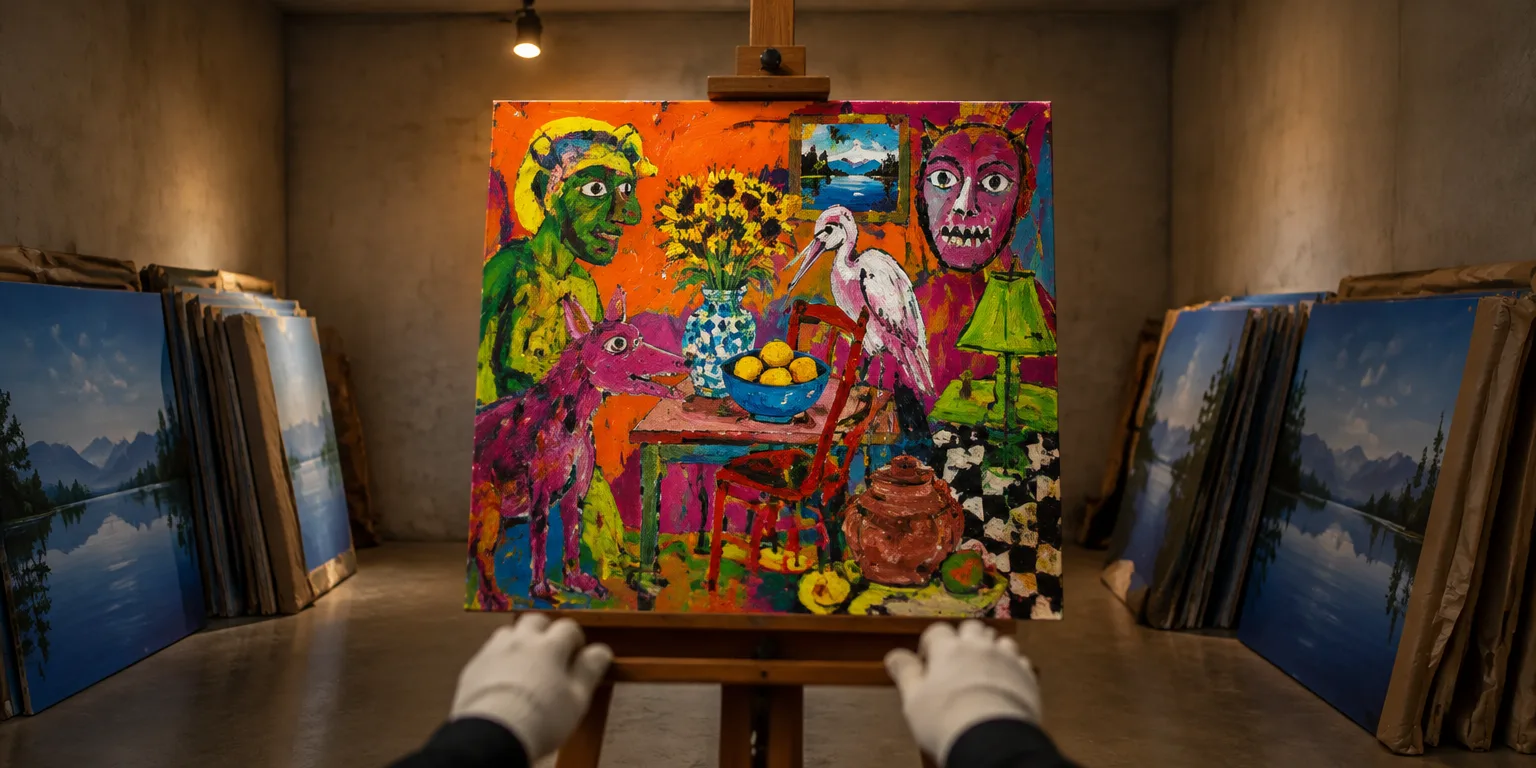
His other evidence is what Komar and Melamid did next, when they also painted each country's least wanted scene. He writes that he doubts he is alone in thinking a few of those rejected works beat every most wanted painting.
Those rejected pictures struck him as livelier and more provocative, with enough surprise to catch the eye and stir a reaction.
Finding that kind of work means risking dislike, meeting things that grab attention in uncomfortable ways, and sometimes spitting things out. That kind of jolt is very different from shows designed to fill time while viewers do something else.
Questions people ask
Who were Komar and Melamid?
Vitaly Komar and Alexander Melamid were Russian-born conceptual artists who emigrated to the United States in the 1970s. They became known for Sots Art, a Soviet-bloc answer to Pop Art, and for large participatory projects. Their mid-1990s People's Choice series polled more than a dozen countries and then had local artists execute the results.
What did the most wanted paintings actually look like?
Most of them were remarkably similar, blue landscapes with water, trees, open sky, and distant mountains. Many also included people, animals, or historical figures, crowded into one calm, realistic scene. The sameness across countries was part of the joke, and the point.
Does friction really help people find things they like?
In this essay it is Mastroianni's interpretation, not a laboratory result. He points to the painting experiment and to everyday habits like skipping songs and autoplay television. His claim is that taste grows when people cannot avoid things they did not select.