Vjosa Shifting Water Supports About 400 Families Through Rafting
Guides Zamo and Alma say the work means reading the water and adapting to it.
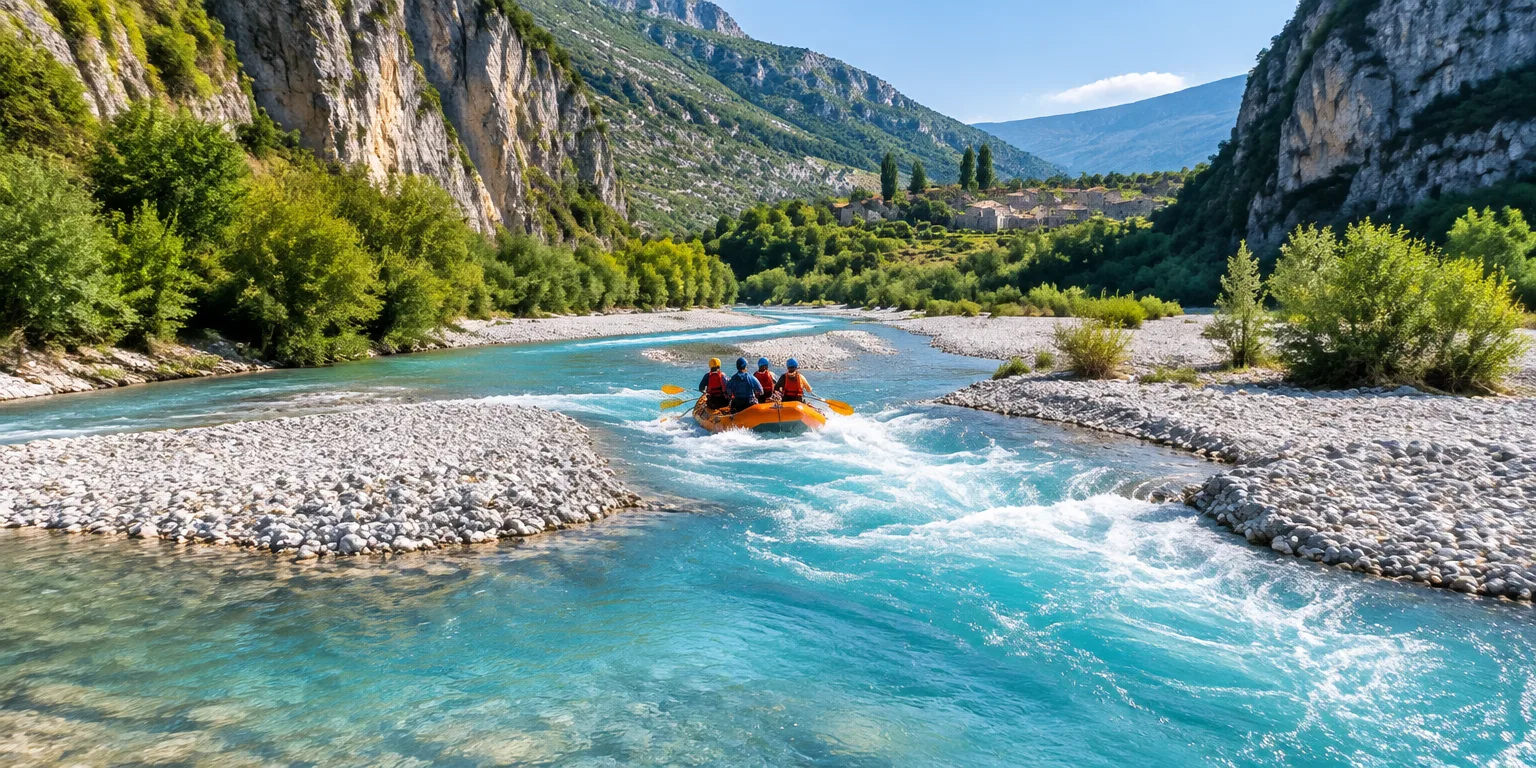
 National Geographic · The Vjosa: Exploring One of Europe's Last Wild Rivers | National Geographic
Along Albania's Vjosa River, Zamo and Alma operate a rafting business built around water that keeps changing.
Zamo and Alma describe the work this way: "You can't control the Vjosa. You have to read the current and adapt to its free-flowing nature."
For them, guiding means reading the current and adapting as the water changes.
The river keeps changing, so the guides must keep adjusting.
The river is presented as central to life nearby, with tourism opening jobs for many households in the valley.
Income from raft trips and kayak outings on the river is credited with supporting around 400 families.
Questions people ask
Where exactly is the Vjosa River?
The Vjosa rises in the Pindus Mountains of northwestern Greece, where it is called the Aoos, then flows northwest through southern Albania to the Adriatic Sea. It runs for about 270 kilometers. Much of its course passes through rural valleys and gorges.
Why is the Vjosa called one of Europe's last wild rivers?
Unlike most large European rivers, the main stem of the Vjosa has no dams blocking its flow. That lets it shift channels, flood, and carry sediment naturally. In 2023, Albania declared its stretch a wild river national park.
What does reading the current mean in rafting?
Guides look for signs such as faster tongues of water, eddies, waves, and obstacles, then choose a line through them. They adjust paddle commands, boat angle, and speed as the water changes. On a shifting river like the Vjosa, that reading has to happen fresh on every trip.