Your Large Intestine Holds More Microbes Than the Milky Way Holds Stars
A single centimeter of lower intestine holds more microbes than every human who has ever lived.
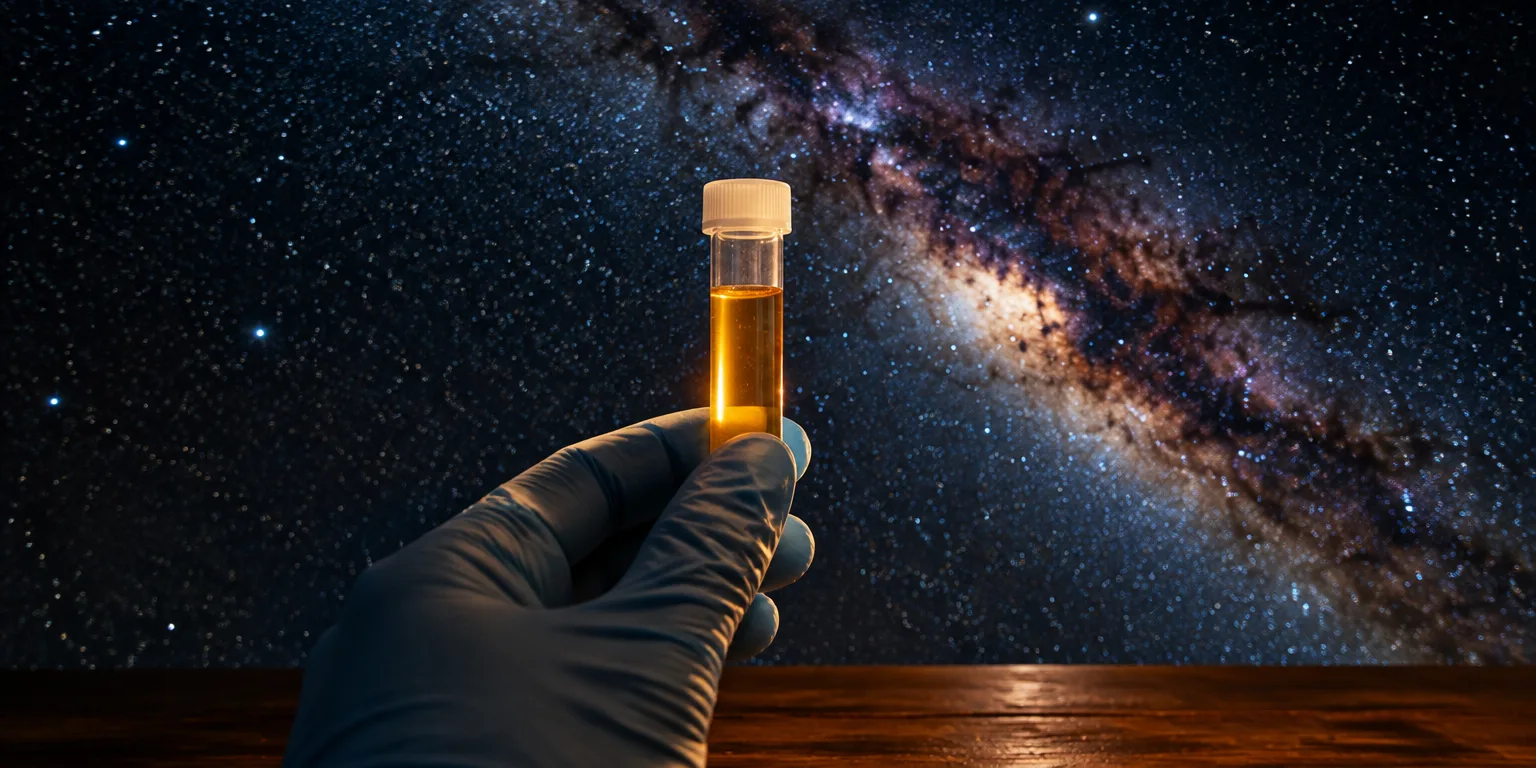
 StarTalk with Neil deGrasse Tyson · Facts for Navigating the Universe with Charles Liu
Physicist Charles Liu compares the population inside us to the population above us: one person's large intestine holds more living microorganisms than there are stars in our home galaxy.
Astrophysicist Neil deGrasse Tyson offered an even tighter comparison: a single centimeter of lower intestine, about four-tenths of an inch, holds more microbes than every human who has ever lived combined.
Comedian Paul Mecurio asked whether human brains can truly grasp the scale of the universe, joking that they evolved for closer problems like spotting a lion that might eat us.
Liu said even our fastest computers cannot track the motion of the microbes moving in one person's gut.
Questions people ask
How many stars does the Milky Way actually have?
Astronomers estimate 100 billion to 400 billion stars, with 200 billion often used as a working figure. The exact count is uncertain because dust blocks parts of the view and many stars are small and dim.
How many microbes live in the human gut?
Researchers commonly estimate around 38 trillion bacteria in an adult body, with most living in the colon. Older ten-to-one claims about microbes outnumbering human cells have been revised to roughly a one-to-one balance.
What are all those gut microbes doing?
Most help digest food, make vitamins, train the immune system, and crowd out harmful germs. Only a small fraction cause disease, and scientists increasingly link the gut community to metabolism, immunity, and mood.