Seawater System Makes Hydrogen For 500 Hours Without Freshwater
The design uses waste heat from electrolysis to purify seawater, offering a way to make fuel without using scarce freshwater.
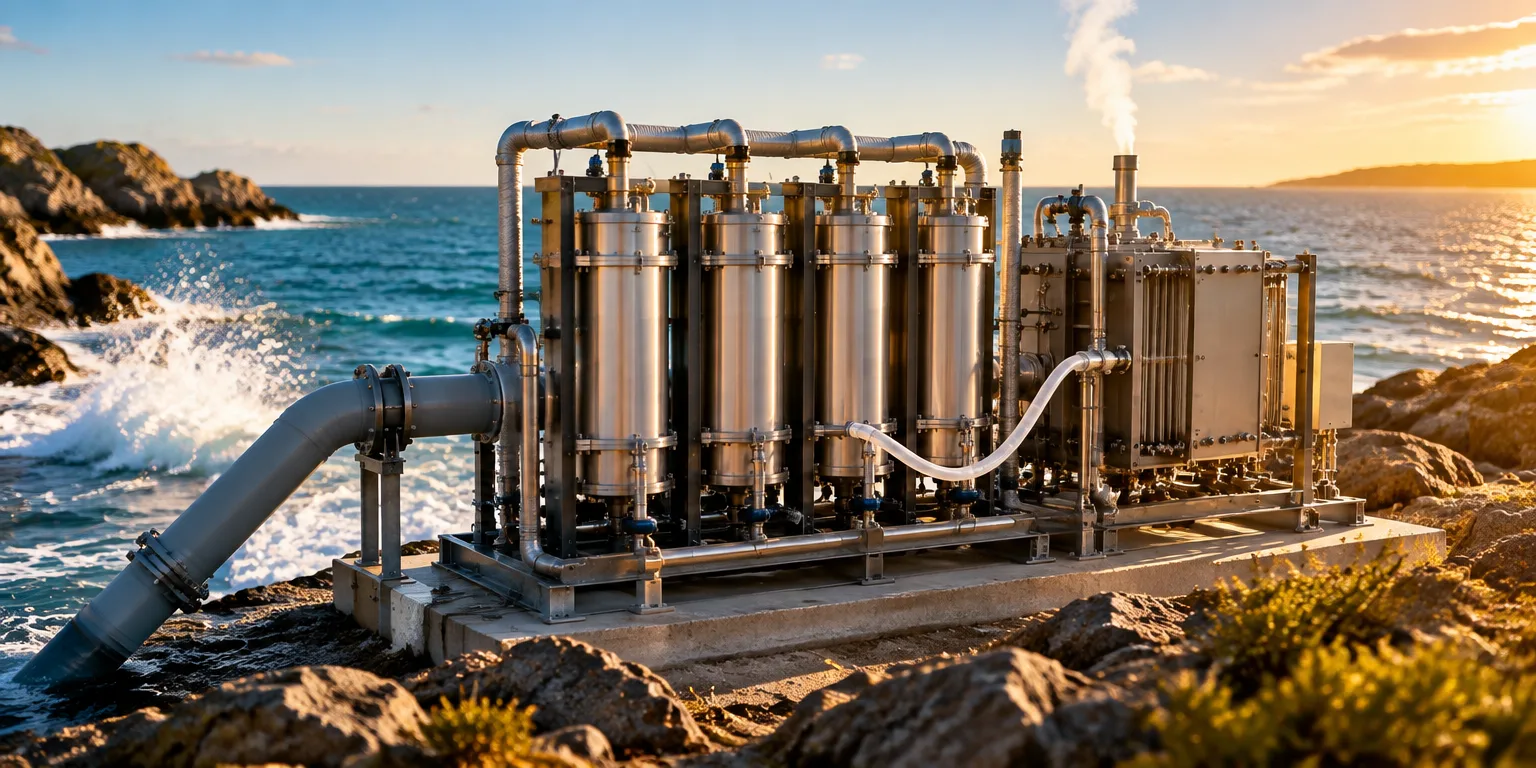
 hkust.edu.hk · Unlocking Clean Fuel with Seawater and Waste Heat | HKUST
A research team led by the Hong Kong University of Science and Technology has built a system that makes hydrogen directly from seawater, according to a study published in Nature Communications.
The result matters because green hydrogen, prized as a low carbon fuel, normally requires large amounts of purified freshwater, a growing problem in a water scarce world.
The project was co-led by Prof. Shang Chii, who teaches in HKUST's civil and environmental engineering department, along with Dr. Gabriela Scheibel Cassol, a postdoctoral researcher in his department who earned her environmental engineering doctorate at the university. They worked with collaborators at Arizona State and at Hong Kong Polytechnic University.
Their system pairs alkaline water electrolysis, an established method that uses electricity to split water into hydrogen and oxygen, with osmotic membrane distillation, a membrane process that pulls fresh water out of seawater. That step supplies the electrolyzer while keeping out harmful salts that can corrode equipment and degrade performance.
The electrolyzer throws off heat as it runs, and the team uses that heat to make the fresh water it needs. The study calls the design thermal symbiosis.
In reported tests, the integrated platform kept out more than 99% of the salts and other dissolved material in seawater and operated stably for 500 continuous hours. “We hope this research can provide valuable insights for the future development of green hydrogen technologies in coastal and water-stressed regions,” said Prof. Shang.
Questions people ask
What is green hydrogen?
Green hydrogen is hydrogen made by splitting water with renewable electricity, so no carbon dioxide is released during production. It can then be used as a fuel or industrial feedstock, but the need for very clean water adds cost and competition with drinking water and farming.
Why can't you just put seawater into an electrolyzer?
Dissolved salts, especially chloride, can corrode electrodes and membranes and trigger unwanted chemical reactions that produce chlorine compounds. Those side reactions lower efficiency and wear out expensive equipment. That is why conventional systems start with purified freshwater.
Is 500 hours of stable operation a lot?
Five hundred hours, or about three weeks of continuous running, is long enough to show that salts are not quickly fouling the membranes and that performance is not rapidly fading. Commercial plants would need to run for years, so this is a durability milestone rather than proof of commercial readiness.