Stamets Says Mushrooms Cut Bunker Oil but Skip Dioxins and Plastics for Better Food
Stamets says the fungi digest oil into sugar, but outdoors they eat other food first and often pass over plastics, dioxins, and other toxins.
 Andrew Huberman · Mushrooms for the Mind & Immune System | Paul Stamets
In a project with Battelle Laboratories, mycologist Paul Stamets said he thought oyster mushroom mycelium had cut bunker oil, the thick fuel burned by ships, from 20,000 parts per million to 200 parts per million in 16 weeks.
That is a cut of about 99 percent. The leftover soil passed state ecology tests for use in freeway landscaping. For oil spills, he says, the result is reproducible and published.
The trick is how fungi eat. Mycelium, the threadlike network that makes mushrooms, digests food outside its body with powerful enzymes.
Stamets describes the process as breaking apart hard to degrade oil chemicals called polycyclic aromatic hydrocarbons, then rebuilding the pieces as fungal sugars.
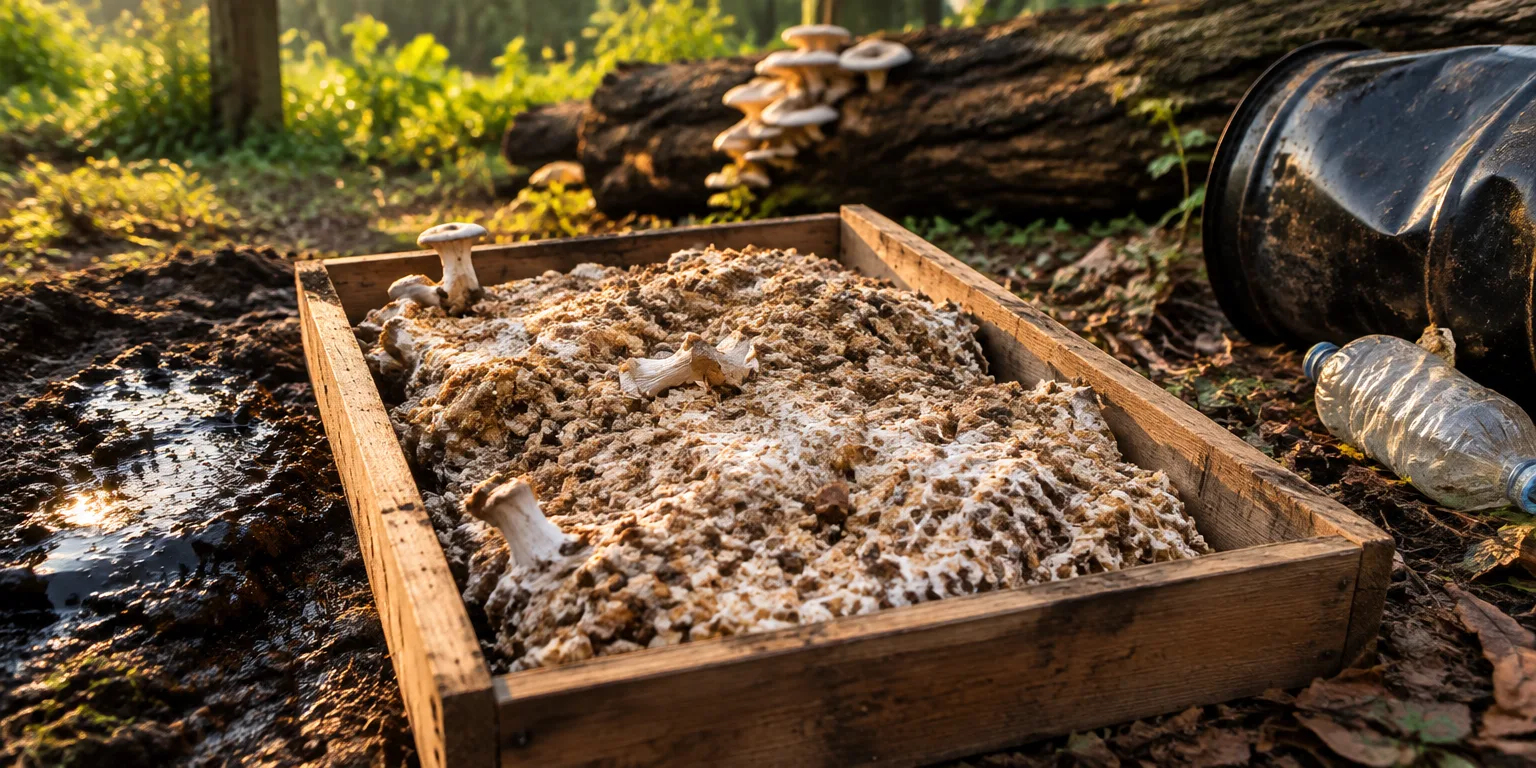
Stamets argues the untapped tool is waste from mushroom farms. After mushrooms are picked, the leftover substrate is still packed with enzymes.
He says the substrate can be milked or compressed for an amber, enzyme rich liquid, then reinflated with water to work again. He proposes reinventing mushroom farms as local remediation supply centers.
The limit is appetite. Stamets says that in a lab dish with nothing else to eat, mycelium will break down dioxins. Outside, faced with what Stamets calls a buffet, it eats tastier foods first.
The same applies to PCBs, industrial chemicals that persist in the environment, and to plastics, which are tightly bonded and not a preferred food. Microplastics are also a tiny part of the available meal.
Stamets points to peer-reviewed examples for what he sees as a more practical use, filtration. He says mycelium can act as a living membrane that captures E. coli and farm runoff before it reaches waterways.
He claims its enzymes can break down pesticides in general and even nerve agents such as VX. Stamets says for radioactive particles, the strategy is different: bind and immobilize them so they do not dissolve into water and enter food.
Questions people ask
What is mycelium?
Mycelium is the main body of a fungus, a dense web of tiny threads that spreads through soil, wood, or compost. A mushroom is only its short-lived fruit, made to release spores. Most feeding and chemical breakdown happen in the mycelium.
What is bunker oil?
Bunker oil is a heavy residual fuel left after refining crude oil into gasoline and diesel. Ships have long burned it because it is cheap and energy dense, but spills are thick, sticky, and rich in toxic hydrocarbons. That is why regulators measure cleanup in parts per million.
How can mycelium filter E. coli if it will not eat plastic?
Filtration is different from digestion. In mycofiltration, layered mycelium or spent compost acts as a physical and biological sieve that traps bacteria as water passes through. It does not need the fungus to prefer the pollutant as food, which is why Stamets sees more promise there than in dioxin or plastic cleanup.
Are mushrooms grown on pollution safe to eat?
No. Mushrooms used for remediation can absorb heavy metals, petroleum residues, and other contaminants. Cleanup material is meant to be treated as contaminated waste or for uses such as landscaping fill after testing, not as food.