Whoever Holds Taiwan Holds China's Door to the Pacific
Control of the island would turn a confined coastal navy into a Pacific force with leverage over Japan, the Philippines, and beyond.
 Uncommon Knowledge · Eyck Freymann on Why Taiwan Matters
Start with a map of the western Pacific, and Taiwan looks small. Its importance comes from where it sits.
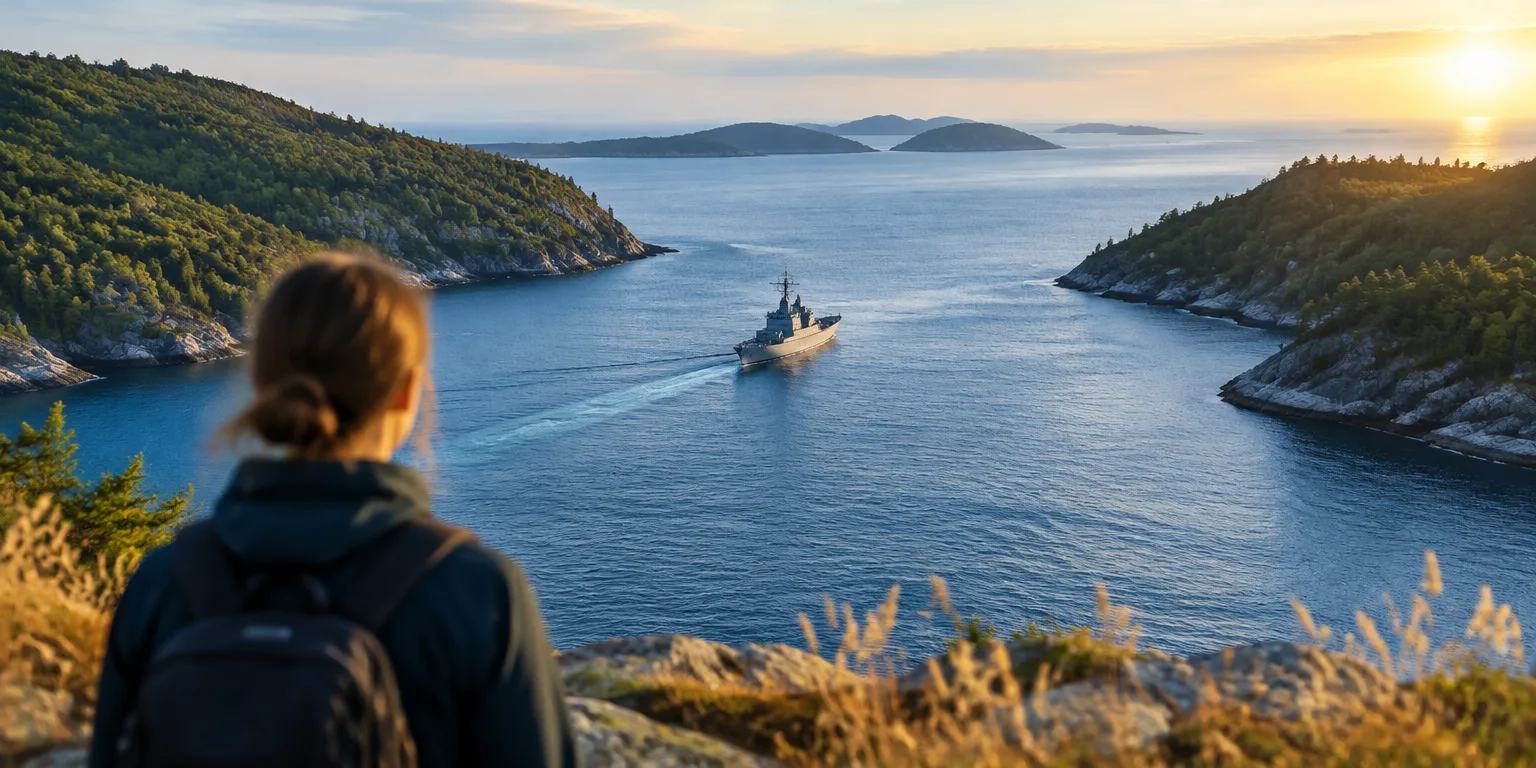
Taiwan lies in the middle of what military planners call the first island chain, a string of islands running from Japan through Taiwan and the Philippines to the South China Sea.
This barrier acts like a fence, says Eyck Freymann, author of a book on defending Taiwan. It largely confines China's navy to shallow waters near its own coast, in the Yellow Sea, the East China Sea, and the South China Sea.
There are only a few navigable openings from those crowded coastal seas into the open Western Pacific. The most important ones lie just north and south of Taiwan.
Freymann puts it this way: "as long as the United States and its partners have this presence there, China's navy is bottled up." If Beijing controlled Taiwan, it could use the island as a forward base.
From there, Chinese naval power could reach around Japan, the Philippines, South Korea, Southeast Asia, and even Australia, much as Japan projected power across the Pacific early in World War II.
That reach would be economic as well as military. With warships astride regional sea lanes, Beijing could threaten to starve out Japan and other American allies, or squeeze them to side with China.
That is why Taiwan, in his argument, is different from Vietnam in the 1960s. Vietnam made little the United States needed and did not affect the naval balance. Taiwan sits on the door to the Pacific.
Questions people ask
What is the difference between China's near seas and the Western Pacific?
The near seas are the Yellow Sea, East China Sea, and South China Sea, relatively shallow waters along China's coast. The Western Pacific is the deep, open ocean beyond the island chain, where navies can move freely toward Japan, the Philippines, Guam, and Hawaii.
Why can't China simply sail around Taiwan or another island?
Warships need deep, wide, and reliably passable straits to move, resupply, and deploy submarines without easy detection. The channels near Taiwan offer that access. Sailing far around the chain would be longer, easier to track, and harder to defend in a conflict.
How does naval position translate into economic pressure?
Japan, South Korea, and Taiwan import much of their energy and food by sea, and their exports also travel by ship. A navy that can patrol or threaten those routes can raise insurance costs, delay shipments, and pressure governments during a crisis without firing a shot.

