Your Own Blood May Ease Arthritic Knee Pain, but There Is No Standard Recipe
Concentrated platelets eased osteoarthritis pain for up to a year in studies, yet dose, timing, and results differ by clinic.
 HEALTH TALK AMERICA · Ask Anything: Your Questions and the Answers Your Doctor Didn't Have Time For
A small vial of a patient's own blood, spun down and injected back into a sore knee, can ease arthritis pain for months.
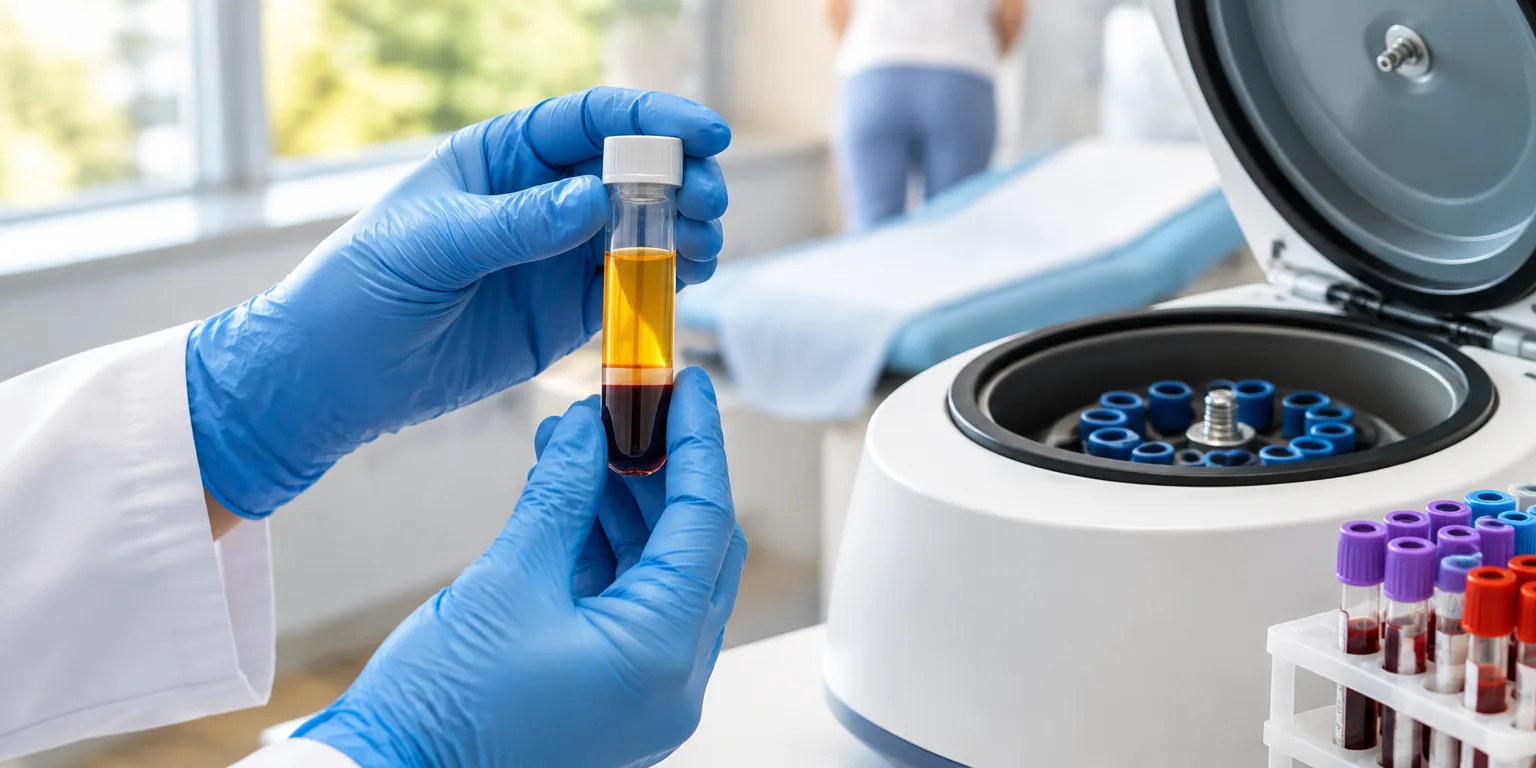
It starts with a blood draw. A centrifuge, a fast spinning machine, separates the blood to concentrate platelets, tiny cell fragments best known for helping blood clot.
Those platelets also carry growth factors, signaling molecules involved in healing. Injecting the concentrated plasma into a joint, tendon, or scalp is meant to deliver a stronger repair signal where it is needed, and because the plasma comes from the same person, allergy is unlikely.
Osteoarthritis, the wear and tear arthritis in which joint cartilage thins with age and use, has the strongest supporting evidence. A combined analysis of 18 trials with nearly 2,000 patients found pain and function gains that exceeded a clinically meaningful difference at one, three, six, and 12 months compared with placebo.
Specialists at Mayo Clinic have noted relief lasting six to 12 months or longer in roughly 60 to 70% of treated patients. After three to six months, the plasma also outperformed two common joint shots, steroids that calm inflammation and hyaluronic acid that lubricates the joint.
The catch is variability. There is no single standard recipe, so how concentrated the platelets are, whether white blood cells are included, and the number and timing of injections differ, along with what can be obtained from each patient. That helps explain why results differ across providers and patients.
Treatment is generally described as safe, with soreness and swelling the most common effects and a small infection risk, as with any injection. Coverage also varies, and it is often not covered by insurance.
Relief from the shots builds over weeks rather than days. Some treatment plans use repeated shots. Keeping muscles strong, weight steady, protein intake adequate, sleep sound, and blood sugar in check help tissues respond to the shots.
Questions people ask
Does PRP rebuild cartilage or just relieve symptoms?
Trials mostly track pain and daily function, not new cartilage, and imaging results have been mixed. Relief likely comes from calming irritation and supporting the joint environment rather than reliably rebuilding cartilage.
Does it work for tendons or hair loss as well as arthritis?
There is also trial support for some tendon problems, such as tennis elbow, and early interest in scalp injections for hair loss. The evidence is less consistent than for knee osteoarthritis, and the best dose and schedule are still being worked out.