
 15 insights saved from this article by @business
- A competitive mindset drives compounding execution because a strong desire to win focuses effort on measurable performance, producing repeated improvements that build sustained advantage.@business· How VCs Think
A competitive mindset drives compounding execution because a strong desire to win focuses effort on measurable performance, producing repeated improvements that build sustained advantage.
- Productive founders favor action over theory because rapid, pragmatic steps generate real feedback and data that enable faster, better-informed iterations than prolonged analysis.@business· How VCs Think
Productive founders favor action over theory because rapid, pragmatic steps generate real feedback and data that enable faster, better-informed iterations than prolonged analysis.
- Extreme, even narcissistic, confidence can help founders because believing you’re destined and capable fuels audacious goals, risk-taking, and the conviction to pursue world-changing work.@business· How VCs Think
Extreme, even narcissistic, confidence can help founders because believing you’re destined and capable fuels audacious goals, risk-taking, and the conviction to pursue world-changing work.
- Speed alone is insufficient because moving fast without direction wastes effort, whereas fast execution aligned to prioritized objectives produces measurable progress that compounds value.@business· How VCs Think
Speed alone is insufficient because moving fast without direction wastes effort, whereas fast execution aligned to prioritized objectives produces measurable progress that compounds value.
- Optimism and reframing matter because treating recurring setbacks as solvable opportunities sustains the persistence and creativity required for decade-long iterative problem-solving.@business· How VCs Think
Optimism and reframing matter because treating recurring setbacks as solvable opportunities sustains the persistence and creativity required for decade-long iterative problem-solving.
- Observed behavior (tone, specificity, follow-through) is more informative than literal answers in interviews because spoken responses can be rehearsed while real-time cues reveal underlying dispositions and likely future actions.@business· How VCs Think
Observed behavior (tone, specificity, follow-through) is more informative than literal answers in interviews because spoken responses can be rehearsed while real-time cues reveal underlying dispositions and likely future actions.
- Early-life signs of independent agency predict founder propensity because self-reliant, initiative-taking childhood behaviors often reflect durable traits like independent thinking and self-teaching that support entrepreneurship later.@business· How VCs Think
Early-life signs of independent agency predict founder propensity because self-reliant, initiative-taking childhood behaviors often reflect durable traits like independent thinking and self-teaching that support entrepreneurship later.
- A systematic, repetitive interview process improves screening for resilience because repeated 'shots on goal' build experience, reveal which questions signal grit, and let you continuously calibrate your judgment.@business· How VCs Think
A systematic, repetitive interview process improves screening for resilience because repeated 'shots on goal' build experience, reveal which questions signal grit, and let you continuously calibrate your judgment.
- Rapid responsiveness signals personal urgency because quick handling of requests reduces delays, sets team expectations, and compounds organizational velocity.@business· How VCs Think
Rapid responsiveness signals personal urgency because quick handling of requests reduces delays, sets team expectations, and compounds organizational velocity.
- Founders should front-load time and intensity early because concentrated effort accelerates product development, learning, and momentum needed to survive initial constraints and competition.@business· How VCs Think
Founders should front-load time and intensity early because concentrated effort accelerates product development, learning, and momentum needed to survive initial constraints and competition.
- Simplicity and focus help founders concentrate resources on high-impact problems because narrowing priorities and systems cuts low-value complexity and speeds progress toward primary objectives.@business· How VCs Think
Simplicity and focus help founders concentrate resources on high-impact problems because narrowing priorities and systems cuts low-value complexity and speeds progress toward primary objectives.
- Prioritizing objective user-behavior metrics and fast development cycles drives compounding product improvement because real customer interactions guide what actually creates value while rapid iterations let teams learn and iterate faster than chasing feature attachment.@business· How VCs Think
Prioritizing objective user-behavior metrics and fast development cycles drives compounding product improvement because real customer interactions guide what actually creates value while rapid iterations let teams learn and iterate faster than chasing feature attachment.
More from Jeff Becker
 The Attention Problem13 insights
 Unapologetic12 insights
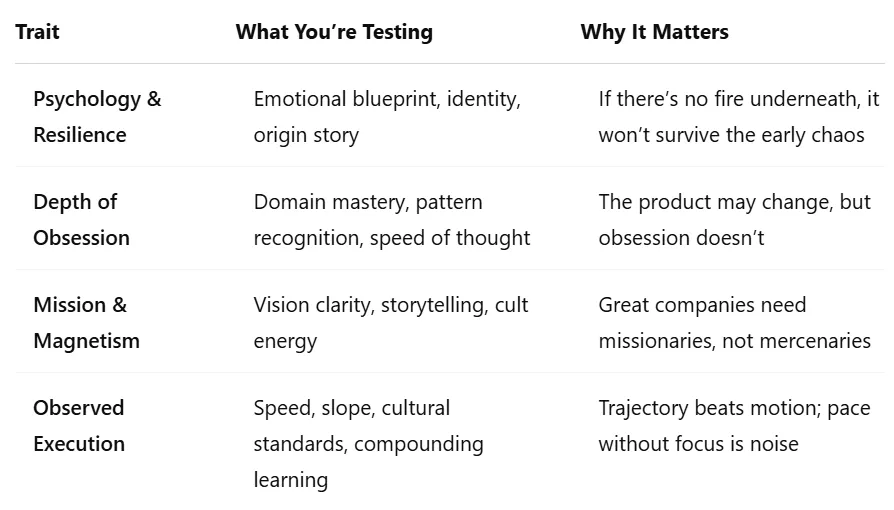 Screening for Maniacs II: The 4-Part Founder Filter9 insights
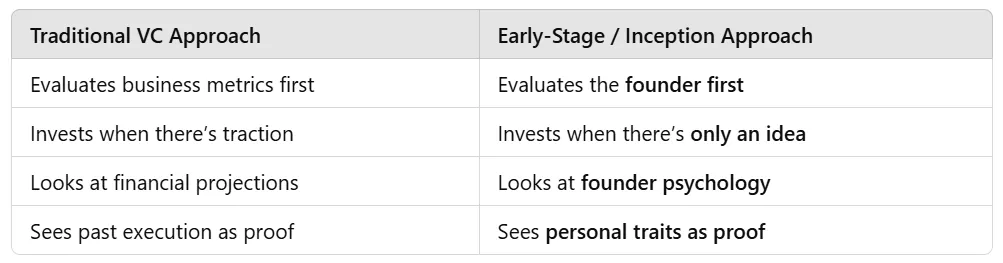 Venture Psychology8 insights
Keep what you found in Screening for Maniacs
A free account saves any of these cards to your Collection, and Korva resurfaces them so you actually remember.