K
Korva
™
Board
Tech & Society
Technology
·
93 insights
·
0 followers
@technology
The timeline, not a fundamental category of mathematics, may be AI’s main remaining obstacle to high-quality mathematical research.
Noah Smith
The end of the age of heroes
Go deeper ✨
@technology
A worthwhile life does not require unique indispensability. Family, friendship, hobbies, civic life, and politics can provide meaning.
Noah Smith
The end of the age of heroes
Go deeper ✨
@technology
If AI makes mathematical discoveries, it threatens the meaning mathematicians attach to discovery, creation, mystery, and human achievement.
Noah Smith
The end of the age of heroes
Go deeper ✨
@technology
AI’s mathematical power could open a golden age for science, freeing researchers from constructing difficult theories to gather and interpret data.
Noah Smith
The end of the age of heroes
Go deeper ✨
@technology
Scientific acceleration estimates range from 1.5× to 100×, but removing mathematics as a bottleneck is the central breakthrough.
Noah Smith
The end of the age of heroes
Go deeper ✨
@technology
Human achievement is usually collective, built by teams, organizations, institutions, and global networks despite individual credit.
Noah Smith
The end of the age of heroes
Go deeper ✨
@technology
Large language models may face a general limit: they cannot yet make the discontinuous conceptual leap called “jumping.”
Noah Smith
The end of the age of heroes
Go deeper ✨
@technology
Daniel Litt conceded he was wrong about AI producing high-quality frontier mathematics and expects it soon.
Noah Smith
The end of the age of heroes
Go deeper ✨
@technology
For now, humans are AI’s edge compute, exploring reality, discovering facts, and feeding lived perspectives back into the system.
Noah Smith
The end of the age of heroes
Go deeper ✨
@technology
AI may produce many correct mathematical results, while humans remain limited by understanding them and choosing worthwhile questions.
Noah Smith
The end of the age of heroes
Go deeper ✨
@technology
AI can eventually remove the single human brain’s bottleneck on understanding, intuiting, and communicating complex ideas.
Noah Smith
The end of the age of heroes
Go deeper ✨
@technology
Humans were always distributed “edge compute,” learning shared knowledge, adding local experience, and returning novelty to the collective.
Noah Smith
The end of the age of heroes
Go deeper ✨
@technology
AI is not merely replacing workers. It is becoming a world-mind integrating human and machine findings into a model of reality.
Noah Smith
The end of the age of heroes
Go deeper ✨
@technology
AI barely changes total employment. It is reallocating leverage across jobs and companies, with gains distributed unevenly.
Alex Lieberman
AI Isn't Killing Jobs. It's Sorting Them.
Go deeper ✨
@technology
AI is mostly reshuffling jobs, not creating or destroying them. That equilibrium is temporary.
Alex Lieberman
AI Isn't Killing Jobs. It's Sorting Them.
Go deeper ✨
@technology
More than half of AI-related roles sit outside core tech, with manufacturing at 21%, alongside finance, education, and healthcare.
Alex Lieberman
AI Isn't Killing Jobs. It's Sorting Them.
Go deeper ✨
@technology
The top 1% of companies spend $7,449 per employee per month on AI. Median companies spend $11.38.
Alex Lieberman
AI Isn't Killing Jobs. It's Sorting Them.
Go deeper ✨
@technology
Only 25% of respondents rated their manager highly effective, while 36% rated their manager ineffective.
Lenny's Podcast
Why the AI’s honeymoon is ending (and tech workers are feeling it) | Noam Segal
Go deeper ✨
@technology
No technology role has net-positive recommendation sentiment. Even founders, the happiest group, would not recommend their role.
Lenny's Podcast
Why the AI’s honeymoon is ending (and tech workers are feeling it) | Noam Segal
Go deeper ✨
@technology
AI-energized employees are not becoming generalists. They are going deep on specific tasks and jobs to be done.
Lenny's Podcast
Why the AI’s honeymoon is ending (and tech workers are feeling it) | Noam Segal
Go deeper ✨
@technology
Teams went from a few pull requests daily to roughly 30, plus more prototypes, PRDs, campaigns, agents, and ads.
Lenny's Podcast
Why the AI’s honeymoon is ending (and tech workers are feeling it) | Noam Segal
Go deeper ✨
@technology
Some AI design problems are tractable. Producing genuinely novel, excellent creative experiences is substantially harder.
Lenny's Podcast
Why the AI’s honeymoon is ending (and tech workers are feeling it) | Noam Segal
Go deeper ✨
@technology
Smaller companies and entrepreneurship offer work environments worth considering when the usual path no longer fits.
Lenny's Podcast
Why the AI’s honeymoon is ending (and tech workers are feeling it) | Noam Segal
Go deeper ✨
@technology
12% are resentful: AI adoption pressures them, leaves them checked out, and still does not prevent job losses.
Lenny's Podcast
Why the AI’s honeymoon is ending (and tech workers are feeling it) | Noam Segal
Go deeper ✨
@technology
The worst-rated managers cluster in design, research, data, and analytics.
Lenny's Podcast
Why the AI’s honeymoon is ending (and tech workers are feeling it) | Noam Segal
Go deeper ✨
@technology
Choose a few problems where AI helps, then go deep. Trying to make AI do everything is a trap.
Lenny's Podcast
Why the AI’s honeymoon is ending (and tech workers are feeling it) | Noam Segal
Go deeper ✨
@technology
Technology is moving in positive directions, even when the findings along the way are difficult.
Lenny's Podcast
Why the AI’s honeymoon is ending (and tech workers are feeling it) | Noam Segal
Go deeper ✨
@technology
The tech industry is in the second inning of a massive shift, and nobody knows the outcome.
Lenny's Podcast
Why the AI’s honeymoon is ending (and tech workers are feeling it) | Noam Segal
Go deeper ✨
@technology
AI-era work is a paradox: unprecedented creative power arrives alongside burnout, fading optimism, and fear of job loss.
Lenny's Podcast
Why the AI’s honeymoon is ending (and tech workers are feeling it) | Noam Segal
Go deeper ✨
@technology
Using AI is not cheating. Learn to leverage it as a capability, especially while the technology keeps improving.
Lenny's Podcast
Why the AI’s honeymoon is ending (and tech workers are feeling it) | Noam Segal
Go deeper ✨
@technology
People drive technological innovation, so attention belongs on the humans building and experiencing the change.
Lenny's Podcast
Why the AI’s honeymoon is ending (and tech workers are feeling it) | Noam Segal
Go deeper ✨
@technology
This survey measures how technology workers feel about their jobs, not whether technology roles are objectively disappearing.
Lenny's Podcast
Why the AI’s honeymoon is ending (and tech workers are feeling it) | Noam Segal
Go deeper ✨
@technology
Forty-one percent are energized by AI, treating it as an expansive playground for building and experimentation.
Lenny's Podcast
Why the AI’s honeymoon is ending (and tech workers are feeling it) | Noam Segal
Go deeper ✨
@technology
AI turns faster work into higher expectations, making every productivity gain the new baseline instead of creating breathing room.
Lenny's Podcast
Why the AI’s honeymoon is ending (and tech workers are feeling it) | Noam Segal
Go deeper ✨
@technology
You can enjoy your current role and still discourage others from entering it, exposing a bleak forecast beneath present satisfaction.
Lenny's Podcast
Why the AI’s honeymoon is ending (and tech workers are feeling it) | Noam Segal
Go deeper ✨
@technology
For technology workers, doing more for the same pay is a bigger fear than losing their jobs to AI.
Lenny's Podcast
Why the AI’s honeymoon is ending (and tech workers are feeling it) | Noam Segal
Go deeper ✨
@technology
Thirty-five percent are conflicted, building more joyfully than ever while fearing their work threatens their careers.
Lenny's Podcast
Why the AI’s honeymoon is ending (and tech workers are feeling it) | Noam Segal
Go deeper ✨
@technology
AI creates “smiling exhaustion”: people feel energized shipping more while relentless speed leaves no off switch.
Lenny's Podcast
Why the AI’s honeymoon is ending (and tech workers are feeling it) | Noam Segal
Go deeper ✨
@technology
Pursuing the future can start with gathering people who cannot stop asking difficult questions and giving them room to develop.
Oana Olteanu
Against Usefulness
Go deeper ✨
@technology
Autonomous agents now dominate computing’s learning landscape, drawing the field’s most-read and most-searched material.
Oana Olteanu
Against Usefulness
Go deeper ✨
@technology
Early funders of paradigm work buy a position in a future markets cannot yet price.
Oana Olteanu
Against Usefulness
Go deeper ✨
@technology
CDG stayed deliberately obscure, protecting deep work from the attention and pressure that visibility brings.
Oana Olteanu
Against Usefulness
Go deeper ✨
@technology
At CDG, uninterrupted silence became a form of trust, protecting researchers’ long-term thinking from routine interruption.
Oana Olteanu
Against Usefulness
Go deeper ✨
@technology
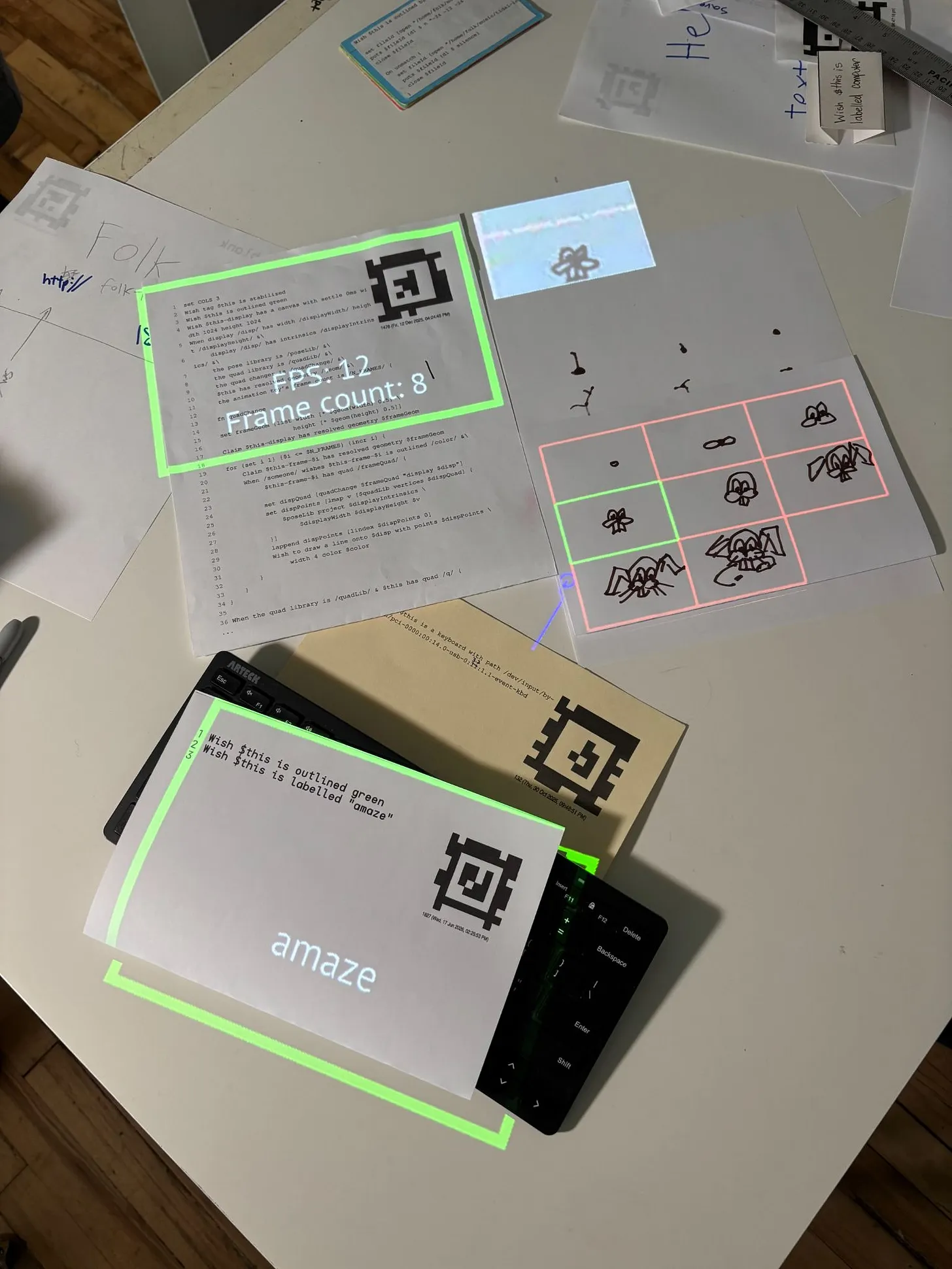
Ceiling cameras and projectors map physical objects and surfaces into Folk Computer’s shared computational environment.
Oana Olteanu
Against Usefulness
Go deeper ✨
@technology
Independent thinkers pursue unfashionable questions for years, challenge obvious approaches, build openly, reject hype, and measure progress in decades.
Oana Olteanu
Against Usefulness
Go deeper ✨
@technology
Foundational work often starts before a company exists. Support it with a check, grant, contract, room, or useful introduction.
Oana Olteanu
Against Usefulness
Go deeper ✨
@technology
Open-sourcing paradigm research turns a visitor demonstration into a system people worldwide can reproduce, modify, and extend.
Oana Olteanu
Against Usefulness
Go deeper ✨
@technology
Paradigm work has always needed patrons. Markets cannot price research that begins intentionally useless.
Oana Olteanu
Against Usefulness
Go deeper ✨
@technology
Every useful company stands on rails that were once somebody’s stubbornly useless research.
Oana Olteanu
Against Usefulness
Go deeper ✨
@technology
Folk Computer makes paper programs executable: edit one with a keyboard, then remove the keyboard and it keeps running.
Oana Olteanu
Against Usefulness
Go deeper ✨
@technology
Technology needs a design renaissance that optimizes for time well spent and user empowerment, not screen time.
TED
How a handful of tech companies control billions of minds every day | Tristan Harris
Go deeper ✨
@technology
A platform could move a controversial online exchange toward an in-person dinner, preserving discussion in a more constructive setting.
TED
How a handful of tech companies control billions of minds every day | Tristan Harris
Go deeper ✨
@technology
Platforms become better at keeping people hooked when recommendations optimize only for the most interesting next item.
TED
How a handful of tech companies control billions of minds every day | Tristan Harris
Go deeper ✨
@technology
Snapstreaks turn consecutive days of communication into something users feel they cannot afford to lose.
TED
How a handful of tech companies control billions of minds every day | Tristan Harris
Go deeper ✨
@technology
Modern platforms let psychologically informed engineers deliberately orchestrate user behavior at enormous scale.
TED
How a handful of tech companies control billions of minds every day | Tristan Harris
Go deeper ✨
@technology
Attention competition creates a race to the bottom. Platforms provoke outrage and deeper neurological reactions to win more attention.
TED
How a handful of tech companies control billions of minds every day | Tristan Harris
Go deeper ✨
@technology
Algorithms often optimize for instinctive clicks instead of preferences people endorse after reflecting on what they truly care about.
TED
How a handful of tech companies control billions of minds every day | Tristan Harris
Go deeper ✨
@technology
Technology is not neutral: competition for attention pushes products toward primitive, powerful psychological triggers.
TED
How a handful of tech companies control billions of minds every day | Tristan Harris
Go deeper ✨
@technology
Persuasive-technology training teaches covert techniques for capturing attention and orchestrating behavior, while most people do not know those techniques exist.
TED
How a handful of tech companies control billions of minds every day | Tristan Harris
Go deeper ✨
@technology
An engagement-optimized newsfeed favors outrage over calm content without anyone making a conscious editorial decision.
TED
How a handful of tech companies control billions of minds every day | Tristan Harris
Go deeper ✨
@technology
Advertising-funded platforms let paying actors target lies at the groups most susceptible to them.
TED
How a handful of tech companies control billions of minds every day | Tristan Harris
Go deeper ✨
@technology
Some teenagers send photos of walls or ceilings simply to preserve Snapchat streaks.
TED
How a handful of tech companies control billions of minds every day | Tristan Harris
Go deeper ✨
@technology
Teenagers have given Snapchat passwords to as many as five friends so streaks survive their vacations.
TED
How a handful of tech companies control billions of minds every day | Tristan Harris
Go deeper ✨
@technology
AI companies support oversight and checkpoints, but not government control over model development.
All-In Podcast
Can the AI Industry Regulate Itself? Stripe Wants PayPal, China Catches Up, NY Bans Datacenters
Go deeper ✨
@technology
Self-driving regulation shows how state sovereignty can make states, rather than Washington, decisive in setting AI rules.
All-In Podcast
Can the AI Industry Regulate Itself? Stripe Wants PayPal, China Catches Up, NY Bans Datacenters
Go deeper ✨
@technology
GPUs will chase energy. Compute capacity is moving toward wherever sufficient power can be secured.
All-In Podcast
Can the AI Industry Regulate Itself? Stripe Wants PayPal, China Catches Up, NY Bans Datacenters
Go deeper ✨
@technology
Aging stiffens the extracellular matrix when sugars and fats bind proteins, making tissue stickier, harder to repair, and inflammatory.
All-In Podcast
Can the AI Industry Regulate Itself? Stripe Wants PayPal, China Catches Up, NY Bans Datacenters
Go deeper ✨
@technology
An AI SRO could bring in independent experts to test cyber, biological, weapons, and social-manipulation risks as needed.
All-In Podcast
Can the AI Industry Regulate Itself? Stripe Wants PayPal, China Catches Up, NY Bans Datacenters
Go deeper ✨
@technology
Employees should bring only personal knowledge and memory to a new job, never files, devices, documents, or company information.
All-In Podcast
Can the AI Industry Regulate Itself? Stripe Wants PayPal, China Catches Up, NY Bans Datacenters
Go deeper ✨
@technology
Self-regulatory organizations let industries write and enforce specialized rules under government oversight, adapting faster than traditional regulators.
All-In Podcast
Can the AI Industry Regulate Itself? Stripe Wants PayPal, China Catches Up, NY Bans Datacenters
Go deeper ✨
@technology
China reportedly paused self-driving car permits after successful deployment produced job losses and civil unrest.
All-In Podcast
Can the AI Industry Regulate Itself? Stripe Wants PayPal, China Catches Up, NY Bans Datacenters
Go deeper ✨
@technology
Engineers reach for the newest AI model. CFOs pay for every token and often want the cheaper model that works.
All-In Podcast
Can the AI Industry Regulate Itself? Stripe Wants PayPal, China Catches Up, NY Bans Datacenters
Go deeper ✨
@technology
Behind-the-meter power lets data centers avoid competing with households and turns AI companies partly into power companies.
All-In Podcast
Can the AI Industry Regulate Itself? Stripe Wants PayPal, China Catches Up, NY Bans Datacenters
Go deeper ✨
@technology
The UAE can import the best leading-edge chips again, reviving its appeal as a data-center destination.
All-In Podcast
Can the AI Industry Regulate Itself? Stripe Wants PayPal, China Catches Up, NY Bans Datacenters
Go deeper ✨
@technology
AlphaFold was used to discover and evolve a therapeutic, then drive its development in biotechnology.
All-In Podcast
Can the AI Industry Regulate Itself? Stripe Wants PayPal, China Catches Up, NY Bans Datacenters
Go deeper ✨
@technology
Glycation is not visceral fat. It is sugar and fat binding to proteins outside your cells.
All-In Podcast
Can the AI Industry Regulate Itself? Stripe Wants PayPal, China Catches Up, NY Bans Datacenters
Go deeper ✨
@technology
If the United States imposes FAA-style AI approval, China could ignore the rules and win the AI race.
All-In Podcast
Can the AI Industry Regulate Itself? Stripe Wants PayPal, China Catches Up, NY Bans Datacenters
Go deeper ✨
@technology
Frontier oversight should target only models that advance the state of the art, not less capable models.
All-In Podcast
Can the AI Industry Regulate Itself? Stripe Wants PayPal, China Catches Up, NY Bans Datacenters
Go deeper ✨
@technology
OpenAI published “PRC linked influence operations are targeting AI debates in the US,” prompting coverage and a planned congressional investigation.
All-In Podcast
Can the AI Industry Regulate Itself? Stripe Wants PayPal, China Catches Up, NY Bans Datacenters
Go deeper ✨
@technology
Demis Hassabis proposed a US-led international AI standards body modeled on FINRA, federally overseen, industry-funded, and run by independent technical experts.
All-In Podcast
Can the AI Industry Regulate Itself? Stripe Wants PayPal, China Catches Up, NY Bans Datacenters
Go deeper ✨
@technology
Stripe, Advent, and Block reportedly offered to acquire PayPal, with Block contributing $17 billion in equity.
All-In Podcast
Can the AI Industry Regulate Itself? Stripe Wants PayPal, China Catches Up, NY Bans Datacenters
Go deeper ✨
@technology
Stripe’s merchants and PayPal’s consumers could create enough scale to run transactions end to end on proprietary rails, bypassing card networks.
All-In Podcast
Can the AI Industry Regulate Itself? Stripe Wants PayPal, China Catches Up, NY Bans Datacenters
Go deeper ✨
@technology
A 3 to 5 percent merchant discount could make switching payment rails economically obvious, even if consumers never choose the combined product.
All-In Podcast
Can the AI Industry Regulate Itself? Stripe Wants PayPal, China Catches Up, NY Bans Datacenters
Go deeper ✨
@technology
Combining Stripe, Block, and PayPal could create a global Visa and Mastercard competitor with hundreds of millions of accounts.
All-In Podcast
Can the AI Industry Regulate Itself? Stripe Wants PayPal, China Catches Up, NY Bans Datacenters
Go deeper ✨
@technology
Mental hygiene means recognizing your brain’s weak spots before emotionally triggering thoughts take hold.
CGP Grey
This Video Will Make You Angry
Go deeper ✨
@technology
The Internet turns ideas into evolutionary experiments: copying changes them, and improvements in appeal earn more sharing.
CGP Grey
This Video Will Make You Angry
Go deeper ✨
@technology
A joke is a thought germ living in your brain, then reproducing when you share it.
CGP Grey
This Video Will Make You Angry
Go deeper ✨
@technology
The “with us or against us” frame erases neutrality, intensifies division, and strengthens both opposing camps.
CGP Grey
This Video Will Make You Angry
Go deeper ✨
@technology
Every social media post is a mental sneeze seeking enough attention to make you pass it on.
CGP Grey
This Video Will Make You Angry
Go deeper ✨
@technology
Opposing ideas can feed each other: each side supplies opponents, attention, and fresh material for the other side’s spread.
CGP Grey
This Video Will Make You Angry
Go deeper ✨
@technology
The Internet can make jokes better while making angry ideas more aggravating and more competitive with accurate, boring alternatives.
CGP Grey
This Video Will Make You Angry
Go deeper ✨
@technology
Each side builds an exaggerated version of the other, and the most enraging version spreads fastest.
CGP Grey
This Video Will Make You Angry
Go deeper ✨
@technology
Agreement can kill an idea’s momentum. Opposition keeps attention alive, and visible conflict attracts bystanders into the loop.
CGP Grey
This Video Will Make You Angry
Go deeper ✨
Keep what matters
Save insights to your own Boards and return to them anytime.
Create your Korva account