Korva is a scroll of the internet’s best ideas.
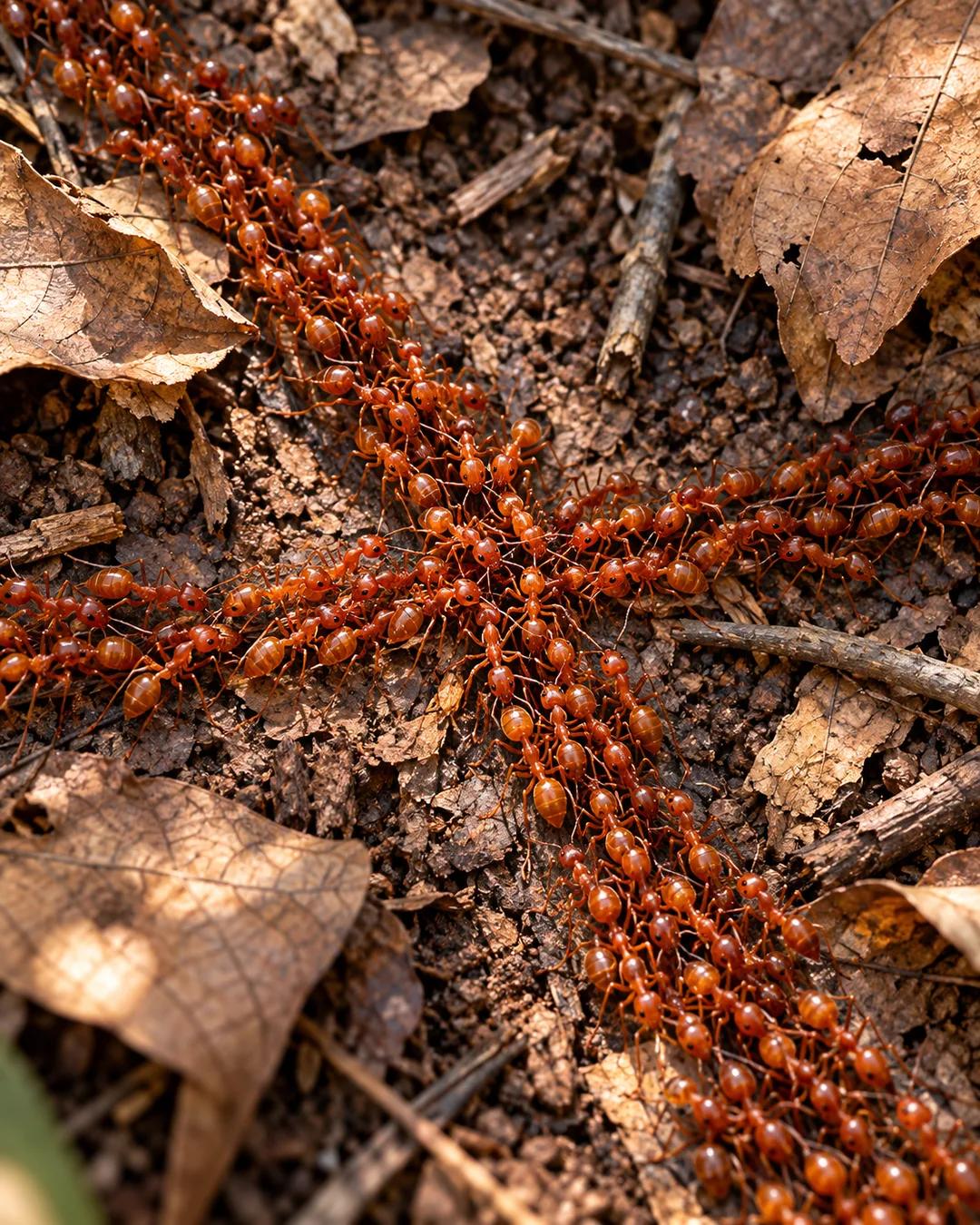
Army ants never fight army ants
The logic is evolutionary. Army ants act as a social unit and overwhelm their victims with sheer numbers, which makes them some of the deadliest ants alive. If they turned that force on each other, the lineages that did so probably eradicated themselves millions of years ago, leaving only the ones that ignore their own kind.
Everything else is fair game. Some army ants specialize in hunting other social insects, especially other ants, and a colony that meets another ant colony attacks at once. Invasions tend to be won by the attackers, and the victim colony is badly damaged or exterminated.
How do ants tell friend from enemy?
Ants coat their bodies in waxy chemicals called cuticular hydrocarbons, and each colony carries its own blend. Nestmates compare the scent on a passing ant with the blend they carry, and a mismatch triggers aggression. The blend comes partly from genes and partly from diet and environment, so it shifts over time and the colony constantly refreshes it by sharing food and grooming.
Why do ants of the same species fight so often?
Colonies of the same species want the same food and the same ground, so they are each other's closest competitors. Argentine ants show this clearly: a 2002 study by Giraud and colleagues found that in Europe and California, enormous supercolonies of them battle along their borders. Fights along those borders can leave piles of dead workers. The ones that avoid fighting are colonies that share the same chemical signature.
More from Kurzgesagt – In a Nutshell