Korva is a scroll of the internet’s best ideas.

Ask about their mom
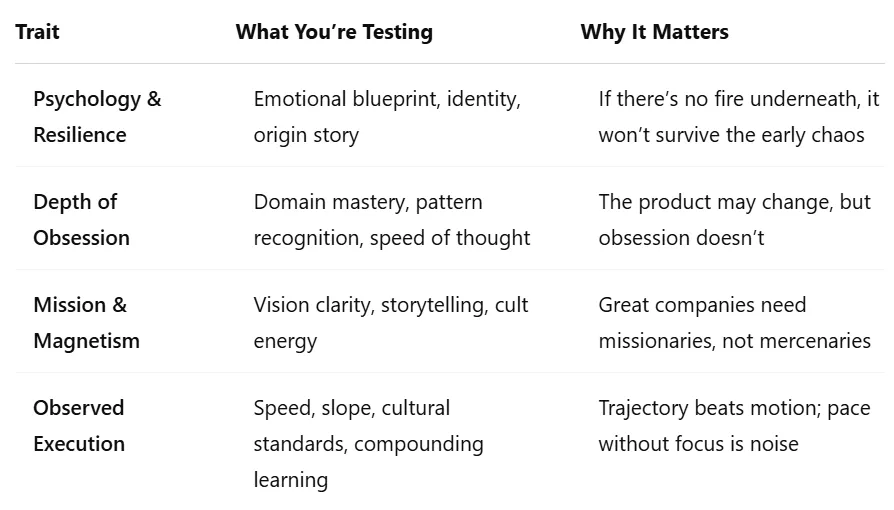
The question
The question opens a window onto emotional source code. It shows whether the person has always been a little different, whether they are chasing a feeling, and what shaped their internal narrative.
Strong answers
Strong answers carry early agency, competition, and a sense of identity taking shape. They often include hardship that the founder navigated, proof of commitment, and friction turned into fuel for optimism.
The weak answer
The weak answer is balanced, neutral, and generic. If the response isn't memorable, the founder probably isn't either.
Why do life stories reveal character?
Psychologist Dan McAdams of Northwestern University developed the idea of narrative identity. In his research, people build an internal life story from memories, and that story shapes how they see themselves and what they do next. Two people with similar histories can tell very different stories about them. The way a person frames an event often says more than the event itself.
How does hardship become fuel?
McAdams has studied what he calls redemption sequences, stories in which a bad event leads to a good outcome. People who tell their lives this way tend to score higher on measures of well-being and sense of purpose. The pattern shows up in interviews where adults describe low points and what came after. Researchers treat it as a feature of the story a person tells, separate from what actually happened.
Why does a casual question beat a rehearsed one?
Prepared answers are stored in memory as a script, so a familiar question pulls up the script. An unexpected question has no script, and the person has to construct an answer on the spot. Cognitive psychologists have long found that unrehearsed recall draws on real memories and associations. A question about family asks for a memory instead of a pitch.
More from Jeff Becker