Korva is a scroll of the internet’s best ideas.
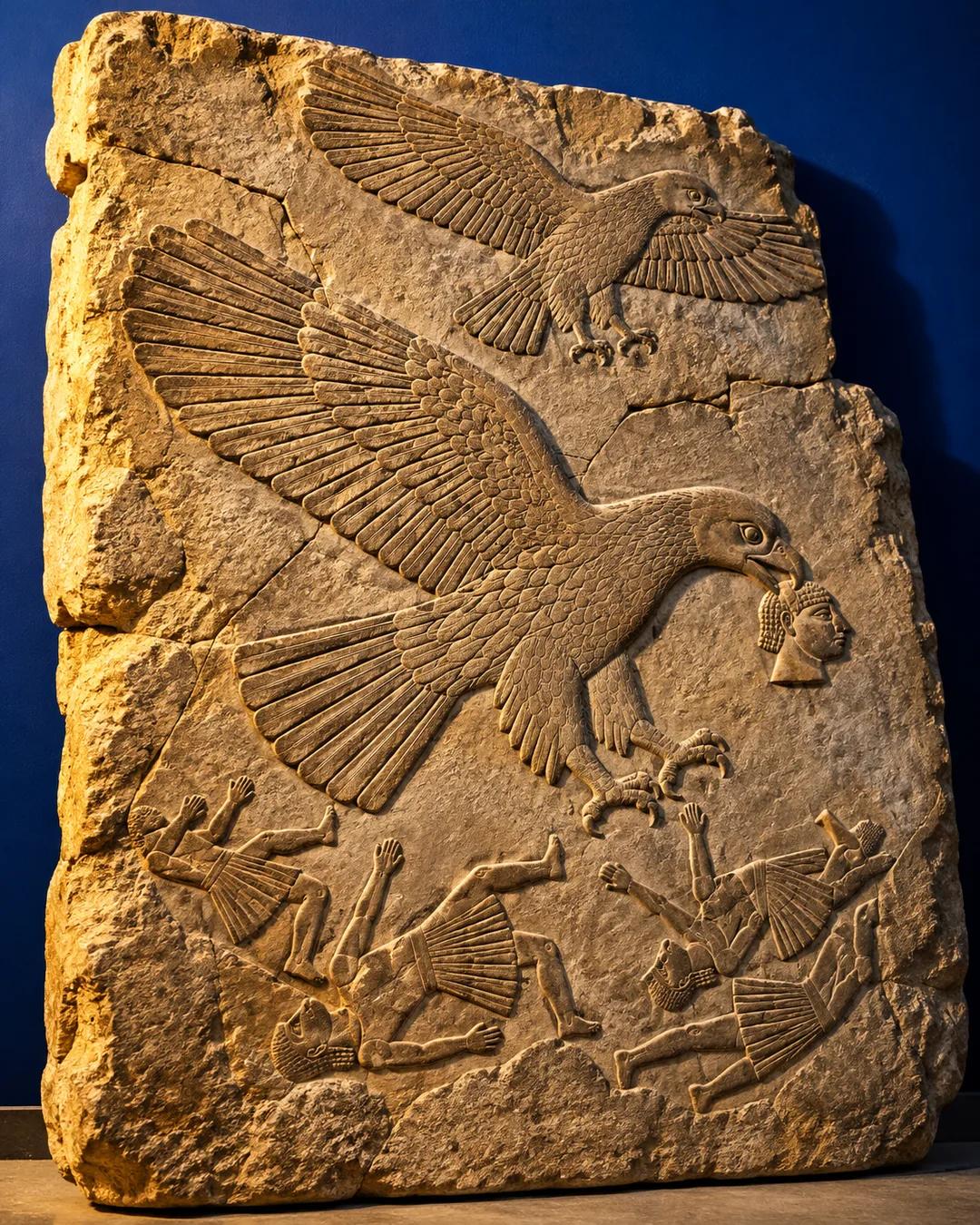
Eagles carrying severed heads
The War Over Farmland
The two cities fought over a plot of farmland along the river. The king of Lagash, Eannatum, led his soldiers into battle in leather helmets and skirts, with spears on their shoulders that were probably tipped with copper or bronze and flashed red in the sun. At one point he got out of his chariot and advanced on foot with his men in a tight formation behind broad shields. An arrow hit him in the eye, and he lived to see his army win. His inscription records the Umma dead at 3,600 bodies.
The Monument
On the monument, the fleeing soldiers of Umma are blocked by Lagash soldiers and trampled. Eagles overhead carry heads in their beaks, pulling out tongues and eyes. Lagash went on to conquer much of southern Mesopotamia, in what some historians call the first true empire in the world, ruled through a campaign of terror that made it hated.
Umma Strikes Back
Revolts broke out. The ruler of the humiliated city of Umma, Lugalzagesi, rebelled against Lagash, overthrew kings loyal to it in Kish and Larsa, then took Ur and Uruk and moved his capital to Uruk. He marched on Lagash itself, stormed its walls, destroyed the city, and burned it to the ground.
Where did this monument end up?
The monument is known as the Stele of the Vultures. Its fragments were found at Tello, the site of ancient Girsu, by the French excavator Ernest de Sarzec in the 1880s. They are now in the Louvre in Paris.
How did Eannatum settle the border dispute?
His inscription describes a boundary ditch and a boundary monument set up along the disputed land. Umma's ruler swore oaths to the gods to honor the border and was made to pay a heavy tribute of barley. The disputed strip of farmland was called Gu'edena. Lagash and Umma kept fighting over it for generations.
What did Lagash's scribes write after the burning?
A text from the reign of Urukagina, Lagash's last ruler, lists the temples that Umma's forces looted and burned. It lays the blame for the sacrilege on Lugalzagesi rather than on the city of Umma. Urukagina is also known for reform texts that record the earliest known attempt to cut back corrupt officials and heavy taxes.
More from Fall of Civilizations