Korva is a scroll of the internet’s best ideas.
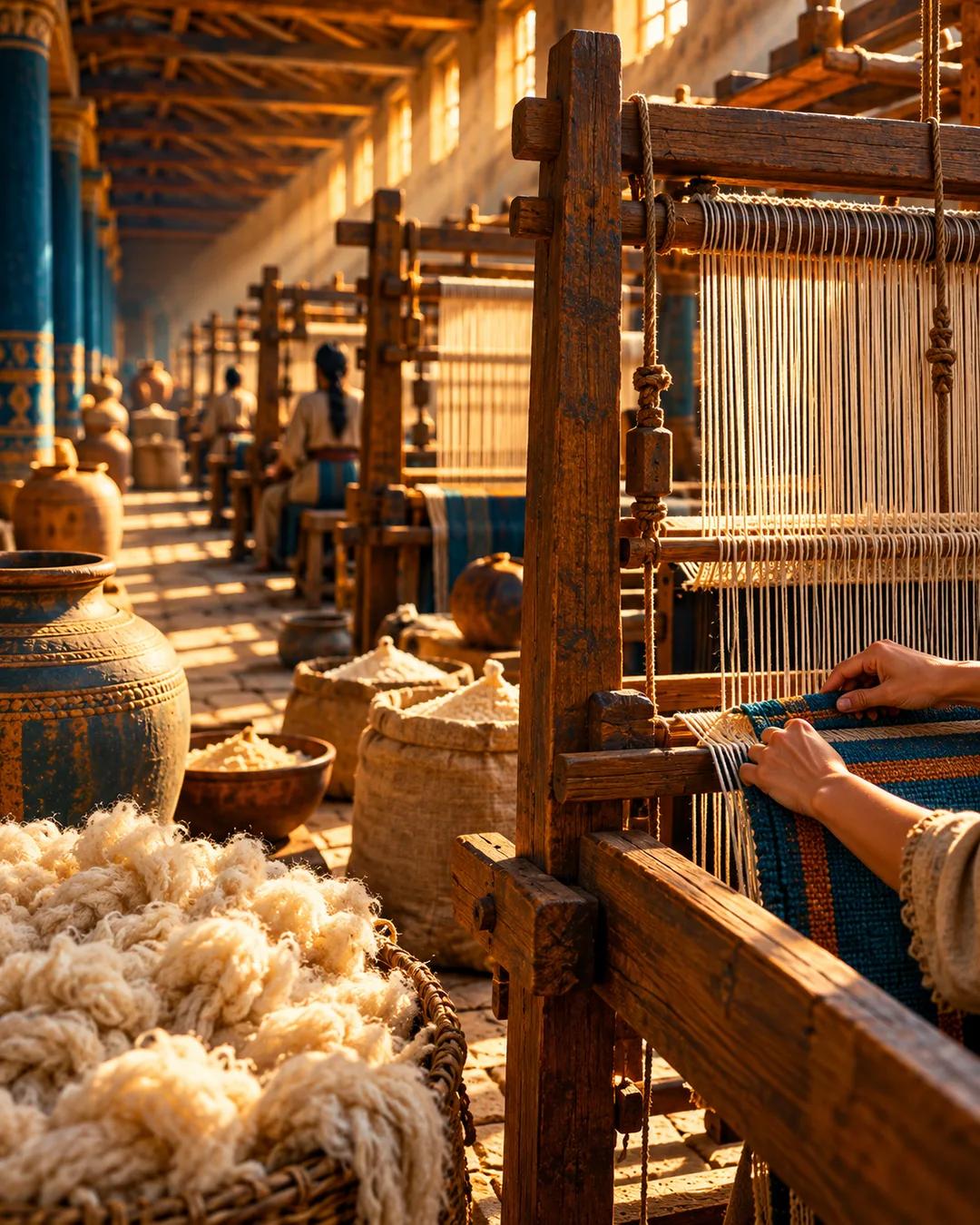
Girsu employed 15,000 women
That factory also made bread, beer, and linseed oil, and employed 134 specialists and 858 skilled workers, the vast majority of them women. With no currency, workers were paid directly in food and goods. The minimum wage for an unskilled worker was 20 liters of barley a month, plus 2 liters of oil and 2 kilos of wool a year. Their supervisor earned almost double.
The poor were oppressed and often had to borrow food or silver from lenders at interest rates as high as 30 percent. Meanwhile the fast potter's wheel let intensive workshops turn out clay jars and pots in huge numbers. The quality fell from the painted pottery of the Ubaid period, which had been a luxury for the select few, and the first era of mass production began.
Why did women run the textile industry?
Weaving was regarded as women's work across Mesopotamia, and the state ran large workshops that employed thousands of female weavers and their children. Archives from the Third Dynasty of Ur record textile workshops on a vast scale. Wool textiles were among Mesopotamia's chief exports in later periods, as in the Old Assyrian trade with Anatolia.
How did the fast potter's wheel work?
A fast wheel is a heavy turntable that a potter spins by hand or foot while shaping the clay. The speed lets the potter throw a symmetrical vessel in minutes. Earlier slow turntables were only used to help finish coil-built pots. Uruk-period sites are also full of crude, mold-made bevelled-rim bowls produced in vast numbers.
How were interest rates set in Mesopotamia?
In later Babylonian law, the customary rates were 20 percent a year on silver and about 33 percent on grain. Debts often ballooned until borrowers lost land or family members to bondage. Kings sometimes proclaimed edicts cancelling debts, as Ammi-saduqa of Babylon did in the 17th century BC.
More from Fall of Civilizations