Korva is a scroll of the internet’s best ideas.
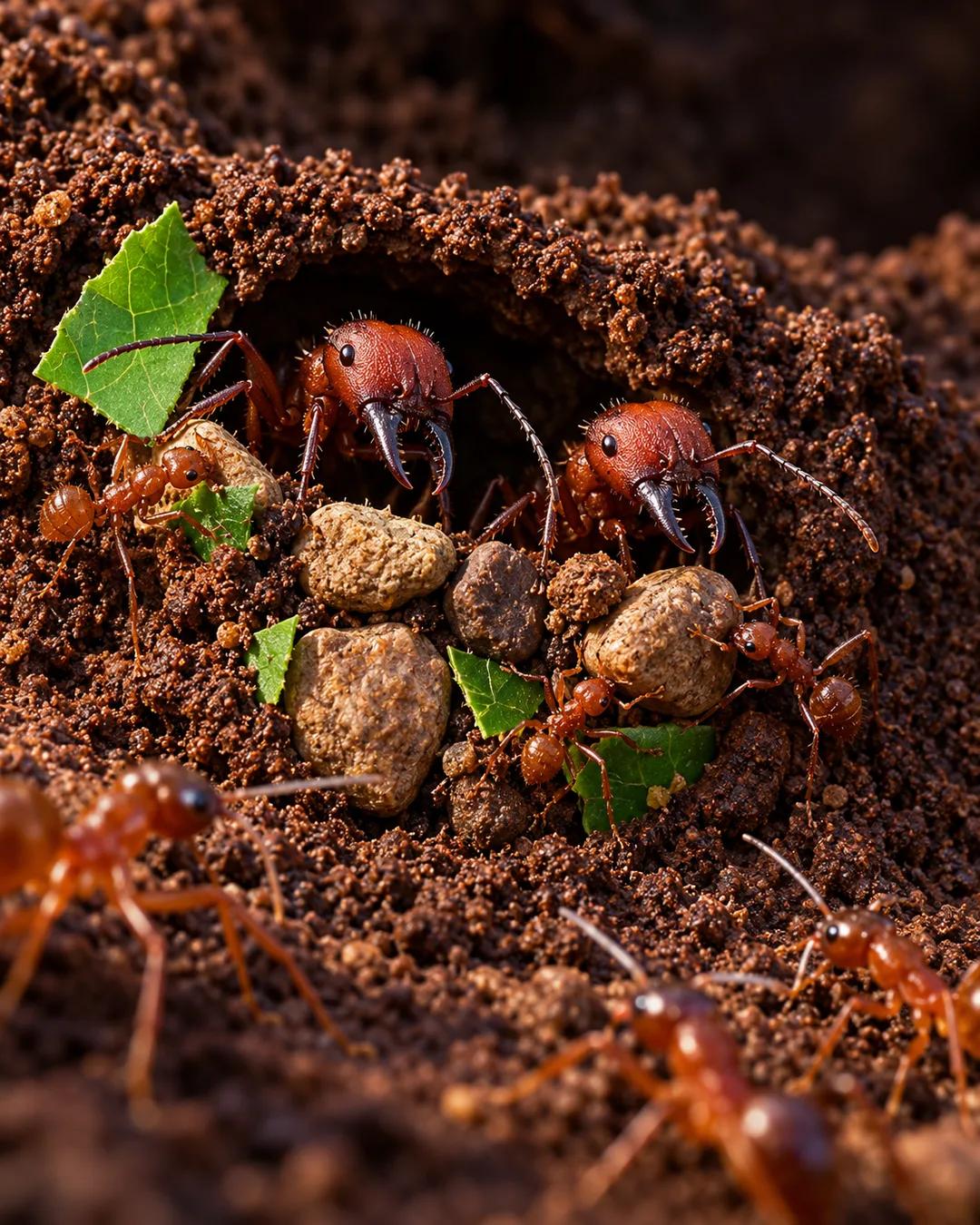
Leafcutters barricade against army ants

The only attacker
That species, Nomamyrmex esenbeckii, feeds mostly on the larvae of other ants, and its soldier caste is more robust than in other army ants. Its targets live in nests many meters deep and across, with millions of citizens and a sophisticated division of labor. Their soldiers are 100 times more massive than a worker, and their sole purpose might be to defend the colony against army ants.
The frontline
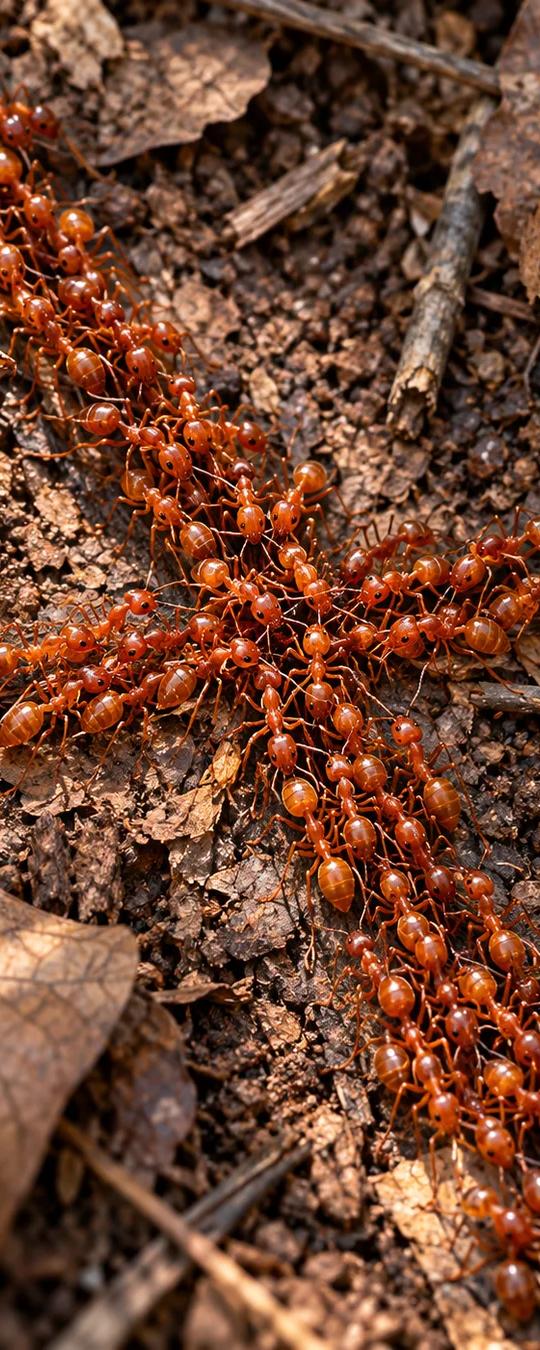
The moment the leafcutters notice the attack, they go into crisis mode and alert their soldiers, who swarm to the site. A frontline develops, a few meters wide and up to a meter deep. Soldiers lock onto the army ants and try to cut through their heads, smaller workers grab the enemies, and small teams behind the line dismember them by ripping their legs from their bodies. The attackers swarm the soldiers and sting them to death in a mob.
Barricades and losses
The army ants still have the numbers, and the leafcutters cannot know whether the battle can be won. Workers rush to build barricades and seal off as many nest entrances as they can. If the defense fails and too few entrances are blocked in time, the invaders penetrate deep into the hidden chambers and steal tens of thousands of brood to eat. Even if the colony survives, it takes a heavy blow, and thousands lie slain on the battlefield whoever wins.
Why are leafcutter soldiers so much bigger than workers?
Leafcutter colonies produce workers in a wide range of sizes, and the size differences are among the most extreme in the ant world. The largest soldiers carry oversized heads packed with muscle that drives the jaws, which lets them slice through the armored bodies of other insects. Smaller workers handle jobs like tending brood and gardening, so each size class does the work its body suits best.
How do leafcutters feed millions of ants underground?
Leafcutters do not eat the leaves they carry. They chew the leaf pieces into a mulch and use it to grow a fungus, Leucoagaricus gongylophorus, in chambers inside the nest. The ants feed on nutrient-rich structures the fungus produces, and the fungus depends on the ants for fresh plant material. Researchers have traced this partnership back tens of millions of years.
Why do army ants go after other ants' larvae?
Larvae are packed with protein and fat, and they cannot run or fight back. For an army ant colony with a huge number of its own larvae to feed, a stolen brood is a dense and easy meal. Raiding ant nests this way is a specialty of several army ant species, and the hunting is aimed at the brood far more than at the adults.
More from Kurzgesagt – In a Nutshell