Korva is a scroll of the internet’s best ideas.
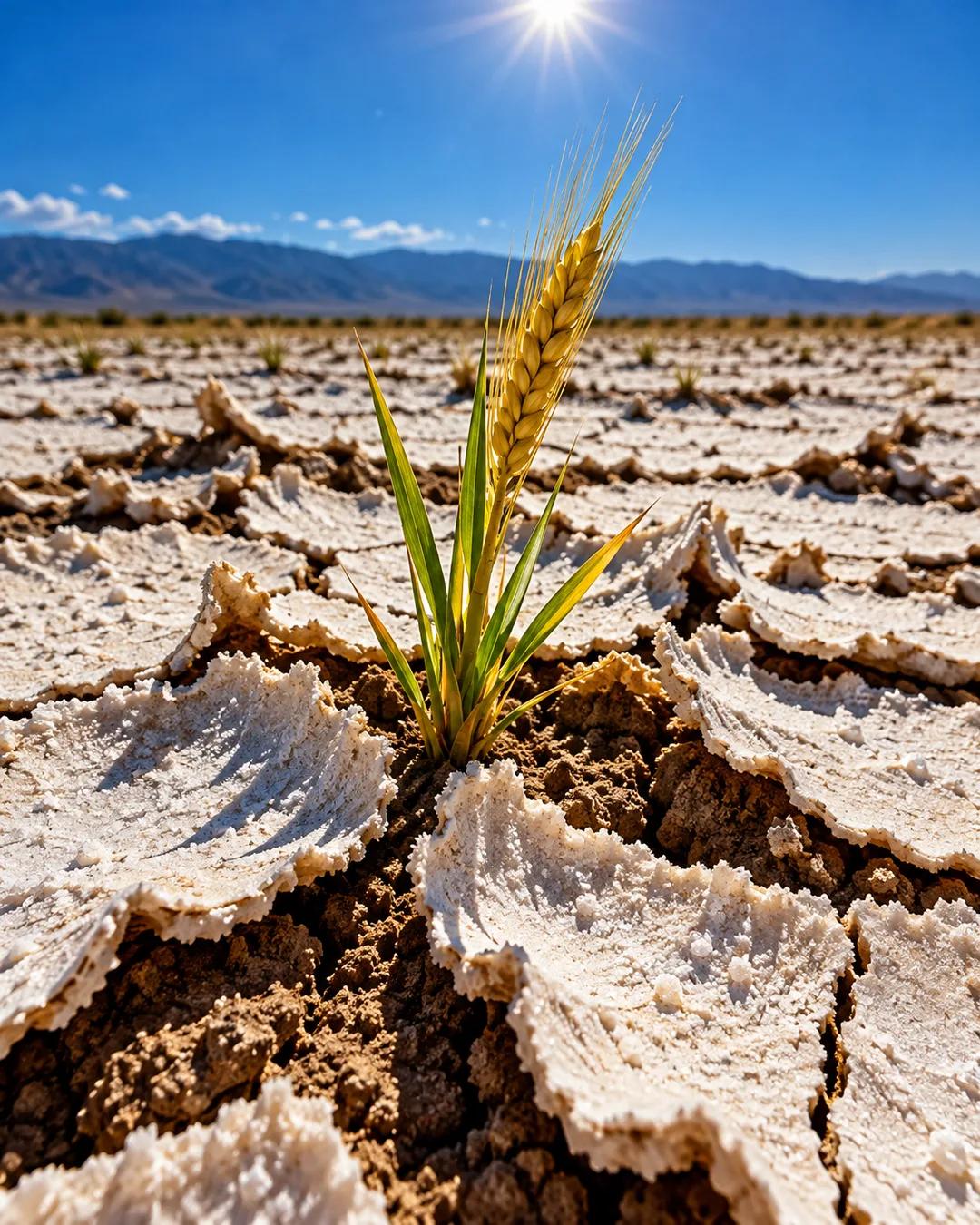
Salt killed the wheat
How Salt Builds Up
The Tigris and Euphrates flow over the limestone of the Taurus Mountains and pick up salt along the way. When Sumerian farmers diverted that water onto their fields, the scorching sun evaporated it and left traces of salt behind. Where a fair amount of rain falls, rain washes the salt away. In Iraq's arid conditions it stays, builds up on the soil surface, and eventually plants struggle to grow.
What the Tablets Record
Sumerian scribes kept meticulous yearly records of crop yields, and from around 2350 BC their texts show a gradual decline across the region. One detail points to salt: wheat fell over the centuries while barley held steady, and barley is particularly resistant to salty soil. Texts from the city of Girsu show wheat and barley once produced in equal quantities. After a thousand years of irrigation, wheat made up only one-sixth of the harvest, and by the 21st century BC it was less than two percent.
Sumerian Fixes
The Sumerians knew the soil needed several seasons of rest to stay fertile. They switched to barley, which took over wheat's role, and developed ways to dry the soil and lower its salinity. Soil salinity is still a problem for farmers in Iraq today.
In some parts of the Iraqi desert, the ground has a crumbly crust that cracks underfoot, peeling like old varnish. It is salt.
Why does barley tolerate salty soil better?
Barley is among the most salt-tolerant cereal crops. In the Food and Agriculture Organization's standard crop tolerance tables, barley is rated tolerant while wheat sits a notch below it. Barley seedlings and plants cope with higher salt levels in the root zone before their yields drop.
Why did salt rise to the surface in Iraq?
In the flat Mesopotamian floodplain, irrigation raised the water table until salty groundwater lay close to the surface. The sun then evaporated that water and left the salt on top of the soil. Thorkild Jacobsen and Robert McC. Adams laid out this case in a 1958 paper in the journal Science titled Salt and Silt in Ancient Mesopotamian Agriculture.
How did leaving fields fallow help?
A fallow year with no irrigation lets the water table sink, which puts salty groundwater farther from the roots. Winter floods can then flush some of the salt downward. Texts from the period describe fallow fields as a regular part of the farming year.
More from Fall of Civilizations