Korva is a scroll of the internet’s best ideas.
Why an hour has sixty minutes

Counting on Fingers
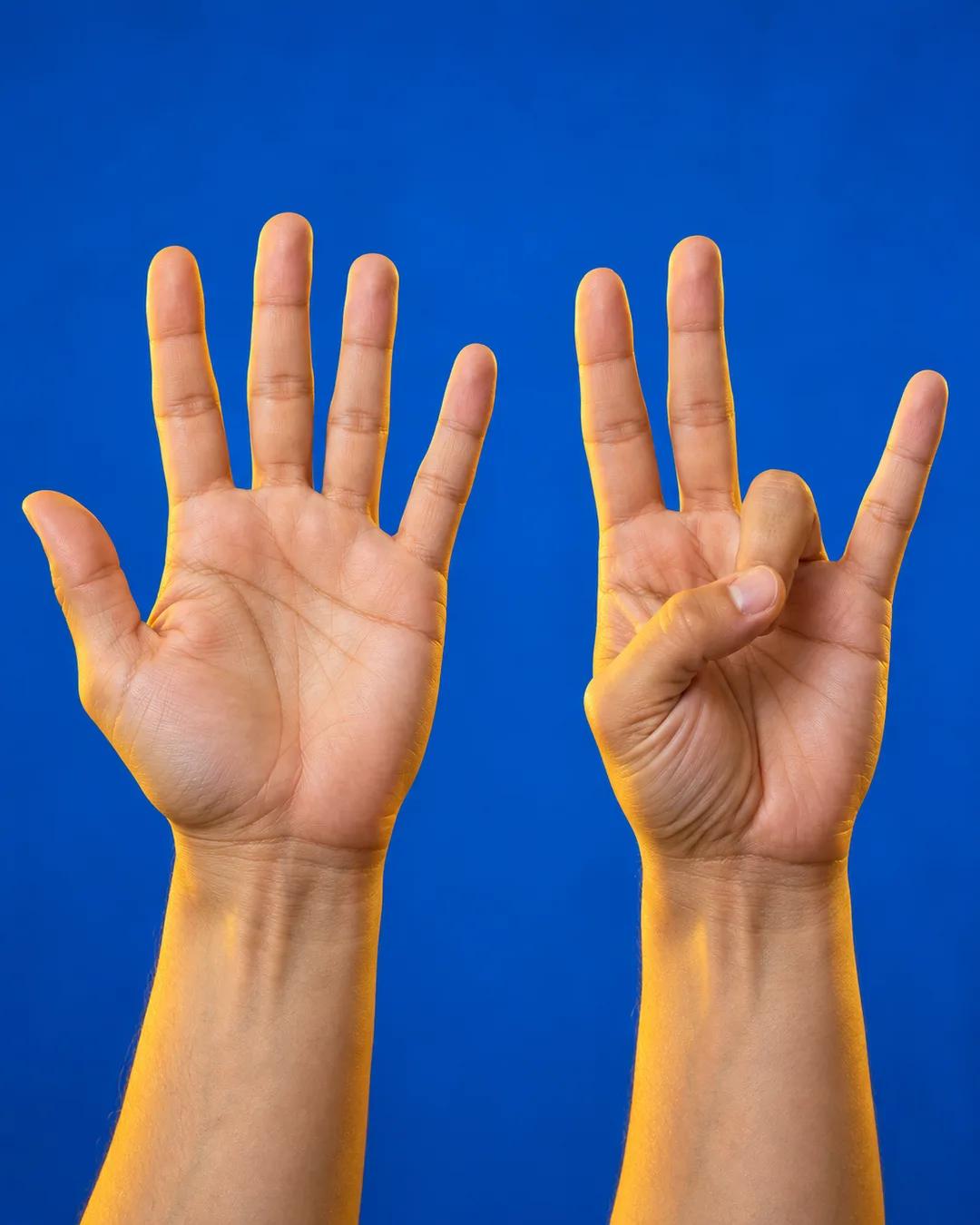
The Sumerian number system was based on 60, where ours is based on 10. The reason is simple and rooted in the design of the body. Each of the four fingers on a hand is divided into three sections. The ancients likely used the right thumb to tap each section and count to 12.
Reaching Sixty
When they reached 12, they raised one finger on the left hand. Five raised fingers on the left hand meant 60 had been counted, and the count started over. The fact that there are 12 lunar cycles each year would have confirmed to the Sumerians that this was the number system the gods intended.
What Survives Today
It was the Sumerians who divided time into minutes and seconds, which is why an hour still has 60 minutes. They also wrote some of the first multiplication tables on clay tablets. The 360 degrees used to measure angles is the last remaining trace of the system.
Why is 60 so handy for dividing things?
Sixty divides evenly by twelve different numbers: 1, 2, 3, 4, 5, 6, 10, 12, 15, 20, 30, and 60. That makes halves, thirds, quarters, fifths, and sixths all come out as whole numbers. By comparison, 10 divides evenly only by 1, 2, 5, and 10.
How did Babylonians write base-60 numbers?
Scribes used just two wedge shapes, a vertical wedge for one and a corner wedge for ten. They arranged these in place-value columns the way we do with digits. The Babylonian tablet YBC 7289 gives the square root of 2 to about six decimal places in base 60.
Where did the words minute and second come from?
They come from Latin phrases used by medieval scholars, pars minuta prima and pars minuta secunda, meaning the first and second small parts. Greek astronomers had already adopted the Babylonian practice of dividing a degree into sixty parts. Ptolemy used base-60 fractions in his Almagest in the second century AD.
More from Fall of Civilizations