A 5,500-Year-Old Greek Town Sank Beneath the Sea
Its street layout largely survived, and archaeologist Jon Henderson argues quakes drowned it in stages.
 National Geographic · Diving Into Deep Sea Mysteries | MEGA EPISODE | National Geographic
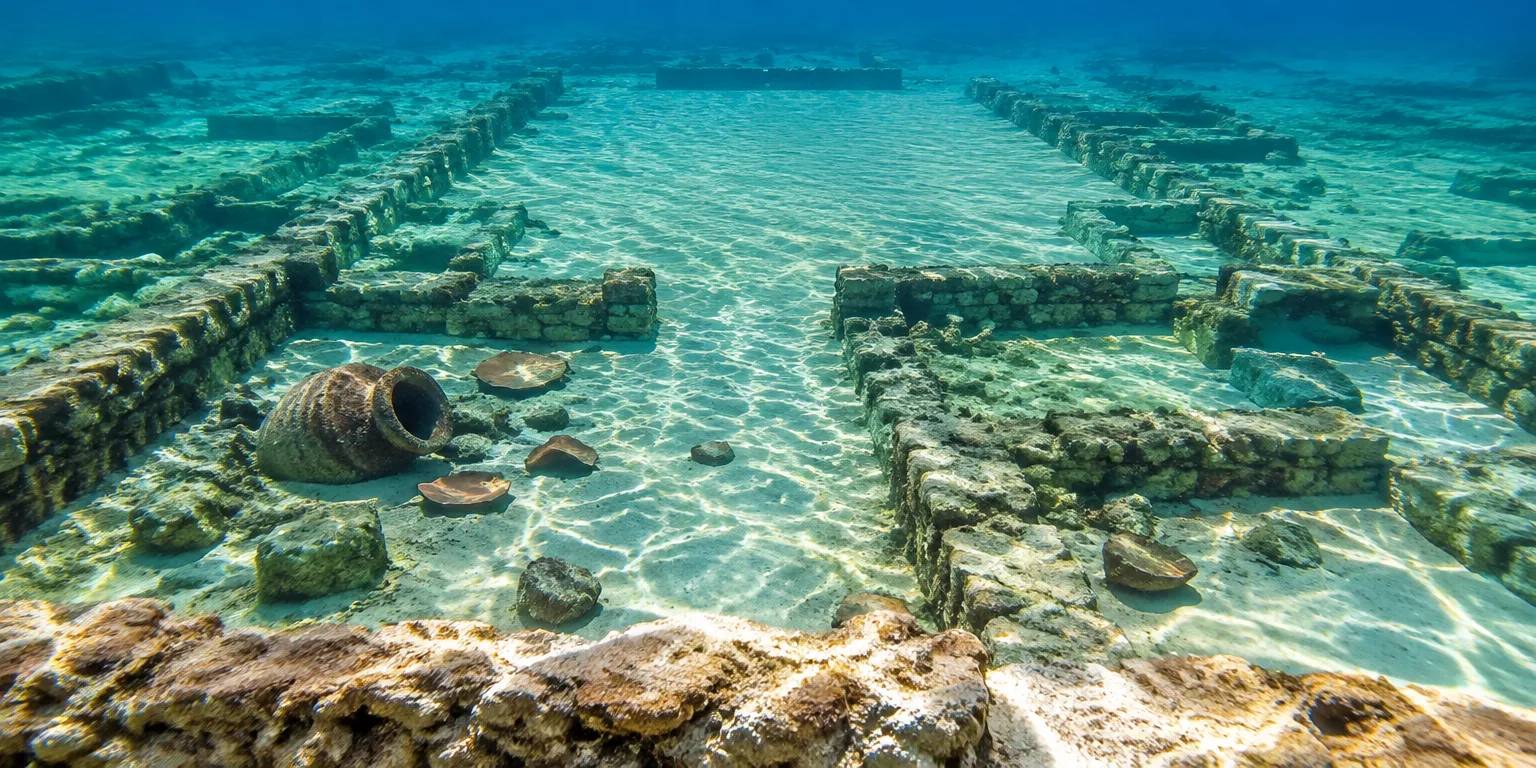
Less than 100 yards off the Greek coast, in water about 13 feet deep, sits an entire town with streets, houses, and graves.
In 1967, maritime archaeologist Nicholas Fleming was snorkeling near the village of Elafonisos when he saw rows of stones on the seafloor. A survey the next year found pots, storage vessels, and tools spread across a large area, leaving no doubt it was manmade. It was named Pavlopetri for a nearby island.
Later scans that mapped the bay revealed the full plan across about 20 acres. Foundations form clear streets around a large open area that may have been a marketplace, plus a large structure that may have been a civic building. The town may have held about 4,000 people.
Archaeologist Jon Henderson says the pottery shows occupation "from about 5,500 years ago," beginning at "the end of the Stone Age," with no gaps until about 1100 B.C. That is about 2,400 years of continuous living through the Bronze Age, when Europeans began building stone towns on regular street plans.
The spot made sense for trade. A huge sandbank let crews beach ships directly on shore, since Bronze Age sailors did not build stone ports, and put Pavlopetri on busy Mediterranean routes. Henderson points to thousands of shards from large storage jars, the shipping containers of the day for olive oil and wine, and thousands of loom weights, which may mean textiles were made there for export.
No ancient writings record its drowning. The clue is three strips of beach rock, a hard crust that forms only at the waterline where sun and saltwater meet, now found in deeper water. Henderson argues that successive earthquakes pushed one part under, then another, until the town was gone.
Questions people ask
Can visitors dive at Pavlopetri today?
Yes, in very shallow water that snorkelers and divers can reach. Greek authorities have protected the site and limited some activities to preserve fragile walls, pottery, and graves.
How can an earthquake sink a whole town?
Greece sits where tectonic plates meet, so large quakes can lift one stretch of coast while dropping another. At Pavlopetri, the land appears to have subsided in steps, moving homes below sea level while leaving the layout largely in place.
How does pottery tell archaeologists how old a town is?
Shapes, materials, and painted styles changed over time in well known ways. When archaeologists find a familiar type of cup or storage jar at Pavlopetri, they can match it to pieces dated elsewhere and estimate when that part of town was in use.