A Dead Husband Came Home And Crushed His Sleeping Wife
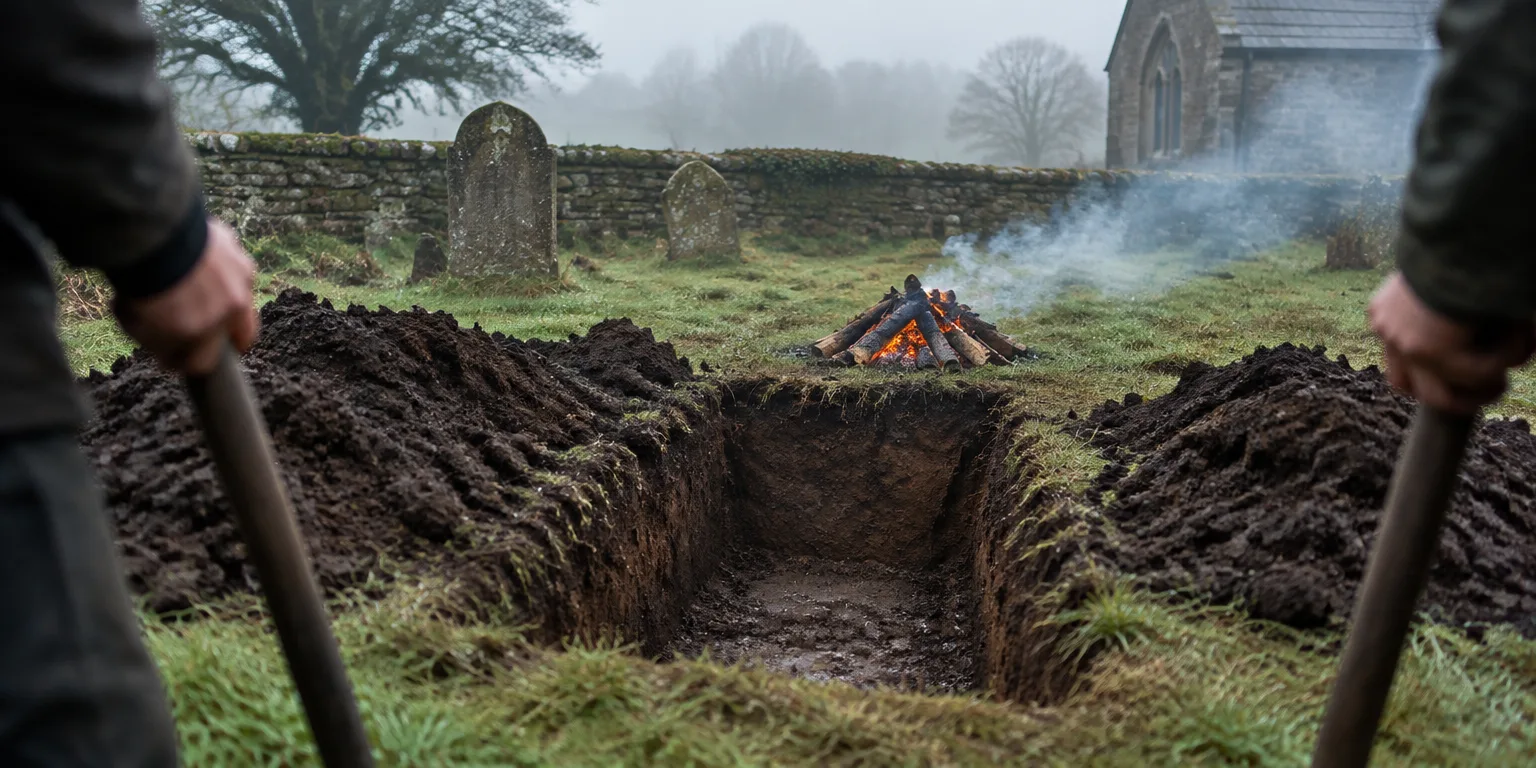
A Yorkshire canon wrote that the cure for the returning dead was exhumation and fire.
 After Dark: Myths, Misdeeds & the Paranormal · Inside the Medieval 'Zombie Village'
She woke to find her husband on top of her, heavy.
He had died and been laid in his tomb, but on the night after his burial he came back, climbed into the bed where she lay, and terrified her as she woke, nearly crushing her with his weight.
The story comes from William of Newburgh, a 12th-century Augustinian canon in Yorkshire who wrote a Latin history called Historia Rerum Anglicarum.
William of Newburgh wrote that the "corpses of the dead" "rise from their graves and wander about to the terror or destruction of the living," and this Yorkshire husband was one of his examples.
He was not inventing horror for its own sake, or at least not only that.
William presented the accounts as true things that had happened, and though few ordinary villagers could have read his Latin manuscript, his tales may have reflected stories already being told aloud.
In other words, the stories may already have been circulating before he wrote them down.
It is unclear whether that reflects what people believed or only the storytelling tradition itself.
William also gave the remedy.
If a dead husband came back to squash his wife, the advice was to lift the remains in daylight and destroy them by fire.
In other cases he described bodies that were exhumed and damaged, with legs broken, heads cut off, and corpses set on fire.
That list matters because bones found at Wharram Percy, a deserted Yorkshire village, show cutting, decapitation, and breakage around the time of death.
The chronicle does not prove what those villagers believed, but it shows what one Yorkshire writer thought should be done when the dead would not stay put.
Questions people ask
Who was William of Newburgh?
William was an Augustinian canon at Newburgh Priory in North Yorkshire who lived from about 1136 to about 1198. His Historia Rerum Anglicarum is mainly a history of England, but it includes several revenant stories. Historians value him because he tried to report recent events, even when the reports sound strange to modern ears.
What is a medieval revenant?
A revenant was a dead body imagined as returning to its home and community, often as a rotting corpse rather than a ghost. In that way it was like the modern idea of a zombie: it was not really the person anymore. Were you to become one, you would no longer be yourself; you would be a different, uncanny and non-human thing.
What did archaeologists actually find at Wharram Percy?
Archaeologists found 137 pieces of human bone at Wharram Percy, thought to come from about 10 people who lived between the 11th and 14th centuries. The bones show cuts, breaks, and decapitation when flesh was still present. Researchers have ruled out cannibalism and ordinary butchery, but they have not settled on one explanation.