Beheaded Bones Look Like Zombie Prevention, but the Dates Make It Hard to Prove
Medieval texts described digging up and burning the walking dead, but the village bones span centuries and lack their burial context.
 After Dark: Myths, Misdeeds & the Paranormal · Inside the Medieval 'Zombie Village'
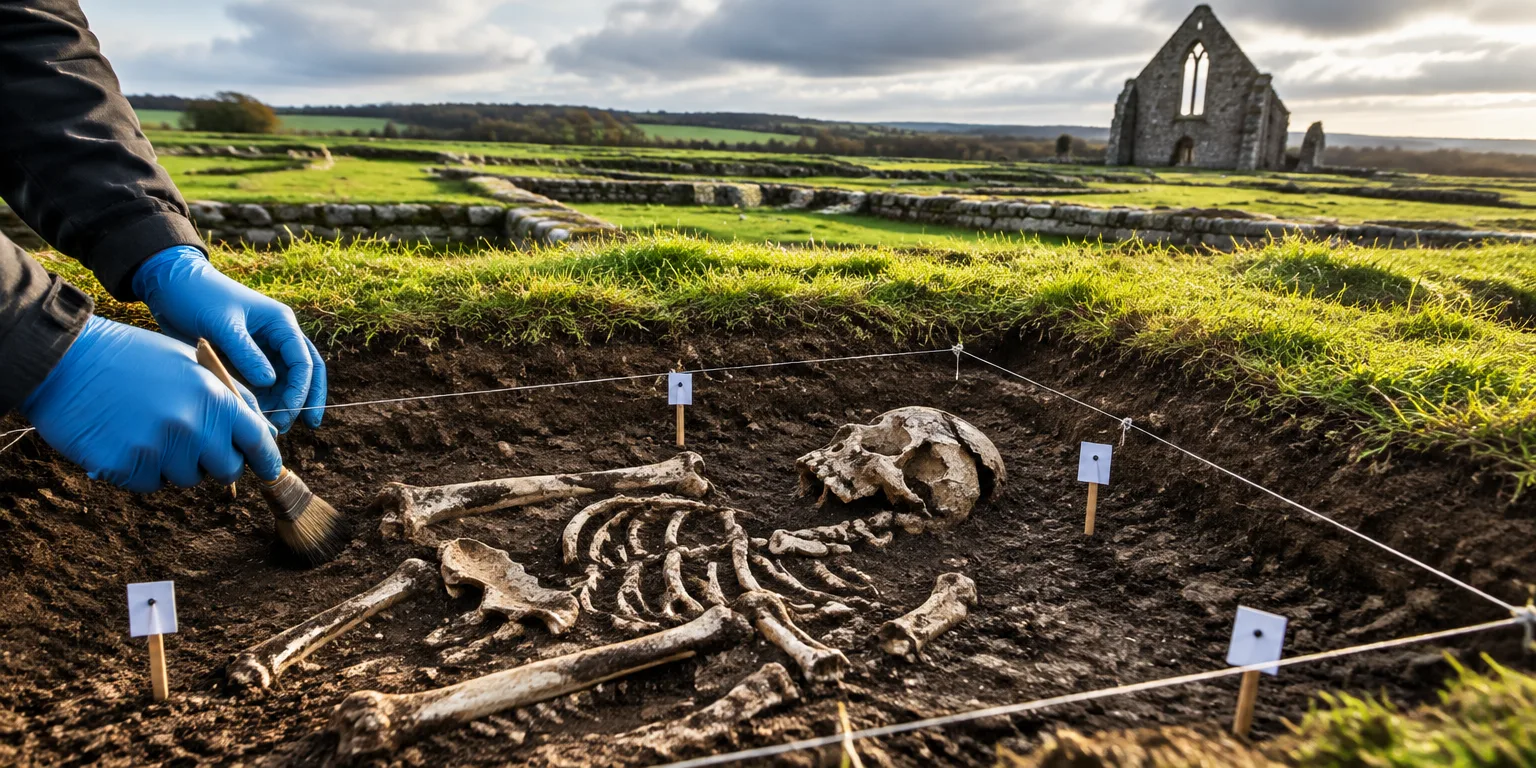
In the 1960s, excavators in the deserted Yorkshire village of Wharram Percy found 137 pieces of human bone buried in the same spot, thought to come from 10 people.
The bones showed decapitation, cutting, burning, and deliberate breakage while still fresh, around the time of death or afterward when flesh remained on the bone.
That damage looks familiar because medieval Yorkshire writings describe the same treatment for revenants, corpses imagined as returning to trouble the living.
In those accounts, the prescribed cure was to dig up the body and burn it, while other stories describe broken legs, burned corpses, and severed heads.
Simon Mays, a skeletal biologist at Historic England, told The Guardian in 2017 that the bones were corpses “burnt and dismembered to stop them walking from their graves,” an idea that “seems to fit the evidence best.”
He said that, if right, it would be “the first good archaeological evidence we have of this practice” and “provides a graphic reminder of how different the medieval view of the world was from our own.”
The problem is timing. The remains broadly date from the 11th to the 14th centuries, a span of about 200 years, so these people did not all die at once.
That long range could also fit more ordinary possibilities raised in the discussion, such as moving older bones to make room in a crowded graveyard, or burning bodies during plague years from fear of infection in a world without germ theory.
Laboratory work has narrowed some options. Archaeologists ruled out cannibalism and ordinary butchery because the marks do not match, and chemical tests of teeth and bone indicate the people were local, not outsiders such as raiders.
The bones were reportedly not burned at very high heat.
What is still missing is context in the ground, including where this burial sat in relation to the church, the village, and other graves, and how the different layers relate.
Without that burial context, the cuts and burns cannot show that fear of the walking dead was the reason, since other explanations fit the same marks.
Questions people ask
What did medieval people mean by a revenant?
A revenant was a dead body imagined as returning to homes and communities, often described as rotting, heavy, and no longer quite the person who died. It resembles a modern zombie in being a physical corpse, not a ghost, but medieval accounts treated it as part of a religious and communal understanding of death.
What is Wharram Percy?
Wharram Percy was a farming village in Yorkshire occupied before the Norman Conquest of 1066 and home to about 200 people around 1300. It was later abandoned amid hardship, plague, inheritance disputes, and a shift toward sheep farming, leaving foundations, earthworks, and a roofless church.
How can bones show what happened after death?
Osteoarchaeology is the study of human bones from archaeological sites to learn how people lived, died, and were treated after death. Specialists examine age, disease, injury, and marks from cutting, burning, or breakage, and can sometimes tell whether damage happened near death or much later.
How does isotope analysis show someone was local?
Isotope analysis measures chemical forms of elements in teeth and bone, which reflect water, soil, and food from childhood and later life. By comparing those signatures with regional geology, scientists can estimate whether a person grew up locally or came from farther away.