Hard Times Emptied a Yorkshire Village of 200 People
Sheep may have played a part, and its earthworks still preserve ordinary life missing from records.
 After Dark: Myths, Misdeeds & the Paranormal · Inside the Medieval 'Zombie Village'
Around 1300, Warren Percy in Yorkshire was a thriving settlement of about 200 people, many of them farming crops and keeping animals.
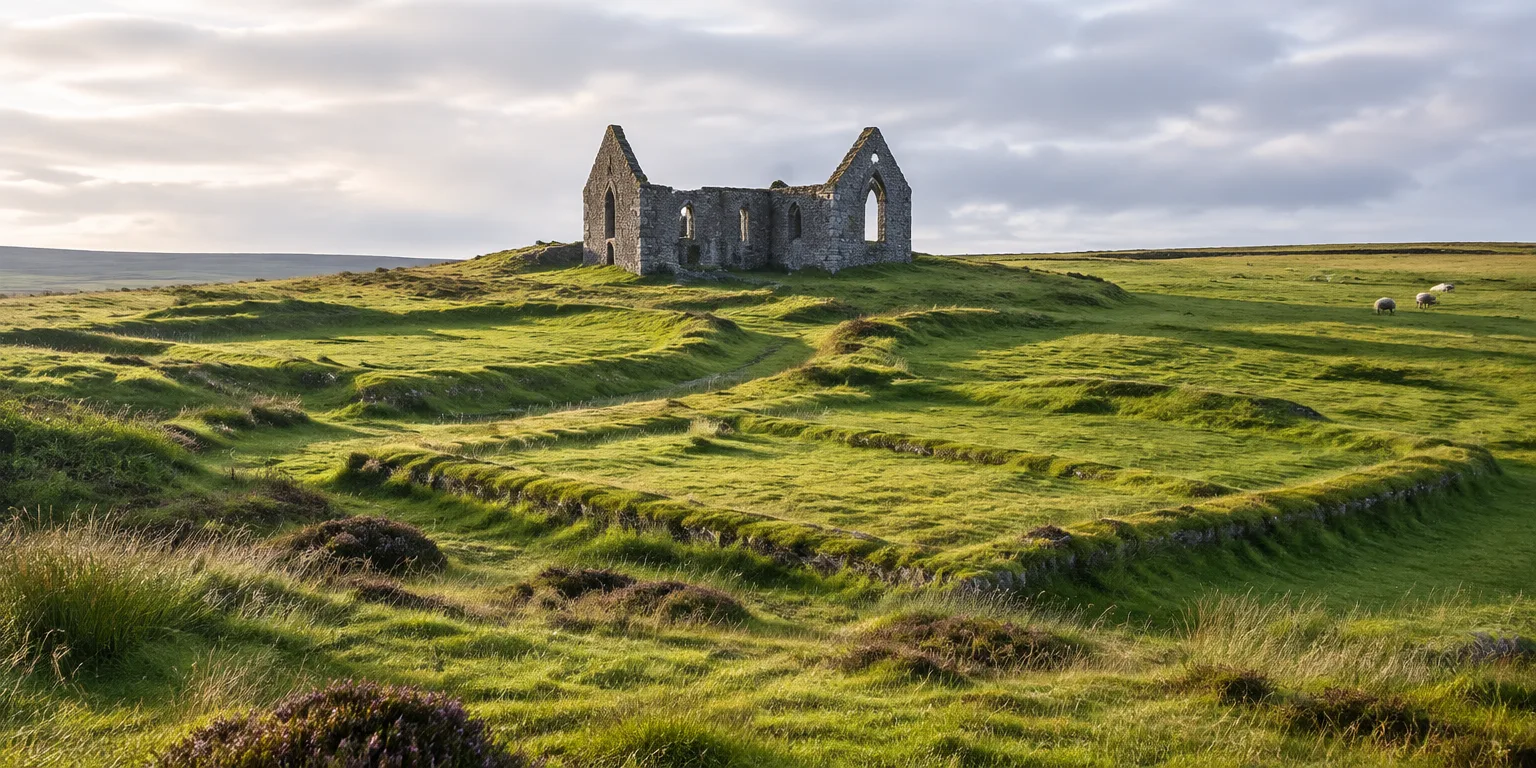
The village predated the Norman Conquest and had 40 peasant houses, two manor houses, water mills, and a church. Today most of it lies under grass as foundations, walls, and earthworks, with only the roofless church still standing.
Maddy Pelling, who has pieced together the village's history, says many medieval villages were deserted in this period as residents left and did not return. Economic hardship and disease, including the Black Death, were common reasons.
Several blows hit Warren Percy one after another.
From 1319 to 1322, Scottish forces seeking independence from England pushed as far as Yorkshire and burned farmsteads, including a nearby farmstead at Tixendale. There is no evidence Warren Percy itself was attacked, but the danger reached its district.
When landowner Peter Percy II died in 1315 without a son, his 14-year-old daughter Eustacia became a royal ward, meaning the crown took control of the estate through her. Pelling says that upheaval may have left tenants uncertain about their tenancy and protection, since help from the center of power far to the south was not assured.
In the 1340s, the Black Death arrived and killed members of the Percy family, including Eustacia's husband, and very likely reached the village.
Pelling suggests that sheep farming may have made more sense than crops on remote upland land, where growing food was difficult. She offers that only as a possibility and notes that she speaks as a non-farmer.
With little written material from the site, the ground itself becomes the record. Anthony Delaney, who is exploring the site with Pelling, says of the ground, "That is the archive," while Pelling adds, "It's under your feet." The streets, house plots, and closeness of buildings show the shape of ordinary life, much as a reconstruction at the Jorvik Centre in York lets visitors see how tightly packed Viking houses stood.
Questions people ask
What did it mean for Eustacia to become a royal ward?
A royal ward was usually a minor child of a landholding family whose guardian became the king. The crown controlled the estate and its income, and could arrange the ward's marriage, until the child came of age.
Why would upland farmers switch from crops to sheep?
Wool could be profitable and sheep needed fewer workers than grain fields, an advantage after plague reduced the population. Sheep also tolerate thin soils, cold, and wet hills where crops fail. Over time, landlords in upland England often favored pasture for those reasons.
Can you still visit Warren Percy today?
Yes, the site is an open landscape with visible bumps and lines marking houses and streets, plus the standing ruin of the church. It is best understood as an archaeological site rather than a rebuilt village, so visitors see the layout rather than furnished homes.