Congress Bunker Was Kept Secret Under a Luxury Resort for 30 Years
It had 25-ton blast doors, a hospital, and room for 1,100 people, and hotel workers never knew.
 The Why Files: Operation Podcast · America Is Hiding Something Underground (Compilation)
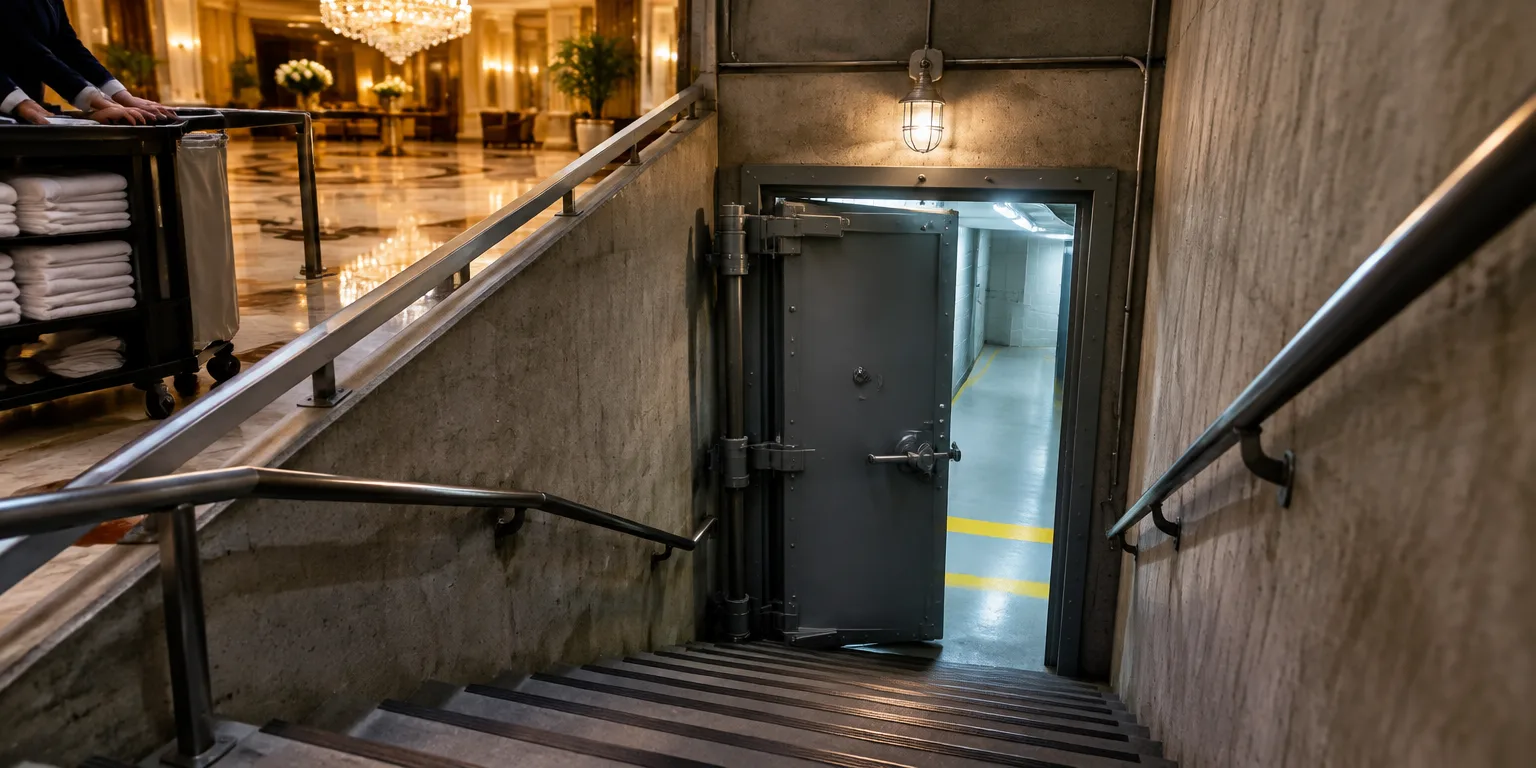
Built in the 1950s beneath the Greenbrier Hotel, a congressional shelter covering about 112,000 square feet stayed secret from the public until 1992 and remained in government use until 1995.
The hideout was under the Greenbrier Hotel, an upscale resort about five hours from Washington, D.C. that had hosted many American presidents and members of European royal families.
During a major hotel renovation in the 1950s, the government added a vast shelter below.
It was no small safe room but a shelter covering about 112,000 square feet, with enormous blast doors, its own electricity supply, a cafeteria, and a clinic with labs and medicine storage.
It had space for 1,100 occupants and was intended as the emergency gathering point for all of Congress. Staff worked there the whole time, right under guests and hotel workers, and some of its space was not even underground.
No one outside the project knew, not even hotel workers. Reporters at the Washington Post revealed its existence in 1992, and the government stopped using it in 1995.
Questions people ask
How did the government keep the bunker secret inside a busy hotel?
Workers maintained the site under the cover of a fake company that supposedly serviced the hotel televisions. That let a full-time crew come and go with tools and uniforms without raising questions. Guests heard drills and saw closed doors and thought little of them.
Can you visit the Greenbrier bunker today?
Yes. After it was decommissioned in 1995, the bunker was opened for public tours. Visitors can walk through the dormitories, cafeteria, communications areas, and the chambers built for the House and Senate. It is now one of the resort's main attractions.
Why hide Congress under a resort?
During the Cold War, Washington planners feared a nuclear attack could wipe out the federal government in minutes. They wanted a secure place for lawmakers close enough to reach quickly from the capital. A large resort renovation offered both distance from blast zones and a convincing construction cover.