Mount Rushmore Hides a Sealed Vault Behind Lincoln's Head
Unfinished when its sculptor died in 1941, a scaled-back vault was approved in 1998 to hold America's founding texts.
 The Why Files · America Is Hiding Something Underground
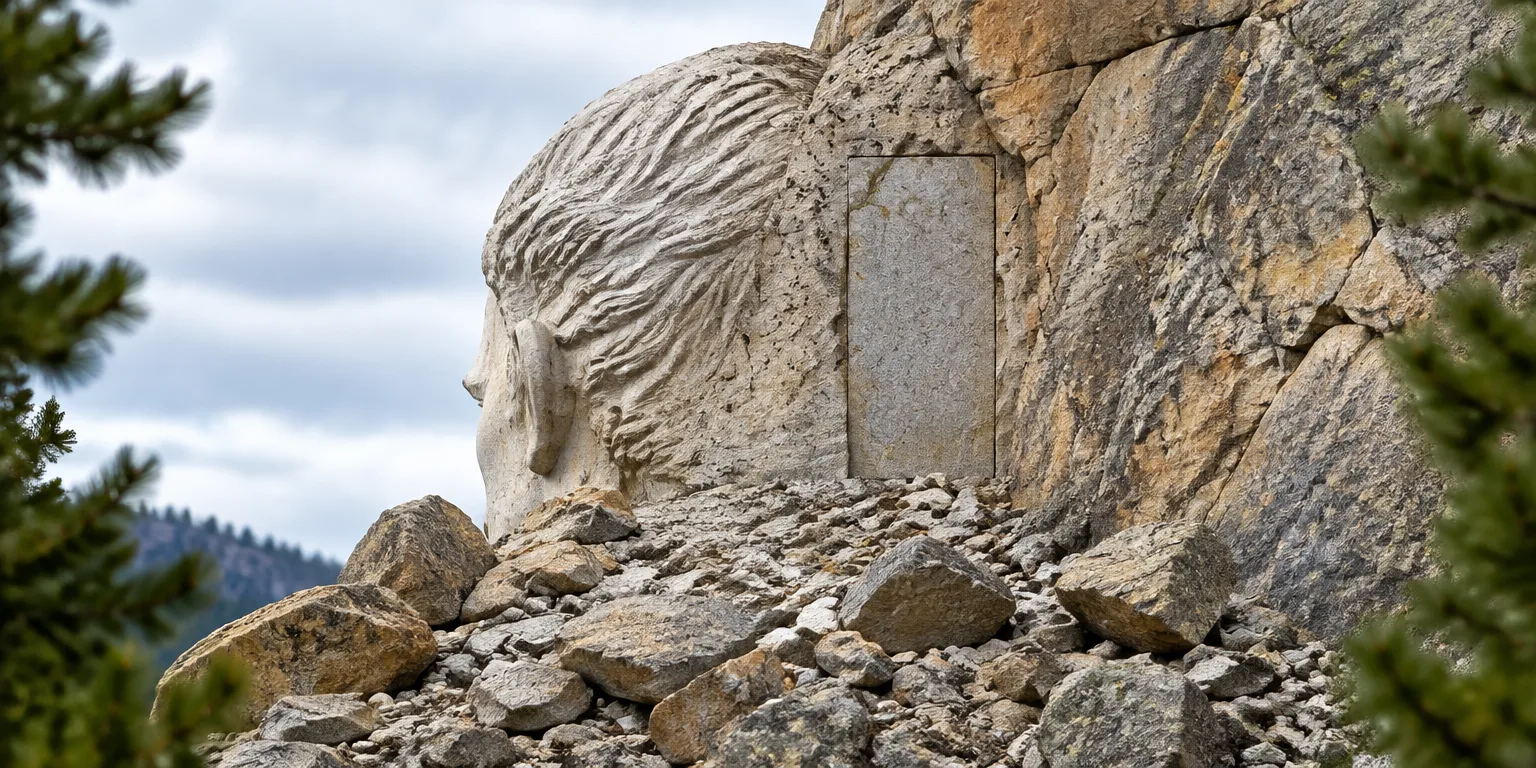
There is a sealed titanium vault tucked behind Abraham Lincoln's head at Mount Rushmore, holding copies of America's founding documents.
Sculptor Gutzon Borglum first planned a far grander Hall of Records, 80 feet tall and 100 feet long and reached by an 800-foot staircase. It was to hold busts of famous Americans, the Declaration of Independence, the Constitution and its Bill of Rights, and a giant bronze eagle over the entrance.
Congress told him to finish the presidents first, and World War II and his death in March 1941 left only a 70-foot cavern. The monument was declared complete that October, with unfinished carving and blasted rock still piled below.
In 1998, his family won approval for a smaller version: porcelain enamel panels telling Rushmore's history and carrying the Declaration of Independence, the Constitution and its Bill of Rights, plus the Gettysburg Address, plus Borglum's biography, sealed behind a 1,200-pound granite slab. It is closed to the public, and access was tightened after Greenpeace hung a protest banner on the monument in 2009.
Questions people ask
Can visitors see the Hall of Records?
No. The chamber sits in a hard to reach spot on the mountain and is capped by a heavy granite slab. The National Park Service does not offer tours there, and security was increased after a 2009 protest.
Why did Borglum want a hall inside a sculpture?
Borglum wanted future generations to understand why the monument was carved, even if it became as mysterious as Stonehenge or the pyramids. He chose a spot just behind Lincoln's hairline so the record would be part of the mountain itself.
Who was Gutzon Borglum?
He was an American sculptor known for large public works celebrating U.S. history. He directed the carving of Mount Rushmore from 1927 until his death in 1941, after earlier being dismissed from a Confederate memorial project at Stone Mountain in Georgia.