Two Men Can Raise 200,000 Chickens at Once
In 2019, one barn held 45,000 birds managed by one computer.
 The Economist · Why is chicken so cheap?
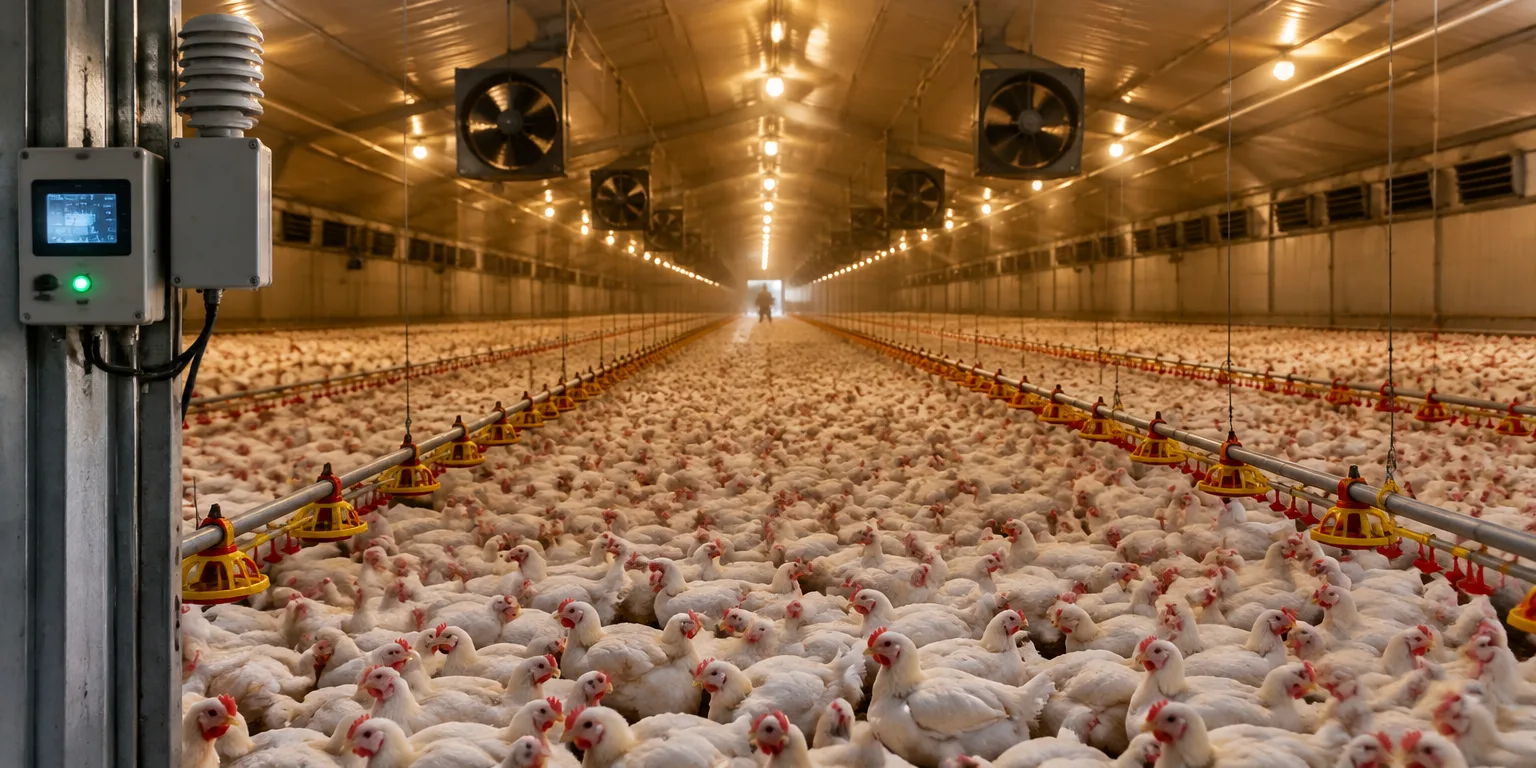
In 2019, two men could raise 200,000 chickens at a time. On the British farm run by David Speller, a poultry farmer and consultant then overseeing about 3 million chickens, one barn held 45,000 birds managed by one computer.
The sheds relied on cameras and carbon dioxide monitors, with artificial light and temperature controlling the birds' whole lives.
That intensive automation helped make chicken cheap. The farm said that efficiency was passed on to the consumer, though Speller disliked the word cheap and called the birds great value.
By then selective breeding had made chickens about four times the size of 1950s birds. Broilers were taken at 38 to 39 days, while a barnyard chicken could live up to 10 years, and birds kept longer developed major medical problems because their bodies could not cope with rapid growth.
There were also concerns about a shrinking gene pool leaving identical birds very vulnerable to disease, and about crowding, with up to 17 grown birds in a single square metre in intensive systems.
Questions people ask
How does this system make chicken so cheap?
The farm described it as efficiency passed on to the consumer. That came from fast-growing birds, controlled sheds, and rapid turnover, with barns restocked seven and a half to eight times a year. Speller called the result great value rather than cheap.
What happens if these broilers are left to keep growing?
A broiler was normally taken for meat at 38 to 39 days. If kept longer, the birds developed major medical problems because their bodies could not cope with rapid weight gain. By contrast, a barnyard chicken could live up to 10 years.
What is the concern about raising so many similar birds together?
There were concerns about reliance on an increasingly small gene pool. The worry was that birds with the same genetics and the same feed would be very vulnerable to incoming disease.