A Hydrogen Bubble Past a Critical Size Sharply Raises Energy Use, Model Finds
Simulations show blocked electrode area drives the loss, but the result so far covers only a single bubble.
 techxplore.com · Green hydrogen production has a bubble problem—new model reveals threshold for steep energy losses
A team from Cornell working with colleagues in Hong Kong published Nov. 9 in EES Catalysis a computer model measuring how bubbles add to the energy cost of making green hydrogen.
Green hydrogen is made by splitting water with renewable electricity, and it offers a possible replacement for fossil fuels in steelmaking and chemical manufacturing.
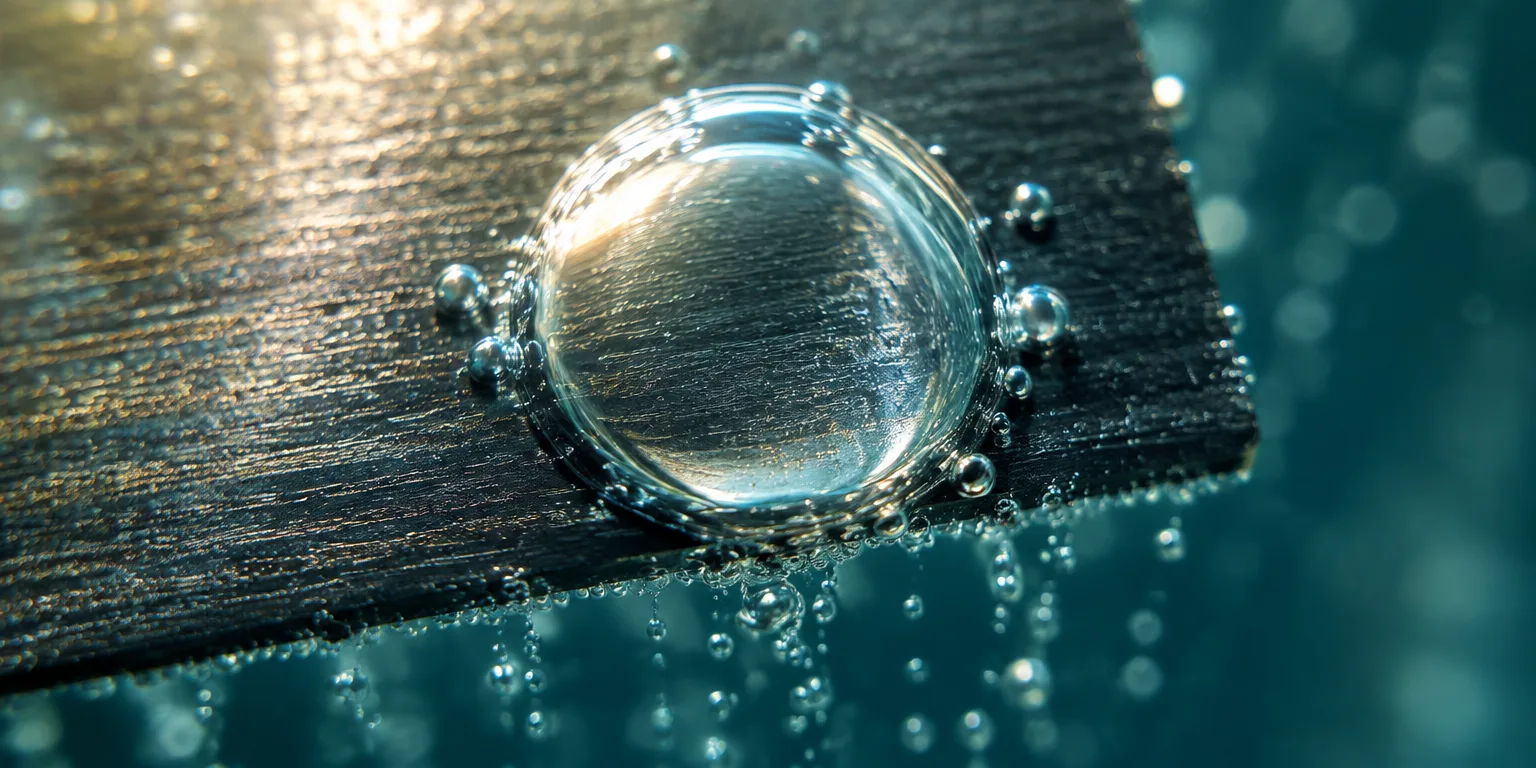
In simulations of a single hydrogen bubble clinging to a metal surface inside an alkaline water splitter, a device that uses a caustic liquid to conduct electricity, the team found that the biggest loss came from the bubble covering active reaction area.
Once that bubble grew past a critical radius, the extra voltage needed to keep the reaction going rose exponentially. In some modeled conditions, that extra voltage exceeded the voltage needed without any bubble by more than 50%.
The finding so far applies to one bubble alone. The project was headed by Lenan Zhang, an assistant professor of mechanical and aerospace engineering at Cornell, and Weihong Li, an associate professor in mechanical engineering at Hong Kong's City University, who are now extending the model to multiple bubbles that grow, merge, and affect one another.
Questions people ask
How does water electrolysis make hydrogen?
Water electrolysis passes electricity through water to split it into hydrogen and oxygen. In an alkaline electrolyzer, the water contains a caustic substance such as potassium hydroxide that helps carry electric charge. Bubbles of hydrogen and oxygen form on the metal electrodes where the reactions happen.
How might electrode designers use a critical bubble size?
Engineers could design electrode shapes, textures, and coatings so bubbles break away while still small. The idea is to keep each bubble below the critical radius identified in the model. Earlier efforts have tried changes to liquid flow and surface properties, but lacked a precise target for when action was needed.
Will this finding lower the price of green hydrogen soon?
Not directly. This is a simulation of a single bubble, not a measurement from a commercial plant with many interacting bubbles. The multi-bubble work comes first, and the team hopes to build the model into software for evaluating materials and designs.