A Map Showed A SEAL Commander What His Platoon Had Achieved
Leif Babin realized his sailors had seized ground across Ramadi, and that he had never explained the larger win to them.
 Not Dead Yet · Leif Babin
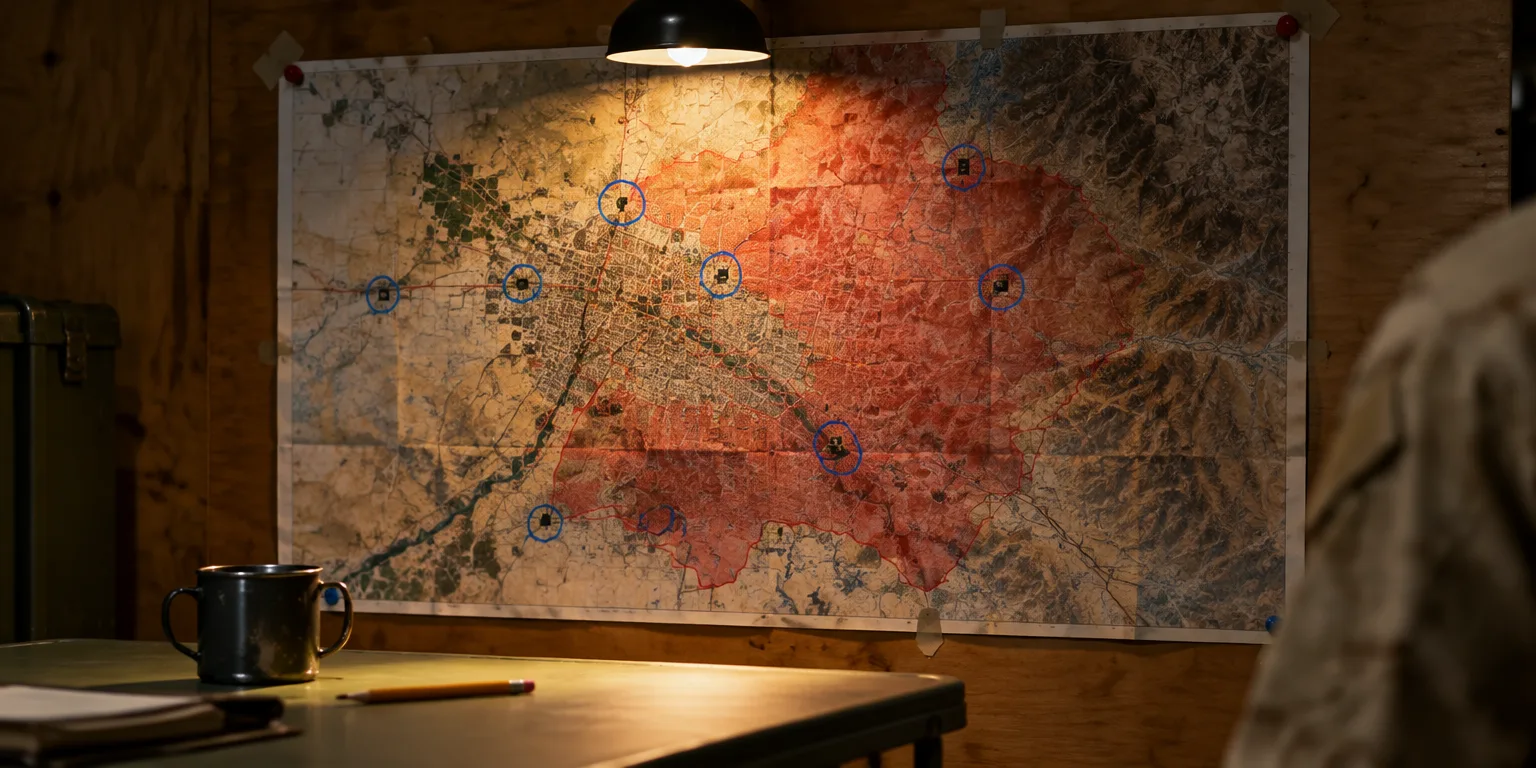
Jocko Willink, his boss and a fellow SEAL officer, asked Leif Babin to check a slide before a briefing. It was a map of Ramadi, washed in red to show ground held by al-Qaeda in Iraq, with blue circles marking new American bases.
Babin, who commanded a SEAL platoon in Ramadi in 2006, stared at it. Babin said his men had been "the lead element for almost every single one of those that went in," and he had never put the pattern together.
That failure became the hardest chapter for Babin to write in Extreme Ownership, his book on leadership. He realized he had kept his sailors focused on dangerous daily missions without explaining how those missions were advancing a larger strategy.
The cost made the question urgent. Babin said his platoon lost Mark Lee, had Ryan Job horribly wounded, and saw its sister platoon lose Mikey Monsoor, "the first and second SEALs killed in the Iraq war." Babin said the losses left the survivors asking what they had accomplished and whether the sacrifices were worth it.
Seeing the map felt, in his words, like a slap across the face. When he later showed it to former platoon members who had scattered after the deployment, he said they had the same reaction, surprise at what they had actually done.
Babin compares a leader stuck in daily tactics to looking through a gun sight, which he likens to peering through a cardboard paper towel tube. When a platoon commander steps off the gun, points it skyward, and looks left and right, the view opens to 180 degrees or more.
That wider view also explained a morale gap. Babin said two men volunteered to stay six more months, so strongly did they believe in the mission, while others grew "burnt out and tired and ready to go home."
The tired men, he concluded, lacked ownership. They did not know, for example, that their leaders had rejected probably a dozen proposed operations as too dangerous, unlikely to succeed, or not worth the risk, and had chosen to focus elsewhere.
Questions people ask
Where is Ramadi and why was it important?
Ramadi is a city in western Iraq, about 70 miles west of Baghdad. In 2006, it was a center of the insurgency and among the most dangerous places for American forces.
What is Extreme Ownership?
It is a 2015 leadership book by Willink and Babin, based on their service with Task Unit Bruiser in Iraq. It argues that leaders must take full responsibility for failures and explain the mission so teams can act on their own.
Can SEALs freely describe combat missions?
No. U.S. military reviews generally allow veterans to describe their service in broad terms. Specific tactics, intelligence sources, and classified details must be omitted or approved, and accounts are expected to honor those who served.