A Maya Boomtown Stopped Building Mid-Project and Tidied Up to Leave
Builders left scaffolding up and families set pots aside neatly, undone by droughts that outlasted months of stored rain.
 National Geographic · Lost World of the Maya (Full Episode) | National Geographic
In the grand palace at Kiwik, archaeologist George Bey stood before what looked like a senseless pile of rock.
The beautiful rooms stood on either side, and in the middle sat rubble. Then the pile made sense. It was a work stair, left by builders to reach the upper stories.
If the building had been finished, Bey said, the workers would have removed the stair. Nearby, masons had laid out second-story walls on the ground but never raised them.
That pointed to a city still growing, with architects at work and a king who, in Bey's words, was feeling “confident and powerful about what he was doing.”
Something had stopped the boom. War was the obvious suspect, but an exhaustive search found no arrowheads or spear points.
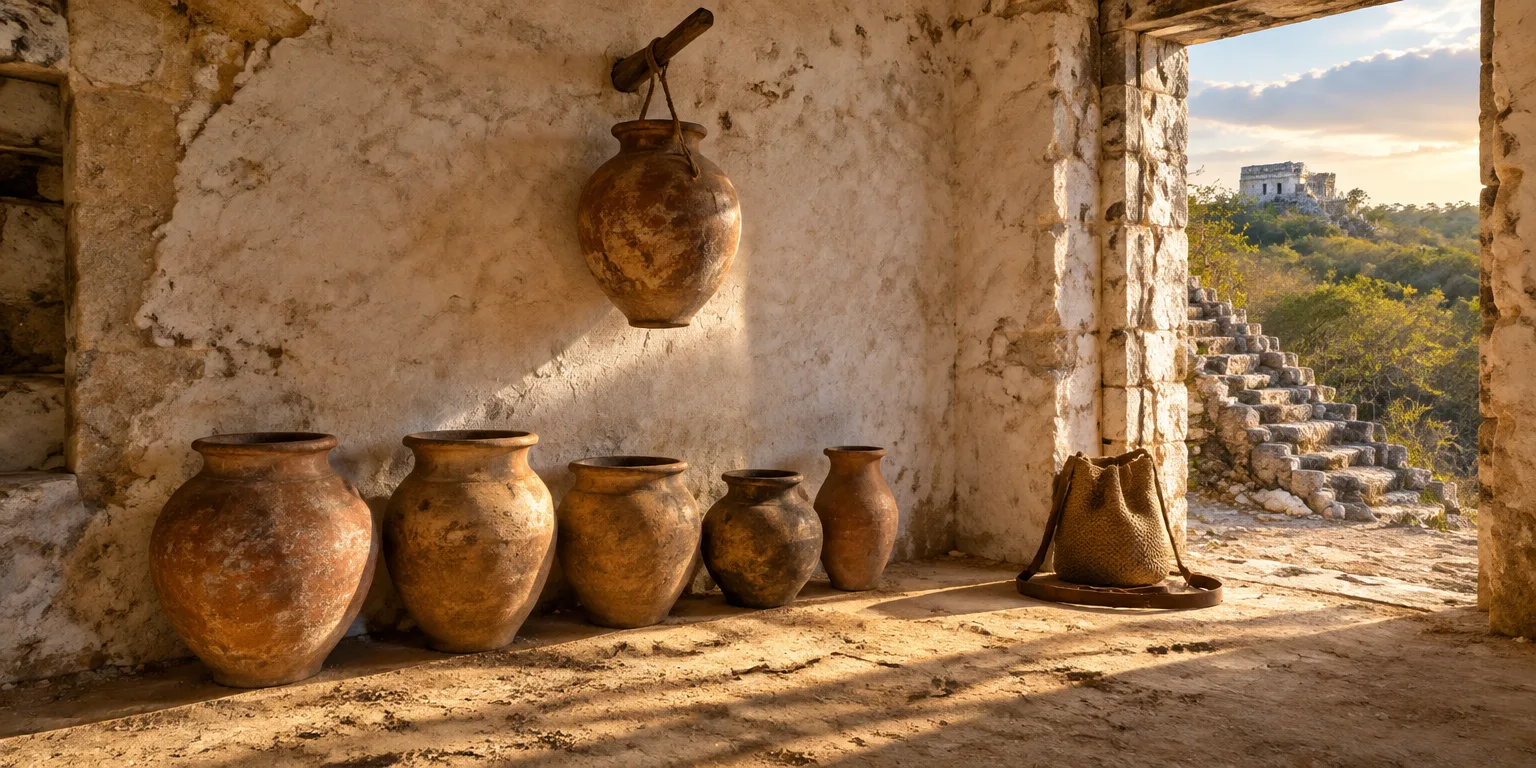
Across town, at the hilltop estate called Stairway to Heaven, the team found the other half of the story. Probably five or six vessels lay smashed on the floor where people had lived.
“these people were not running for their lives,” Bey said. The vessels had been set carefully along the edges of rooms, some hung from wall pegs, and left intact.
They broke only later, as the abandoned building crumbled. It looked, one archaeologist said, like tidying up before leaving the house.
The likely reason was water. Kiwik has no rivers or streams, so residents carved underground cisterns to catch seasonal rain.
At Stairway to Heaven, those stores could last about three months without rain, a little longer on strict rationing.
But core samples showed eight drought bands, evidence not of one dry spell but of repeated droughts lasting about three to 20 years.
After each recovery, another long drought hit. Once the cisterns went dry, living on that hill became impossible.
So elite families made the hard choice to go. They loaded what they could carry onto their backs and stored the rest with care.
They planned to come back once the rain came again.
Why they did not remains uncertain. Bey and archaeologist Bill Ringle speculate that political disarray tied to the feathered-serpent ideology left no stable authority to organize a return.
Questions people ask
How did the Maya store water without rivers?
They carved bottle-shaped underground tanks, called chultuns, into limestone and sealed the walls with plaster to make them watertight. During the rainy season the tanks filled, and families drew from them through the dry months.
How can core samples show ancient droughts?
Scientists pull long tubes of mud from lakes and wetlands. Dry periods leave distinct layers of minerals and pollen, so counting those bands gives a rough timeline of droughts and how long each lasted.
What was Stairway to Heaven?
Stairway to Heaven is the nickname archaeologists gave a large hilltop estate outside Kiwik's center, reached by a massive staircase. It held a nine- or ten-room mansion and other stone houses, home to wealthy families outside the royal palace.