The Ancient Maya May Have Had a Middle Class
At Kiwik, stone homes and a surprisingly varied diet suggest prosperity spread well beyond kings.
 National Geographic · Lost World of the Maya (Full Episode) | National Geographic
From a lookout near Kiwik, a Maya town of perhaps 3,000 or 4,000 people in Mexico's Yucatan, archaeologist George Bey thought he understood the place.
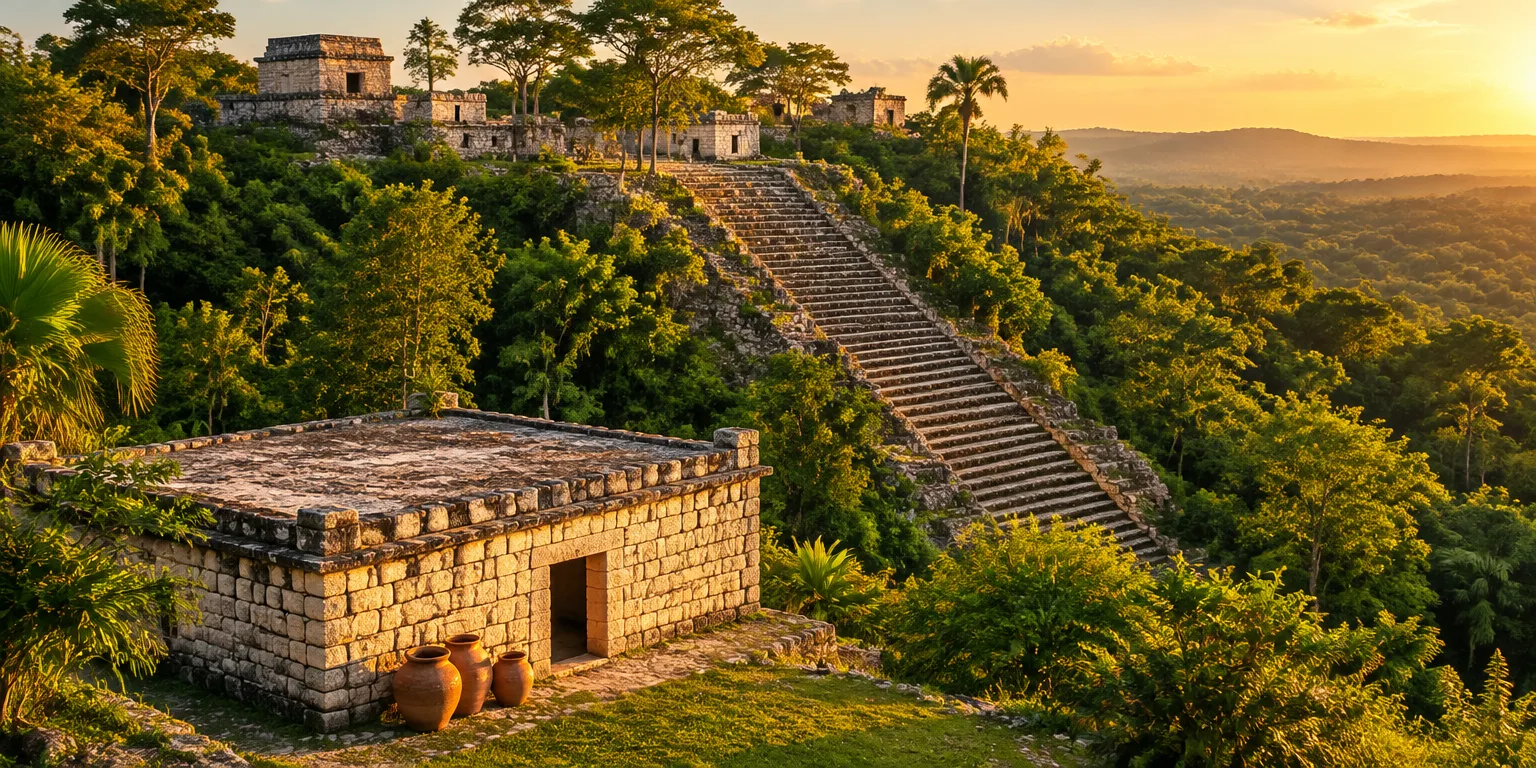
Laser mapping from aircraft proved him wrong. It revealed a sprawling hilltop estate across the valley, reached by an enormous staircase, that his team calls Stairway to Heaven.
Standing at its base, where a nine or ten room mansion once stood, Bey offered his provocation. "We're not looking at a large peasant population that's under the hands of a very small royal elite but that wealth and prosperity have spread over almost half of the population."
Bey argues the buildings back him up. Stairway to Heaven includes 22 large stone buildings, and nearby hills hold dozens of similar estates, with many smaller homes also made of cut rock, an unusual luxury for ordinary households at the time.
Archaeologist Stephanie Sims found another clue under the floor of a three-room residence there. Beneath capstones and an upside-down plate lay badly decomposed bone, confirmed as human by a lower incisor, plus traces of skull, arm, and leg.
Sims reads it as a secondary burial. She said, "our thinking with these secondary burials is that they're bringing bones or parts of family members to new locations to sanctify the structures that they're building."
Back in the lab, Sims found 1,200-year-old plaque embedded in the teeth. Chemical analysis of food particles pointed to a varied diet of squash, beans, fruits, and chili peppers. The rich finds point to residents who controlled sizable farmland down in the valley.
Kiwik, in Bey's words, "may be evidence of America's very first middle class nearly a millennium before North America's colonial middle class." These people might have acquired land and opportunity, he said, and, in his phrase, "they might have been living the Maya dream."
Questions people ask
How can lasers map ruins hidden under jungle?
Lidar fires rapid pulses of light from an aircraft and times their return. Pulses that hit leaves bounce back differently than ones that reach walls, floors, and stairways, letting software strip away forest and map ruins below.
How can 1,200-year-old teeth show what someone ate?
Hardened dental plaque traps tiny food particles for centuries. Chemical analysis can identify plant remains, so researchers can tell that someone ate squash, beans, fruit, and chili rather than just corn porridge.
Why does it matter that ordinary houses were built of stone?
Most ordinary houses in much of ancient Central America were made of perishable wood, thatch, or adobe. A stone house required quarrying, hauling limestone, and skilled masonry, so many stone houses imply many families could command surplus labor.