A Tiny Crystal Tumor Can Short Out A Transistor
Chipmakers grow parts of a transistor atom by atom, and when that growth runs wild it can connect regions that must stay apart.
 Dwarkesh Podcast · What will computer chips look like in 2045?
Inside a chip factory, engineers worry about something that sounds like medicine: a tiny tumor that can make a transistor stop working properly.
The process is called epitaxy, which means growing new crystal on top of an existing crystal. Chipmakers heat a silicon wafer and pass gases across it, causing atoms from the gas to settle onto the surface.
The crystal below acts as a template. Each arriving atom settles into alignment with the structure underneath, so the fresh coating extends that same orderly pattern.
At one step, makers use that growth to build the source and the drain, the two terminals where electric current enters and leaves a transistor. They build them up into little crystalline regions that sit on opposite sides of the gate, the switch in the middle that turns current on and off.
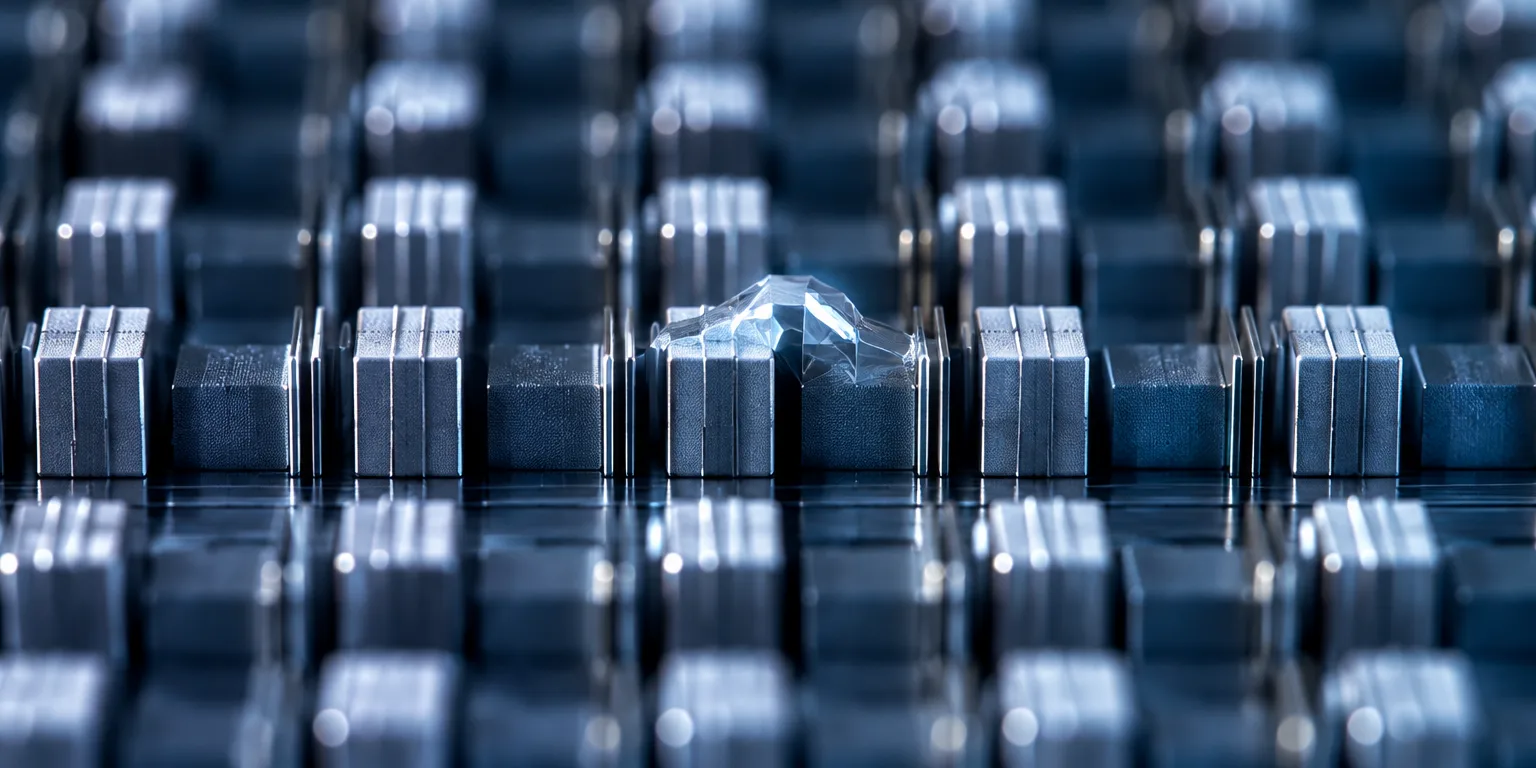
Sometimes the growth runs abnormally fast. Ken Fisher, an Intel engineer who helps bring new chip processes into production, likens the result to a tumor: a small, unwanted lump called an epi nodule.
The lump matters because transistors are packed so tightly. If a nodule grows large enough to touch a neighboring crystal, it can bridge two regions that should stay separate and let current leak where it should not.
That unwanted connection is a short, and the transistor stops working properly. Engineers must then choose whether to add a special cleaning step that removes the nodule after it forms, or to hunt down and eliminate whatever caused it in the first place.
Questions people ask
What does it mean for a transistor to short out?
A short is an unintended path for electric current. In a transistor, current is supposed to flow between the source and drain only when the gate allows it, so a crystal bridge that connects the wrong regions lets electricity go where it should not and the switch no longer works reliably.
Why grow parts of a transistor instead of carving them?
Epitaxy builds material up, while etching takes material away. To form the raised source and drain on either side of the gate, engineers need to add crystal in specific places, which etching alone cannot do.
How big is an epi nodule?
They are extraordinarily small, measured in billionths of a meter. A modern transistor is tens of nanometers across, so even a nodule far too small to see with the naked eye can be large enough to bridge two neighboring structures.