A Veteran Who Survived Suicide Built a Network Where Veterans Save Each Other
After medication, counseling, and career success failed to lift his despair, Chad Robichaux found purpose in veterans helping veterans.
 The Tucker Carlson Show · JFK, UFOs, Atlantis and Mind Control: The Man Who Put World Famous Conspiracies to the Ultimate Test
He slid a plan to fix his life across the table. Steve Toth, the man he had turned to for help, did not even read it.
Chad Robichaux, a veteran of eight tours in Afghanistan who survived a suicide attempt in 2010, built his recovery work on the conviction that nothing replaces another veteran who has been there.
Robichaux had served on a special operations task force and as a defense contractor, then made about 20 more trips to conflict zones on humanitarian rescue work. When he came home, he said, he was hit by debilitating panic attacks, anxiety, and depression.
By 2010, he felt he had no purpose and that his family would be sad without him but better off. He tried to take his own life.
What surprised him was what did not help. He had tried medication and counseling, and he had even rebuilt a successful career teaching and fighting in martial arts, which he had practiced since childhood. None of it lifted the hopelessness.
Toth told him his repair plan was a waste of time because it left out a relationship with Christ, and Robichaux decided to try a different path. Toth mentored him for about a year, and Robichaux said he found restoration, hope, and a sense of purpose.
That purpose became the Mighty Oaks Foundation, which he started in 2011. He said it has since served between 700,000 and 800,000 troops in uniform through resilience training and provides free recovery programs, including travel, for former service members, emergency workers, and relatives.
The method is deliberately peer to peer. As Robichaux puts it, another veteran can say, "I know where you are right now because I am you," in a way no counselor or spouse can match.
Recovery, in his telling, is not a six day course or a six month program but a single decision. A person stops seeing himself only as a victim of people and circumstances, takes responsibility even for a small share of the problem, and chooses to move forward with continued guidance.
Mighty Oaks teaches principles from the Bible, but Robichaux said about half the people who come are not Christians and no profession of faith is required. One man arrived with 666 and a cross tattooed on his neck, said he was a deacon in a Satanic church, stayed for the week, and later became a Christian missionary in Africa.
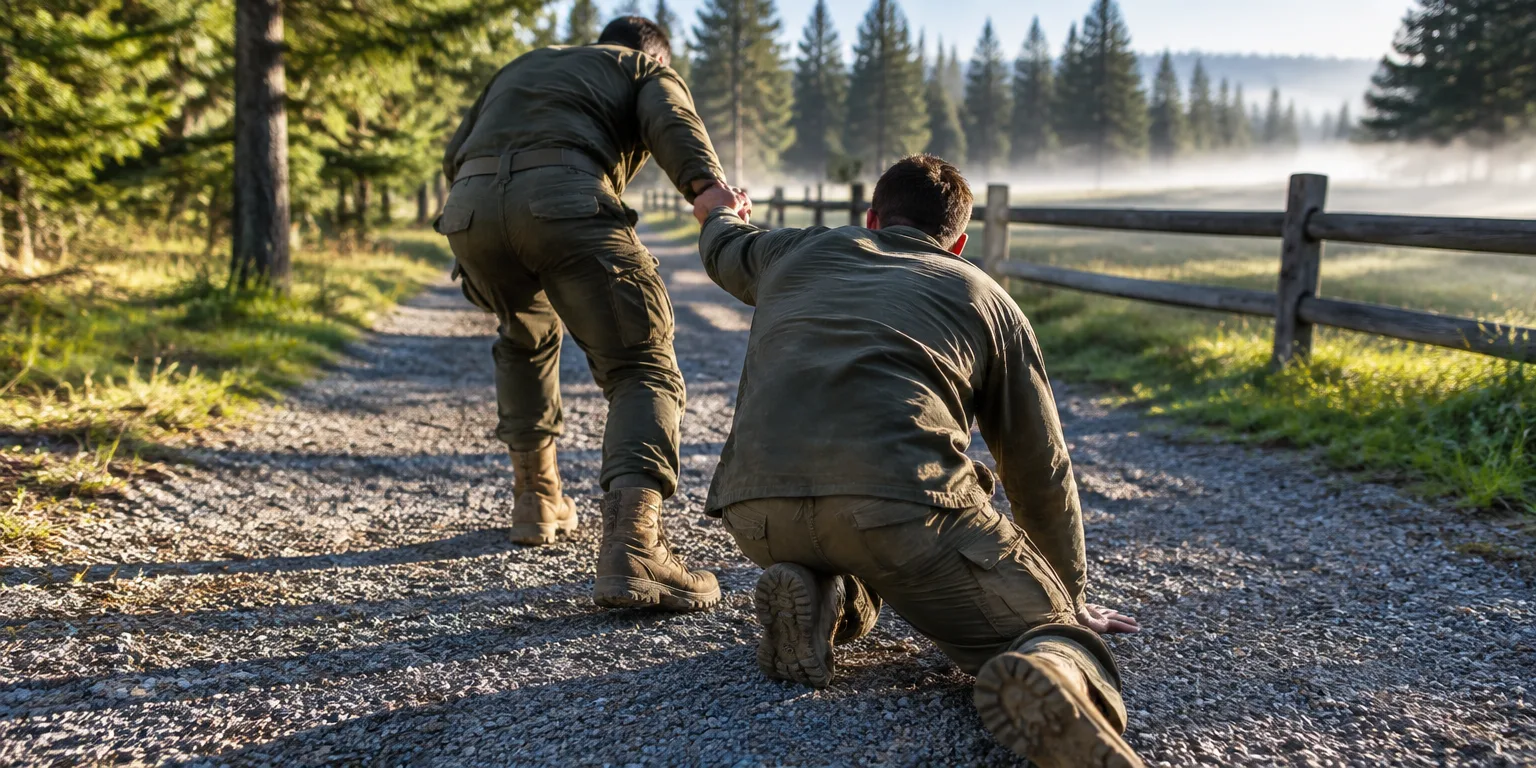
Robichaux describes the whole effort simply: he fell down, someone helped him up, he turned around to help the next person, and that chain has continued for more than a decade.
Questions people ask
What happens in a Mighty Oaks program?
The foundation runs weeklong intensive retreats focused on peer discussion, personal responsibility, and principles drawn from the Bible, followed by longer mentoring. It also runs resilience training for active duty troops. All programming, including travel, is described as free to participants.
Do you have to be a Christian to attend?
No. Robichaux says about half of participants are not Christians, including agnostics and people of other beliefs, and the program does not require conversion. The teaching is based on biblical principles for daily life, and some participants later choose Christianity on their own.
Where can a veteran in crisis get help right now?
In the United States, call or text 988 and press 1 to reach the Veterans Crisis Line, which is available day and night. Veterans can also text 838255 or chat online at veteranscrisisline.net. If there is an immediate danger, call emergency services.