Cooking at High Heat Can Leave Pollutants After the Smell Fades
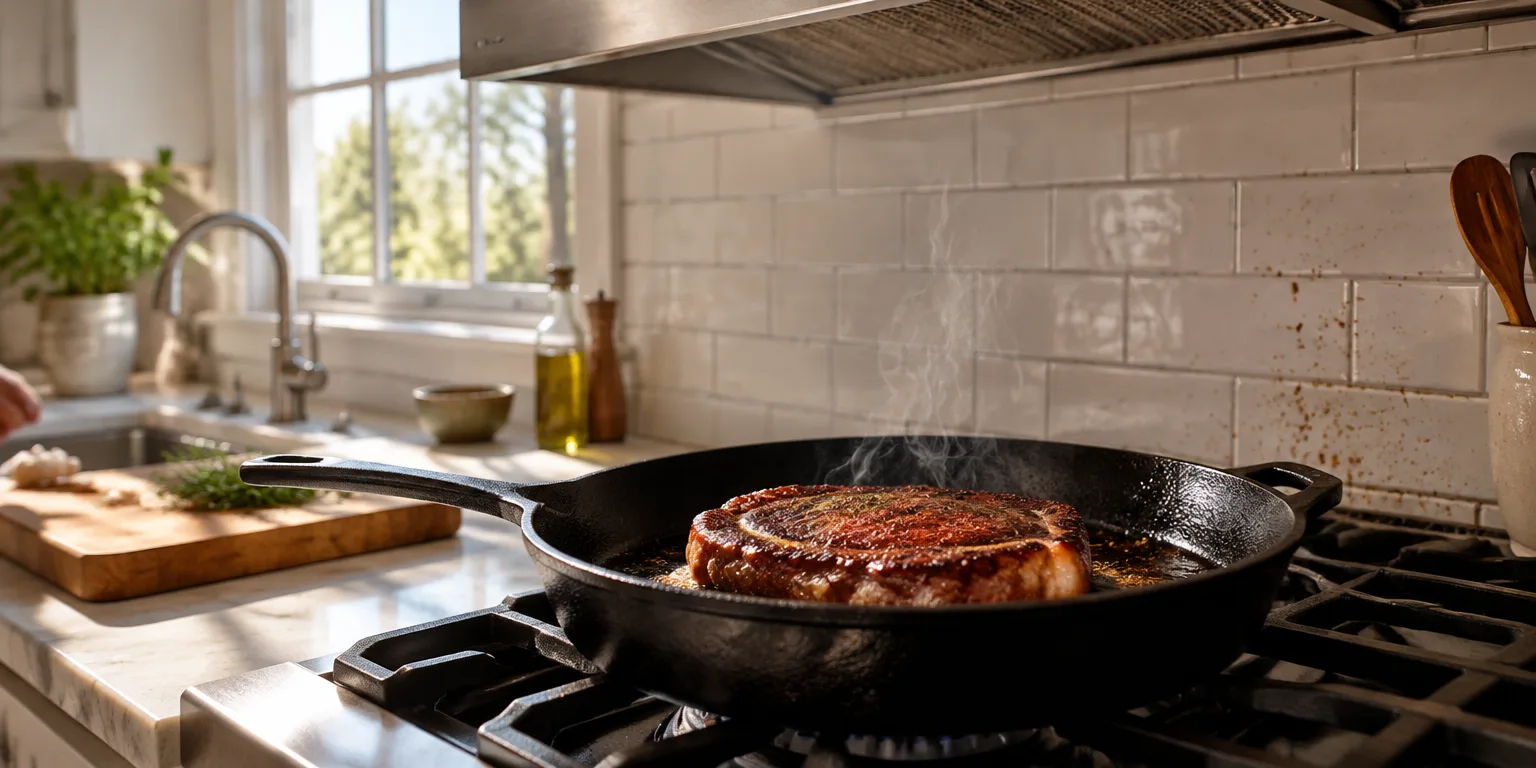
Even grass fed steak in a good pan can make polycyclic aromatic hydrocarbons, Feldstein says.
 Modern Wisdom · Your Home Might Be Destroying Your Health (& how to fix it) - Michael Feldstein - #1173
Even with good oil or beef tallow and a grass fed, grass finished steak in a great pan, high heat meeting protein can create pollutants that stay embedded in the home, says Michael Feldstein, a disaster restoration veteran who tested homes after fires.
The pollutants are polycyclic aromatic hydrocarbons, or PAHs, a family of chemicals that form when organic material burns at very high heat.
Feldstein says testers look for PAHs when checking homes after fires, and he says the same kind of compound can form during ordinary cooking when heat reacts with protein.
Bacon smells great in the pan, he says, but even when the cooking smell passes, those reaction products are still embedded in the home.
People only recently started cooking indoors and living indoors, he says. He describes modern houses as little Tupperware containers, with the average American spending 95 percent of time indoors.
He says most people are not using their range hoods. Opening windows or using the range hood fan above the stove is a good idea, he says.
Outside, he says, weather and trees help clean the air.
Questions people ask
What exactly are polycyclic aromatic hydrocarbons?
They are a large family of chemicals found in smoke, soot, and charred food. Researchers study long term exposure because certain members are carcinogenic.
Why can the smell fade while pollutants remain?
Odor comes from gases that can clear quickly, while cooking also leaves fine particles and compounds that cling to surfaces. Kitchen films, dust, and soft furnishings can hold those residues after the smell is gone.