An Undertaker Promised Burial at Sea and Sold the Body Instead
He had been exhibited for money in life and wanted no more display, but the buyer boiled away the flesh and kept the skeleton.
 After Dark: Myths, Misdeeds & the Paranormal · The Gruesome History of London's Undertakers
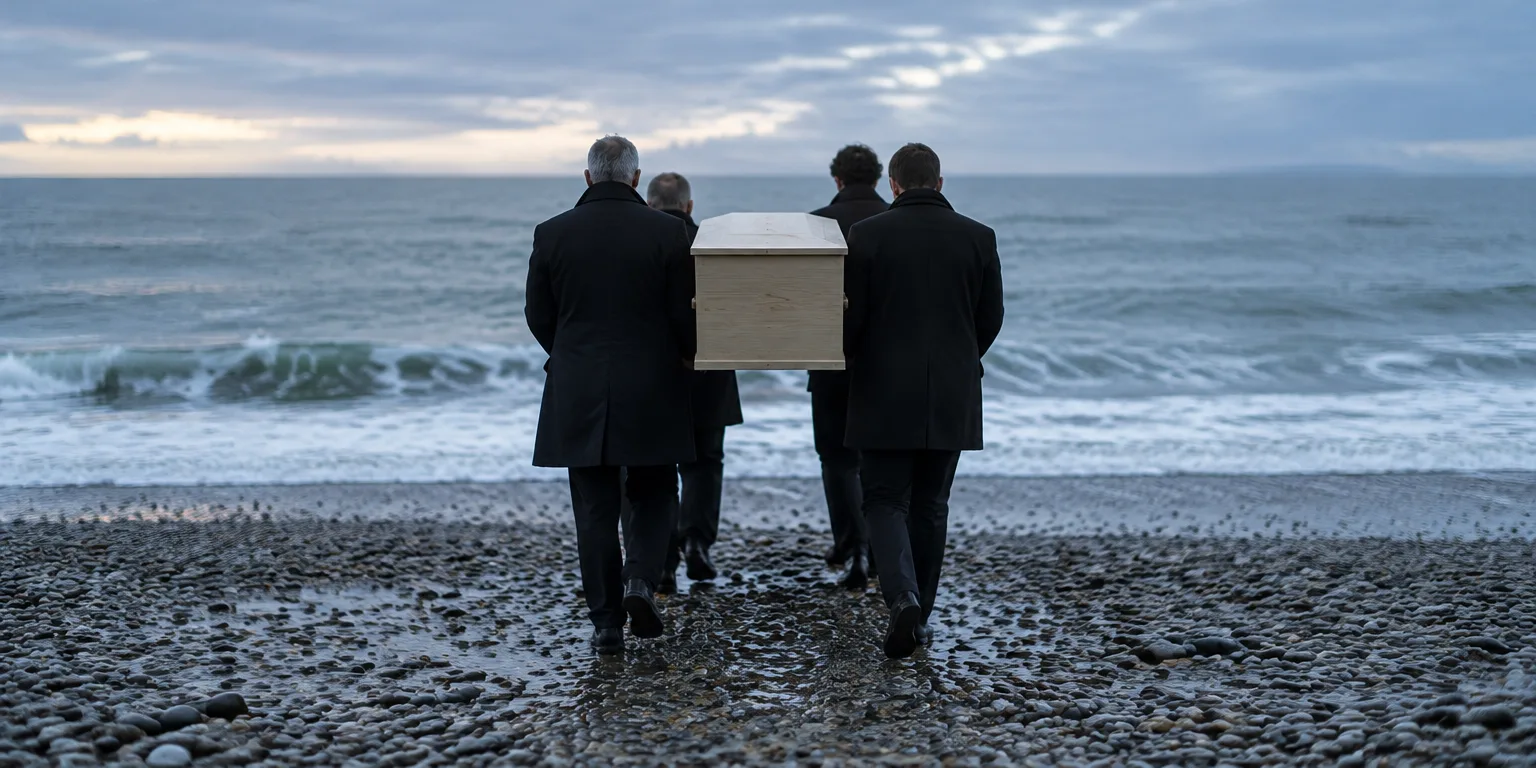
The coffin was carried toward the sea, and everyone watching believed the plan had worked. Inside, they thought, lay Charles Byrne, the Irish giant, at last safe from prying eyes beneath the waves.
Byrne was only 22 or 23 when he died, and he had spent much of his short life on display. He had earned money from crowds who paid to stare at him, but he had also been exploited by that attention.
He left explicit instructions to be buried at sea, where no one could display or study his body. Instead, the undertaker hired to carry out that wish secretly sold the corpse for about 500 pounds, a betrayal that shows how much power funeral workers hold over the dead.
The buyer was John Hunter, a collector who wanted the skeleton for his museum. While a coffin holding something else was dropped into the water, Byrne's real body was taken to Hunter.
There, Hunter boiled the body to remove the flesh and kept the cleaned bones. He added the skeleton to his collection, the kind of display and study Byrne had wanted to avoid after death.
Historian Dan O'Brien, who studies London's funeral trade, calls the case a real-world warning about hiring an undertaker. The service spared families from organizing burials themselves, but it also placed a person's last instructions in someone else's hands.
That anxiety was familiar in 18th-century London, where cartoons and jokes lingered on what undertakers did behind closed doors. O'Brien says the undertaker took a bribe from Hunter.
The skeleton remained in a collection into the modern era, though it is not currently on display. More than two centuries later, debate continues over whether Byrne's wish for the ocean should finally be honored.
Questions people ask
Who was Charles Byrne?
Byrne was an Irishman who grew to more than seven and a half feet tall and was exhibited in London in the early 1780s as the Irish Giant. Crowds paid to see him, which brought him income but also constant scrutiny.
Who was John Hunter?
Hunter was a Scottish surgeon and anatomist whose large collection of preserved specimens became the basis of the Hunterian Museum in London. He was known for paying for unusual bodies to study and display.
What happened to Byrne's skeleton afterward?
The skeleton was held for more than two centuries and long displayed at the Hunterian Museum at the Royal College of Surgeons in London. The museum has since removed it from display, amid continuing calls to honor Byrne's wish for burial at sea.