Slow Funeral Processions Were Easy Prey for Highwaymen
Hearses had to move slowly and respectfully, while carrying wealthy mourners and valuable goods.
 After Dark: Myths, Misdeeds & the Paranormal · The Gruesome History of London's Undertakers
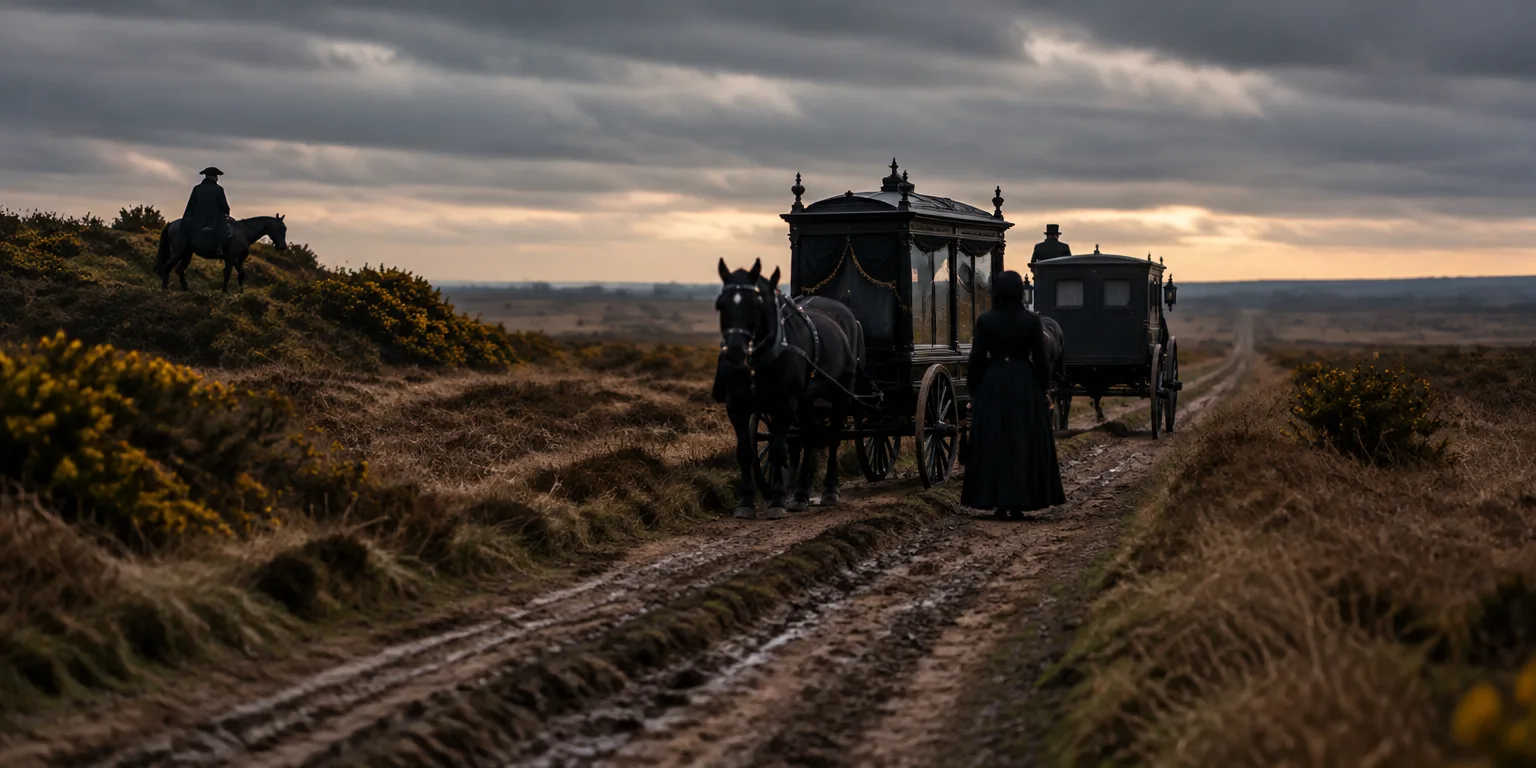
In 18th-century England, a funeral procession could be a prize target for highwaymen.
Unlike a mail coach that could whip through dangerous ground, a hearse had to plod along respectfully under a heavy load. On a rural journey outside London, mourning coaches might follow behind, with the undertaker conspicuous in full black.
The slow pace was only part of the appeal. The party traveled with valuable items, and the coaches carried affluent mourners.
Dan O'Brien, a historian of London's funeral trade, singles out Hounslow Heath west of London as the kind of lonely stretch where a party heading to or from a burial would have been a sitting duck.
Questions people ask
Where was Hounslow Heath, and why was it dangerous?
Hounslow Heath was a large, open area west of London on the main road to the west of England. Its isolation and heavy traffic of coaches and wealthy travelers made it notorious for robberies in the 17th and 18th centuries.
What was a mail coach?
A mail coach was a fast, scheduled stagecoach that carried mail, passengers, and parcels. Speed and armed guards were its main defenses, the opposite of a slow and highly visible funeral procession.
Did highwaymen remain a danger to funerals in the 1800s?
No. By the 19th century, professional police forces, better roads, and enclosed suburbs reduced highway robbery. Funeral risks shifted to disease, fires in crypts and workshops, and later to traffic rather than holdups.