Undertakers Sold Locking Coffins to Calm Fears They Helped Grave Robbers
London funeral firms turned suspicion that they tipped off grave robbers into a sales pitch for locks, iron bands, and high-security coffins.
 After Dark: Myths, Misdeeds & the Paranormal · The Gruesome History of London's Undertakers
In late 1700s London, the man hired to bury a body was also suspected of helping to steal it. The worry was practical, because undertakers had the steadiest access to the dead and knew when funerals would happen.
Historian Dan O'Brien, who studies London funerals, describes a feared alliance among lawyers, gravediggers, church sextons, undertakers, and surgeons. Each held a useful piece of information, from when someone might die to when a fresh grave would be filled.
That knowledge was valuable to resurrectionists, the body snatchers who dug up corpses to sell for medical study. The suspicion was that an undertaker might pass burial times to the thieves, while a physician might tip off an undertaker about an approaching death.
A thief did not need to steal a whole coffin or remove its lid. O'Brien says snatchers could break open the top of the lid and pull the body out, so builders focused on making that quick grab harder.
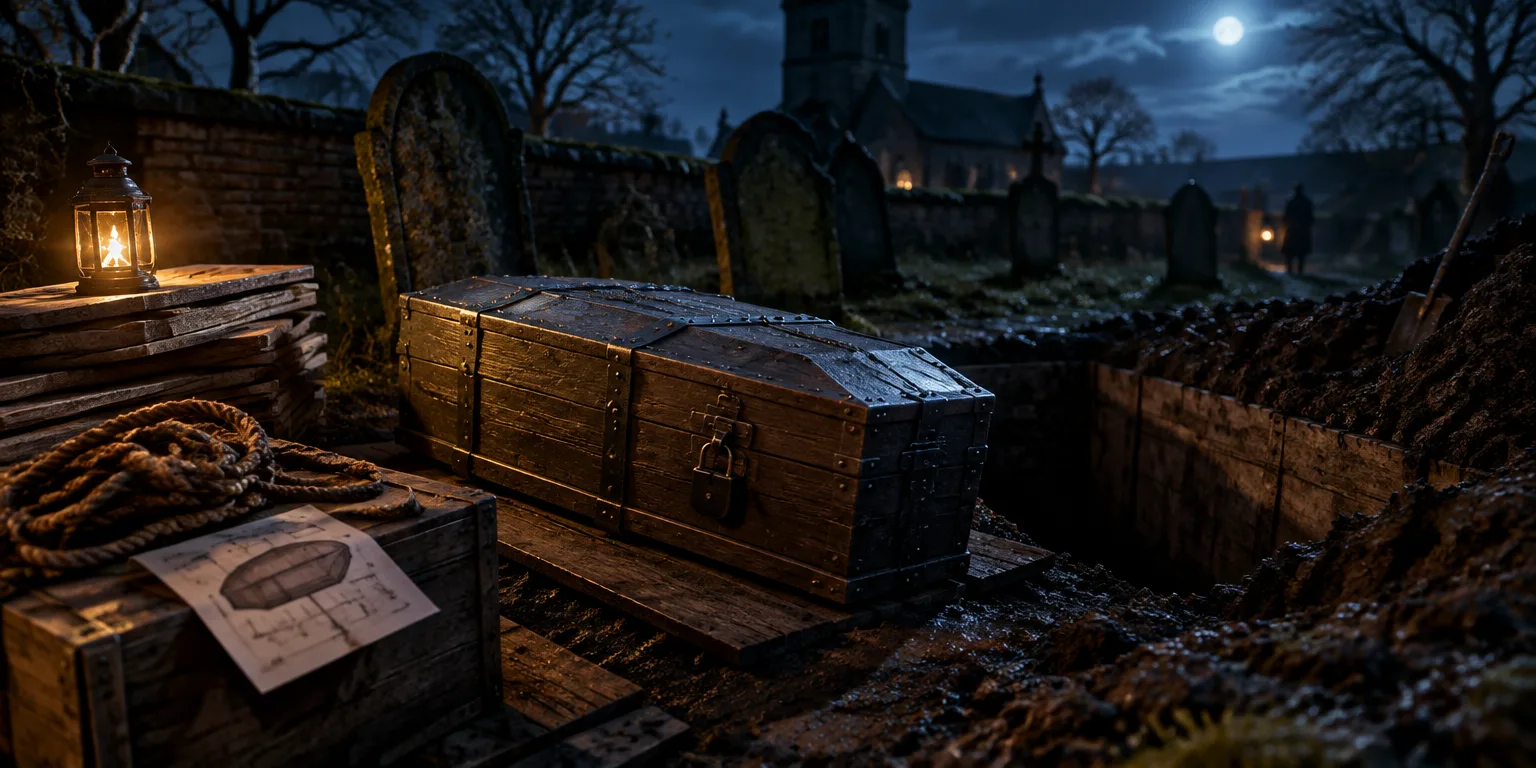
Funeral firms answered with patent coffins fitted with locks and bands of iron. The pitch was protection: pay more, and the coffin itself would resist being forced open in the ground.
The strongest version was the iron coffin. It was secure, but it did not rot away like wood, which alarmed authorities in crowded London because used burial ground could not be reused.
One firm, Jarvis and Sons, advertised an engineered security coffin with a trade card showing the design pulled apart, with letters marking how the parts locked together. O'Brien says most customers could not afford such a model, but advertising it told the public that the firm understood the fear and had the skill to meet it.
Questions people ask
Why did body snatchers want corpses in the first place?
Medical schools needed bodies to teach anatomy, and for much of the period the only legal supply was the corpses of executed criminals. That shortage created a black market in freshly buried bodies, which were dug up at night and sold to surgeons and students.
Did locking coffins actually stop grave robbery?
They made a hurried nighttime theft slower and noisier, which was often enough to deter thieves. Determined robbers could still force many designs, so families also hired watchmen, used secure burial grounds, or waited until the body was less useful for study.
Why did authorities dislike iron coffins?
London churchyards were severely overcrowded, and parishes depended on wooden coffins and bodies decaying so graves could eventually be reused. An iron box that survived intact underground permanently occupied scarce space, which authorities saw as unworkable.