Funerals Once Hired Silent Men to Stand Outside the Door
A mute at the door told Londoners someone had died, and he was supposed to look the part.
 After Dark: Myths, Misdeeds & the Paranormal · The Gruesome History of London's Undertakers
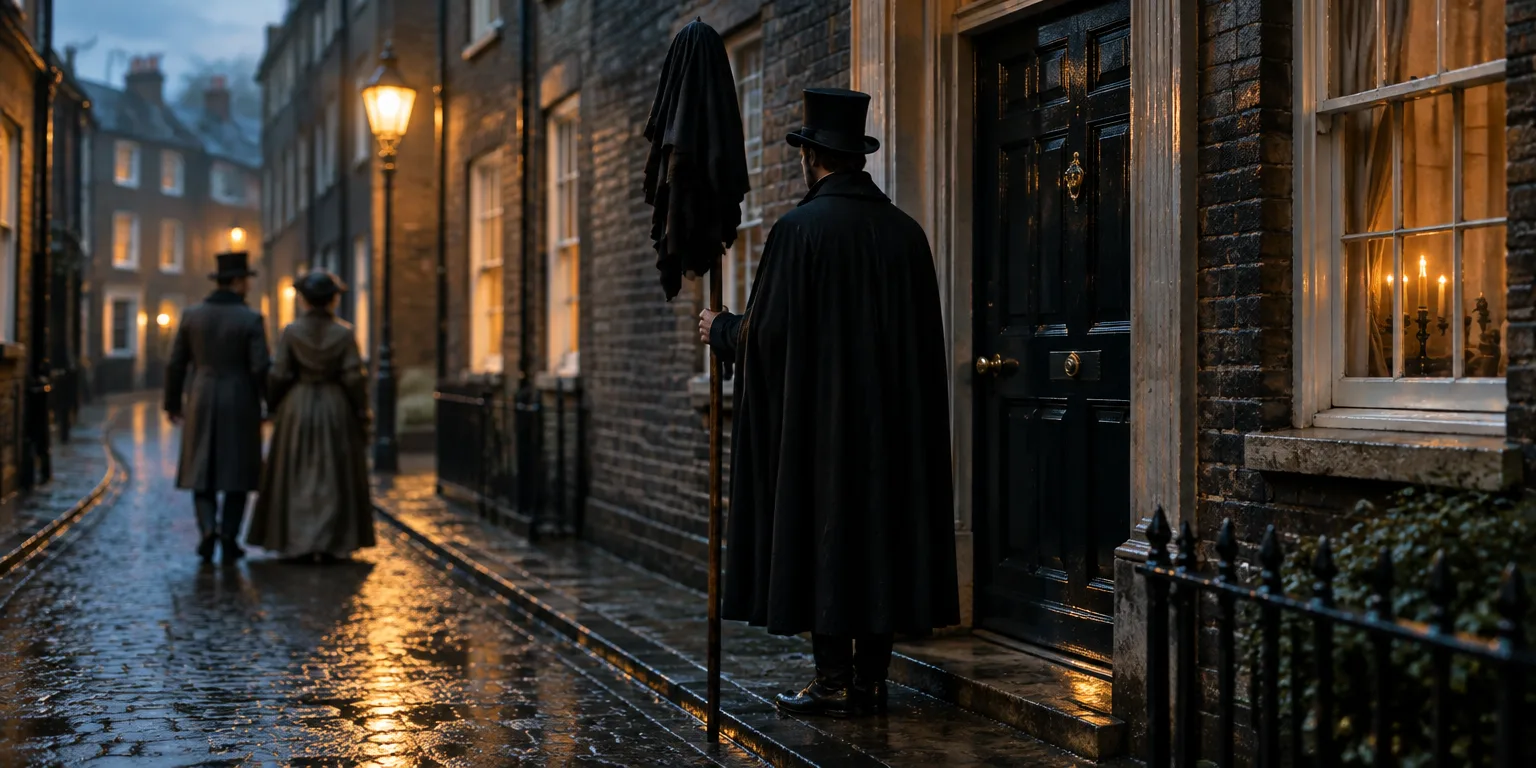
In 18th-century London, some funerals hired men called mutes to stand silent outside the house where someone had died. Historian Dan O'Brien says their job was to personify grief, keeping quiet and looking grave.
Each mute carried a stave, a wooden pole topped with fabric. Posted at the door, or carried in procession and sometimes on horseback for grander funerals, the stave told any passerby that a body lay inside.
Like other funeral workers, mutes were expected to move slowly and with restraint. The joke, O'Brien says, was when they broke character by getting drunk, fooling with their staves, knocking gravestones, or falling asleep.
That failure was newsworthy because the role was so strict. A silent man at the door was supposed to make death visible without saying a word.
Questions people ask
Were funeral mutes actually unable to speak?
No. Mute described the job, not the person. The men were hired to keep silent and look grave, serving as living symbols of grief and respectability for the household.
Did mutes only stand outside houses?
They were part of a wider paid cast that could include the undertaker and coffin bearers. For grander funerals, mutes might walk in procession or ride on horseback, turning a private death into a public display of status.
Do funeral mutes still exist?
Paid mourning has a long history in many cultures, from hired wailers to professional pallbearers today. The formal role of the silent door attendant faded as funerals moved away from elaborate street processions.