China's Northern Border Is Protected by Emptiness
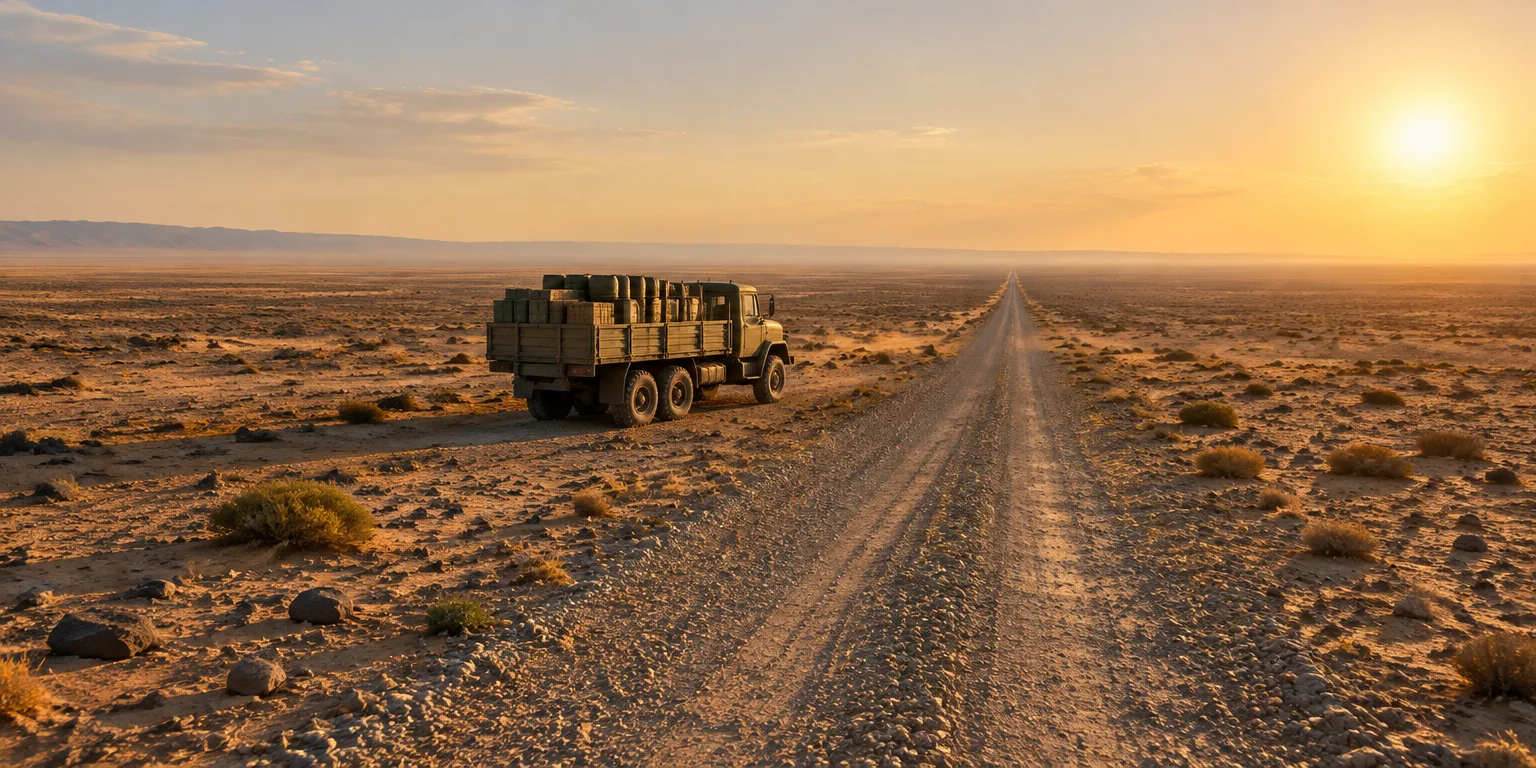
Mongolia's vast, empty terrain would make any invading army's supply lines enormously long.
 Wendover Productions · China's Geography Problem
In a 2017 analysis of China's borders, the north stood out for how little there was to fear.
The buffer was Mongolia, described at the time as enormous, thinly settled, and friendly toward Beijing.
The protection is the ground itself: the Gobi desert and barren land that offer a passing army almost nothing to use. A modern, mechanized force would struggle to cross quickly or effectively.
Crossing that emptiness would force fuel, food, and parts to travel huge distances, giving Beijing plenty of advance notice before any attacker reached its frontier.
Mongolia has only one other neighbor besides China, Russia, which the analysis described as a friendly military and economic partner. The argument was that China did not need to worry much about the northern border unless ties with Russia soured.
Questions people ask
What is the Gobi desert like?
The Gobi is a large, cold desert and grassland stretching across southern Mongolia and northern China. It gets little rain, has extreme temperature swings, and has few towns, rivers, or roads, so travelers must carry most of what they need.
Didn't northern invaders conquer China before?
Yes. Mongol forces conquered China in the 1200s and established the Yuan dynasty, and the Manchus later entered from the northeast to found the Qing dynasty. Those were horse based armies that could live off herds and move lightly, unlike modern mechanized armies that need constant fuel and parts.
Why doesn't China fear Mongolia itself?
Mongolia had about 3.4 million people in 2017 with a very small military, compared with China's 1.4 billion people and one of the world's largest militaries. The two countries also had normal diplomatic and trade relations at the time, so Mongolia was treated as a buffer rather than a threat.