In Rats, Meth Spikes The Brain's Reward Signal Ten Times More Than Sex
Bigger, faster dopamine hits are more reinforcing, which helps explain why some drugs and habits hook harder.
 Andrew Huberman · Overcome Addictions and Obsessions of All Kinds | Dr. Anna Lembke
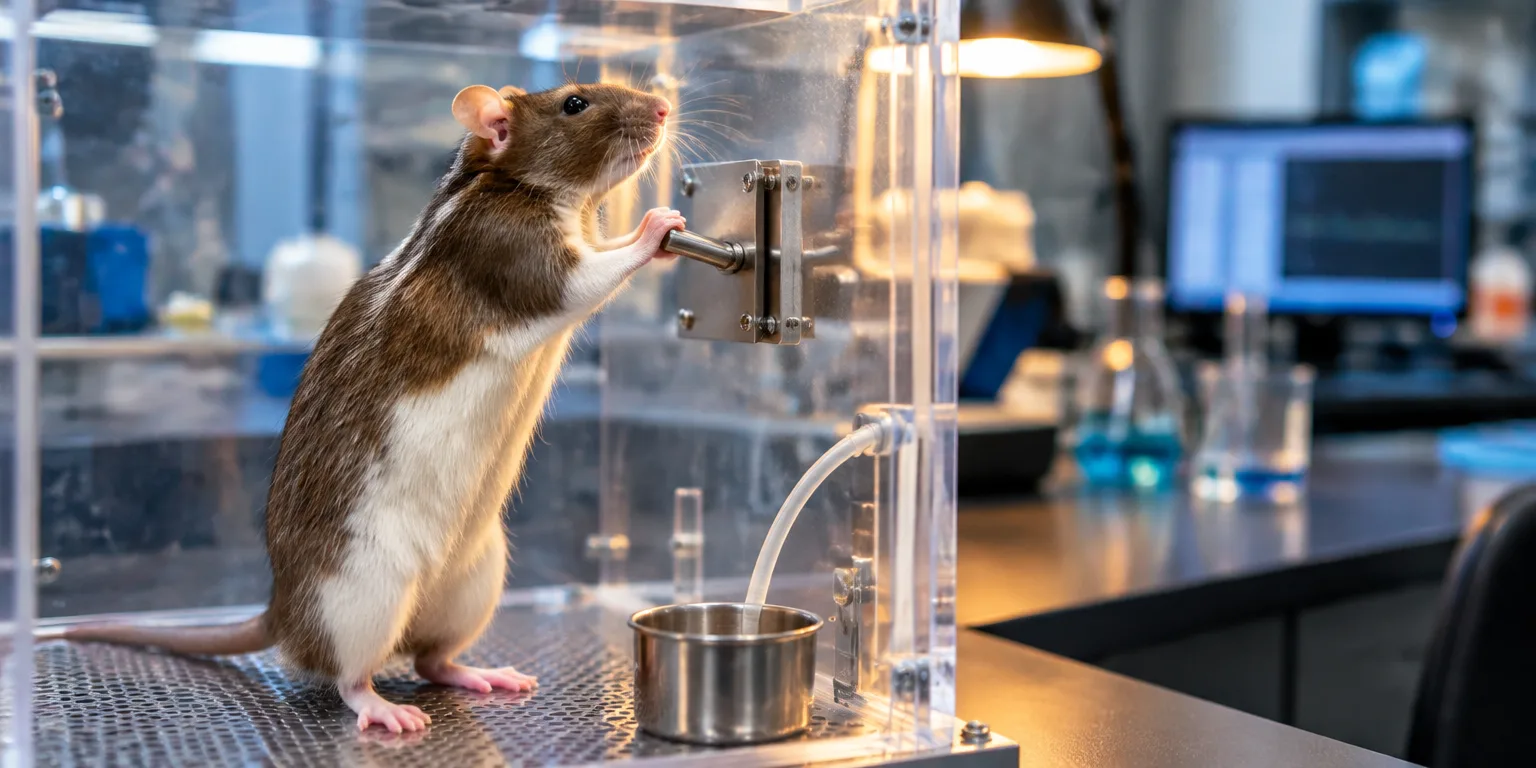
In rats, methamphetamine pushes dopamine in the brain's reward pathway to 1,000% above baseline, ten times the 100% increase seen with sex.
That comparison comes from addiction psychiatrist Dr. Anna Lembke, who lays out a ladder: chocolate lifts the signal 55% above baseline, sex 100%, nicotine 150%, and methamphetamine 1,000%. The rule, broadly speaking, is that more dopamine, released faster, makes a substance or behavior more reinforcing and usually more pleasurable.
Direct probes can measure the chemical in a rat's nucleus accumbens, a key reward center, while human measures are relative and less exact. But Lembke says the principle holds in people, and sex, gambling, and social media rely on overlapping reward circuitry also involved in drug and alcohol use.
Questions people ask
Does more dopamine mean more pleasure?
Not exactly. Dopamine is more about reinforcement and wanting than pure liking. Other brain chemicals shape pleasure, but a large, fast dopamine rise makes the brain more likely to repeat the behavior.
Can scientists measure this spike in people?
Only indirectly. Researchers cannot routinely place probes in the human brain as they can in rats. They use brain scans and other relative measures, so the numbers are not directly comparable, though the ranking of larger, faster hits holds.
Does social media really use the same brain pathway as drugs?
It uses overlapping circuitry, not an identical experience. The point is that gambling, social media, and sex can tap the same reward pathway as drugs and alcohol, which is why behaviors can also become compulsive.