Consumer Purifiers Could Not Clear Smoke From a Home
Consumer purifiers could not keep up, and his wife would not live with the noisy fix.
 Modern Wisdom · Your Home Might Be Destroying Your Health (& how to fix it) - Michael Feldstein - #1173
A week after his crew handed back a freshly cleaned house, Michael Feldstein, a disaster restoration contractor, learned the family's baby was in the hospital.
His team went back to the home in Fort McMurray, Alberta, tested the air, and found it badly contaminated again. The cleaning had held for only days.
The setback came after the 2016 Fort McMurray wildfire, which Feldstein described as the "biggest wildfire in Canadian history." All 100,000 residents were evacuated for a month, and returning families found homes drenched in smoke.
This was not campfire smell. About 5,000 homes had burned, along with cars, paint, drywall, and household chemicals, creating a toxic smoke that could take weeks or a month of gutting and cleaning to remove.
Feldstein's lesson was blunt: a house can be cleaned and then quickly recontaminated when the air outside stays polluted. After a severe wildfire, he said, outdoor air can remain bad for four to six months, with residue in soil, ash, and burned structures.
Feldstein called the insurer and asked to move Tanya, the homeowner, and her family to a hotel and redo the cleaning once the ambient air improved. The company refused, he said, telling him the check was already on its way and the job was done.
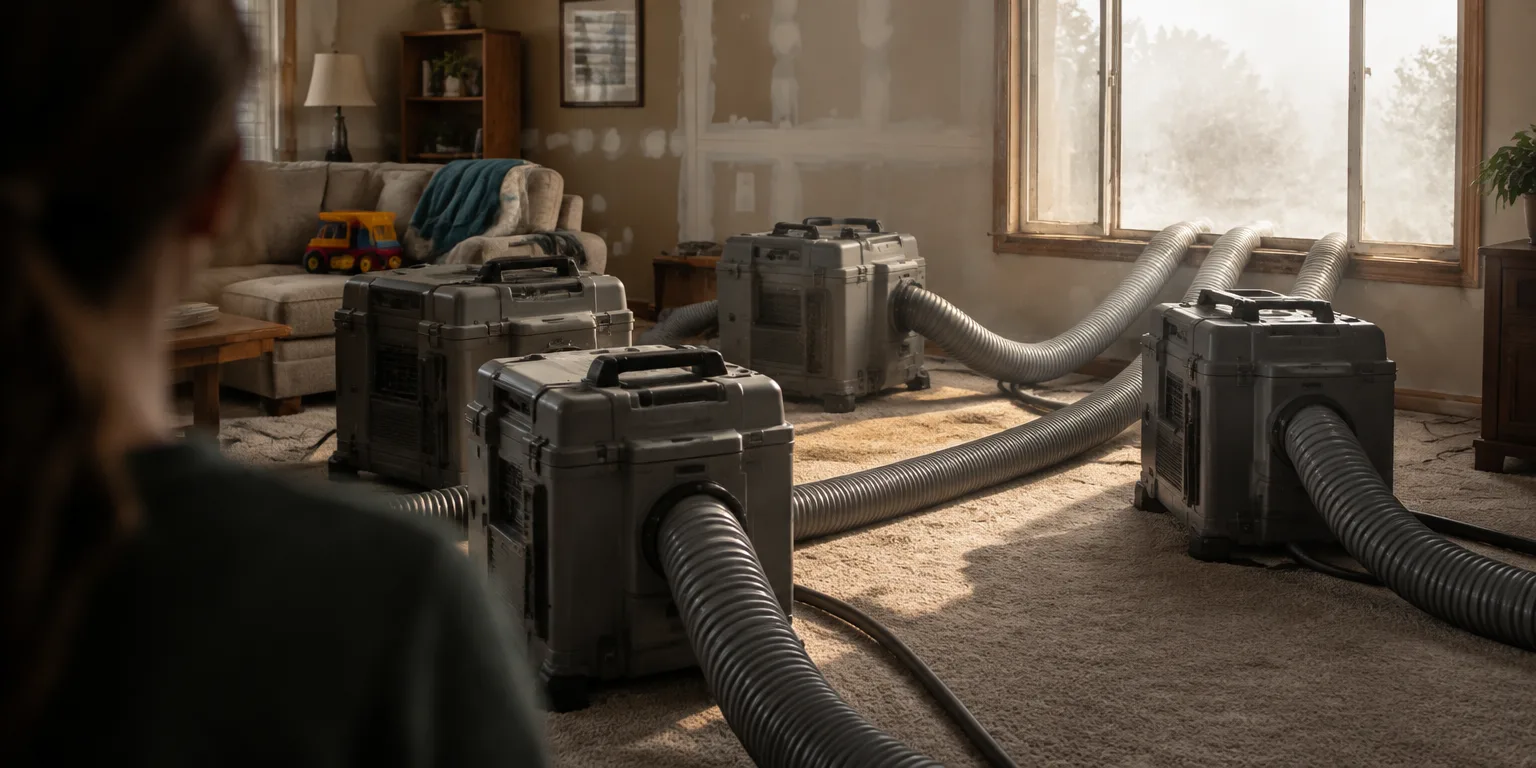
So the crew left four big industrial air scrubbers running in the house. Two or three hours later, he said, the air tested clean. The catch was obvious to anyone inside: the machines were loud.
They left the scrubbers there for weeks, about a month. At that home, the problem kept returning, he said, so the crew kept the equipment in place because the cleaned house would not stay clean and the insurer would not pay for another cleaning.
Feldstein tried a cheaper answer from a big box store, five or six ordinary purifiers costing a few hundred dollars each. A few hours later, he said, the house still tested contaminated, and he concluded the small machines could not handle a truly smoke loaded home.
People on the West Coast told him smoke did not need long to take hold. Even one or two days of smoke passing through a city could leave contaminants absorbed in chairs, carpets, and drywall after the smell faded and residents got used to it.
The industrial machines worked, but they were loud and ugly, built for job sites rather than living rooms. When Feldstein brought one home to Toronto, his wife Rachel said, "get that thing out of the house," and he began thinking about a quieter, better looking scrubber meant for home use.
Questions people ask
Why compare indoor air with outdoor air at the same time?
An indoor reading alone cannot show whether pollution comes from the house or from the neighborhood. Taken together, the two samples show the difference between the home and the air around it at that moment.
What makes an industrial scrubber stronger than a small room purifier?
Restoration scrubbers generally move much more air, use larger and thicker filters, and are designed to cycle the air in a damaged room many times per hour. Most small home purifiers move less air and carry smaller filters, so they can be overwhelmed when smoke loading is heavy and pollution keeps entering.
What can residents do for smoke when they cannot leave town?
Public health agencies often advise closing windows and doors during heavy smoke, running heating and cooling on recirculate with a clean filter, and avoiding added smoke from cooking, candles, and vacuuming. A portable cleaner with a high efficiency particle filter can help in a closed bedroom, but it works best as one part of reducing exposure.