Federal Retirement Checks Were Calculated by Hand in a Pennsylvania Mine
Processing could take more than a year, until officials moved applications online and bought machines to scan 400 million old files.
 The a16z Show · Scott Kupor on Building a16z and Rebuilding the Federal Workforce
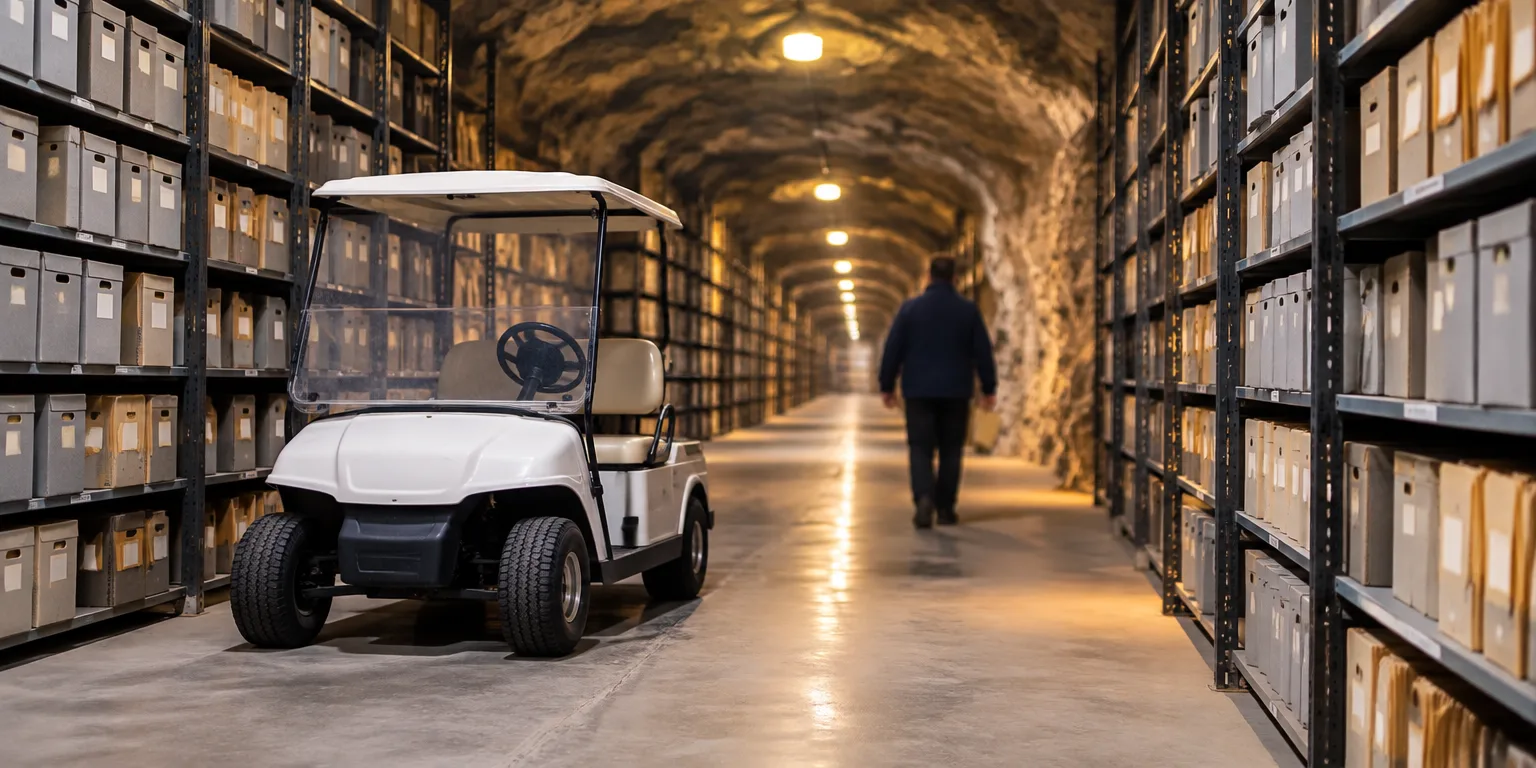
Deep inside a former limestone mine in Boyers, Pennsylvania, federal workers started their day by driving golf carts through secured tunnels lined with paper.
They were processing retirement checks. Each claim arrived by mail, was read by hand, and had benefits calculated by hand by staff in a retirement operation of about 800 people.
Scott Kupor, head of the Office of Personnel Management, the federal government's personnel agency, says 100,000 to 200,000 federal workers retire each year. Their first full check could take three months at best, and more than a year at worst.
The paper traveled a long route. A retiree filled out forms, put on a stamp, and mailed them to a personnel office, which did its review and mailed them onward.
Personnel and payroll are separate operations in the federal government, so the file passed through both before reaching the mine. The mine itself, in rural Butler County, was once a working limestone operation and is now a vast, guarded storage site.
Elon Musk called the process insane and teamed with Airbnb co-founder Joe Gebbia on a plan to automate it before Kupor arrived. Kupor then carried the project forward.
The office moved new applications online and declared June 30 as the last day incoming paper would enter the mine. Processing time has already fallen by more than half.
Kupor says the goal is to cut processing time by 90 percent. A retiree who files a complete electronic application should get a full check within 15 days.
A larger backlog remains underground. About 400 million older documents are still stored there, some dating to the 1950s, and a worker known as a runner must pull the physical file whenever a retiree calls with a question.
The office has bought two room-sized scanning machines to digitize that archive. Once the files are electronic, officials say, they can improve service and eventually close the storage part of the mine.
Questions people ask
Why store federal records in a limestone mine?
Limestone mines stay cool, dry, and stable year round, which helps preserve paper, and they are naturally secure and resistant to fire. The government and private storage firms have long used such sites, including the Boyers facility, for records that must be kept for decades.
Will the mine close now that new claims are online?
Kupor says the goal is to digitize all 400 million remaining documents so the storage operation can eventually close. He has not given a closing date, and the office must first scan the archive and shift customer service to electronic records.
How does the new retirement process work?
Retirees now file electronically instead of mailing stamped forms, and personnel and payroll reviews happen around that digital file. OPM is also consolidating 120 personnel computer systems into one, so a worker's service history can be tracked during a career rather than reconstructed at retirement.