Oil Cooks Food Faster Because It Fills the Gaps Your Pan Cannot Reach
Without it, Brussels sprouts take twice as long and still stay hard, and even a nonstick pan leaves steak gray.
 Adam Ragusea · Why we cook food in oil
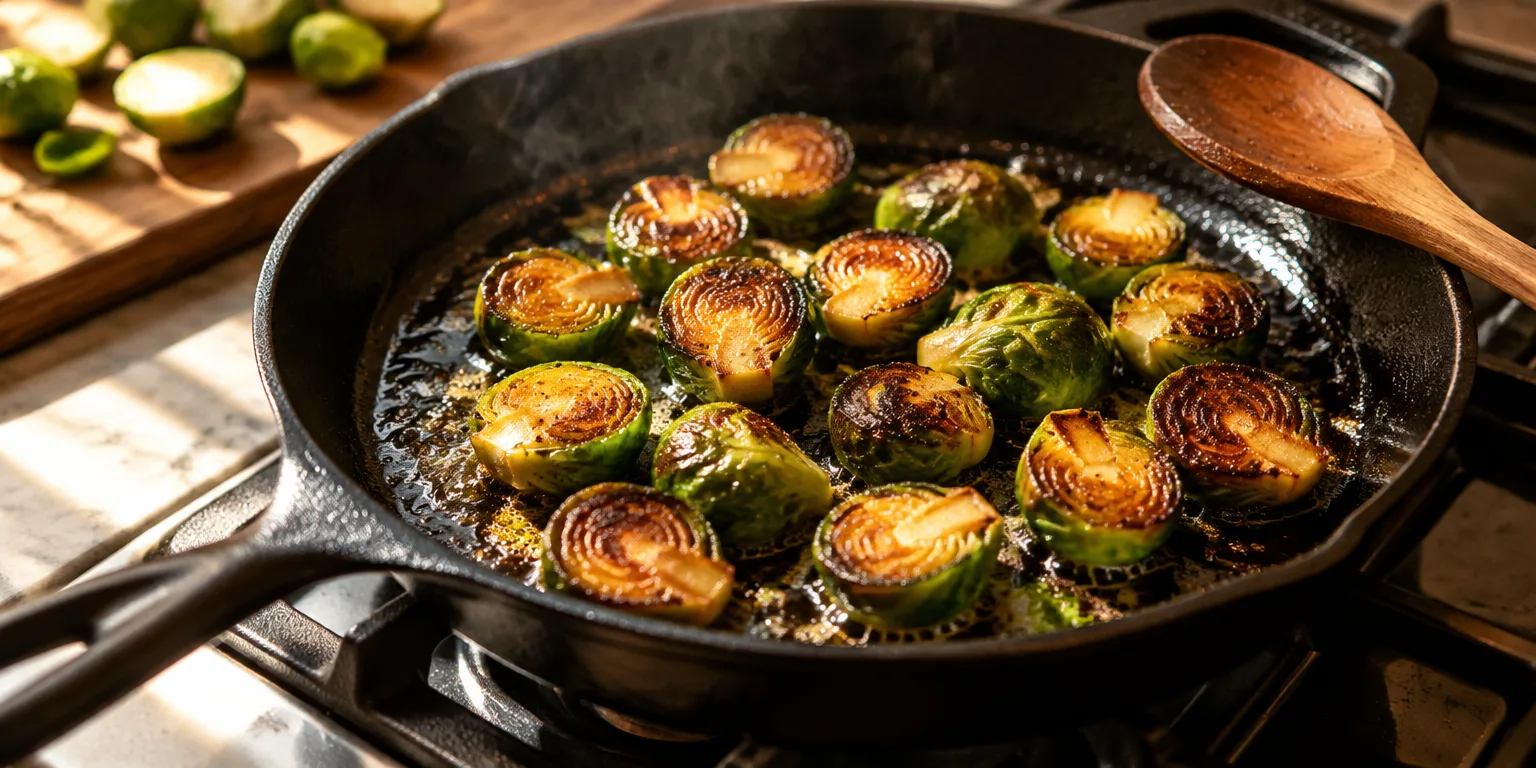
Put halved Brussels sprouts in a hot pan with a little olive oil, and in six minutes they turn tender and golden brown across the cut face.
Do the same thing with no oil, keep them moving so they do not stick, and at six minutes they are still hard inside. After eleven minutes they are still not done, and you have to push a fork hard to get in, and the color is not gold but isolated black spots with sharp edges.
It is not mainly about sticking. A pan is flat and rigid and a sprout is round and lumpy, so only tiny points of the food actually touch the metal.
That film of oil acts as a thermal interface, a liquid bridge that carries heat. It surrounds the curves and bumps that never touch metal, so heat flows into a much wider area than contact alone would allow. Seen with a heat sensing camera, broccoli fried in oil glows hot across its whole face, not just at the contact points.
Without oil, heat stays pinned to those few points and the food as a whole stays cooler, so the inside takes far longer while the outside risks burning before it gets tender.
The same gap explains why even a nonstick pan still needs oil. A lean sirloin steak will not stick to the coating, but as it cooks it gives off puffs of steam that balloon up and lift the meat away from the hot surface, leaving pale gray patches. Oil fills that new gap, keeps heat flowing into the meat, and helps build a brown crust that cooks faster, tastes better, and lets go easily.
So when a recipe tells you to start with oil, it is not just greasing the pan. It carries heat to the parts of the food the pan cannot touch.
Questions people ask
Do I need a lot of oil to get this effect?
No. A thin film that coats the pan is enough to bridge the tiny gaps between metal and food. More oil will start to fry or deep fry, which is a different technique, and it adds calories.
Can butter, lard, or chicken fat do the same job?
Yes. Any fat that is liquid at cooking temperature can act as that heat bridge, because the job is physical, not flavor specific. Butter and other animal fats contain water and milk solids, so they sputter and brown faster, but the heat transfer works the same way.
If oil helps browning, why do oiled foods sometimes brown less in a crowded pan?
Crowding cools the pan and releases a lot of water from the vegetables or meat. That water keeps the temperature near boiling until it steams off, and oil cannot get hot enough to brown while that water is present. Cooking in smaller batches and drying food first lets the oil stay hot.