Pirelli Designs Formula One Tires Before the New Car Is Available
With little track testing available, Pirelli built up virtual modeling in racing and then moved it into road tires.
 In Good Company with Nicolai Tangen · Pirelli CEO: Formula One, Smart Tyres and Europe’s Car Industry
Pirelli starts work on a new Formula One tire before the new car is available, beginning with the structure and materials for editions such as 2027.
The starting point is unusually blind because time is short. The development window is very tight, and Pirelli has very limited chances to run physical tests, according to Pirelli chief executive Andrea Casaluci.
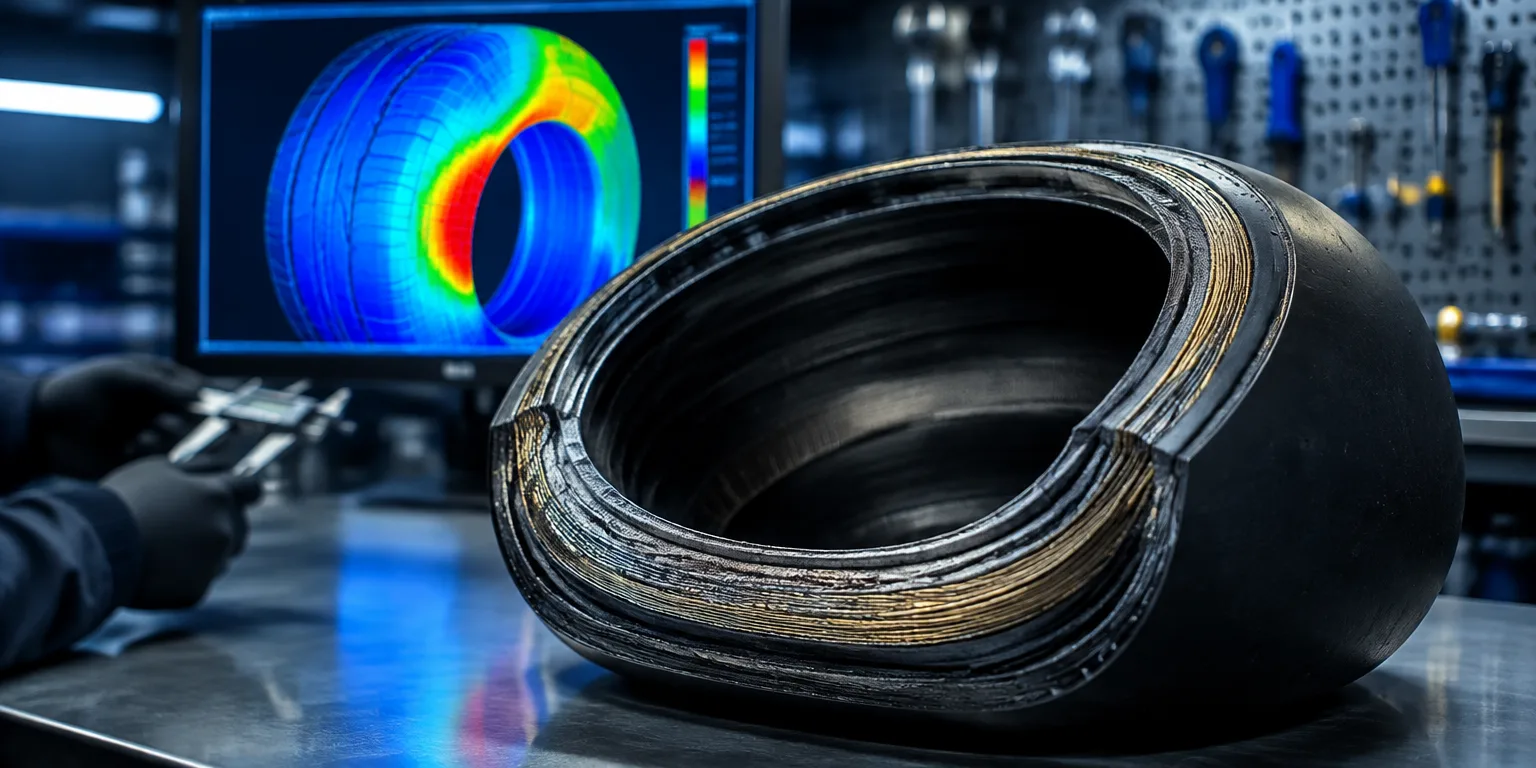
So engineers develop the tire through mathematical models in virtual form. They predict how the tire will behave instead of learning mostly by testing it on track.
Casaluci says those time limits and few physical tests are where virtualization began inside Pirelli. The company started introducing these methods in Formula One.
That experience matters beyond racing because Pirelli now makes only consumer tires, for cars, motorcycles, and bicycles, after leaving truck, mining, and other large tires behind. Casaluci calls Formula One an open-air laboratory, a place to learn from a technology standpoint and then transfer what it learns.
The example he gives is virtual development itself. The capabilities built in Formula One were transferred into everyday tire development, so methods first needed for racing are now part of ordinary tire work.
Questions people ask
Why is designing the tire without the car so difficult?
As general engineering context, a tire's behavior depends on the car around it. When that car is not available for testing, engineers have to work from estimates and models, then use limited later tests to check the work.
What does virtual development replace?
Casaluci's point is practical: Pirelli has very few chances to test physically, so much of the development is done in mathematical models. The models let engineers develop structure and materials in virtual form before limited testing.
Why would race-tire methods help ordinary tires?
Racing exposes a tire to high speeds, heavy loads, rapid heating, and quick performance changes. Lessons about materials, construction, and prediction under those stresses can inform the design of passenger tires, even though the products are different.