A San Francisco Teacher Swapped Take-Home Essays for Oral Exams Over AI Worries
A San Francisco teacher now tests sixth graders aloud, and a social studies teacher leans on paper notebooks.
 Reuters World News · Judge blocks DOJ threats, Italy strike, Burnham 'open to slave trade apology'
In a sixth-grade humanities class in San Francisco, the take-home essay is gone. The teacher now asks questions during class and has students answer aloud in real time.
Answering aloud leaves little room to look anything up. The oral exam is one of several in-class assignments the teacher uses to judge what students know without worrying about AI help.
The example comes from Helen Koster, a reporter who has spoken with teachers across the country about classroom AI. Koster says divisions over how to use AI have left many teachers to navigate the change largely on their own and search for workarounds.
What Koster heard repeatedly was worry about what AI will do to students' critical thinking. Koster called AI by far the most drastic technological development for teachers and their students.
Cheating still comes up. One teacher told Koster that students slipped out to restrooms to consult AI on phones during tests and classwork, even where phones are banned.
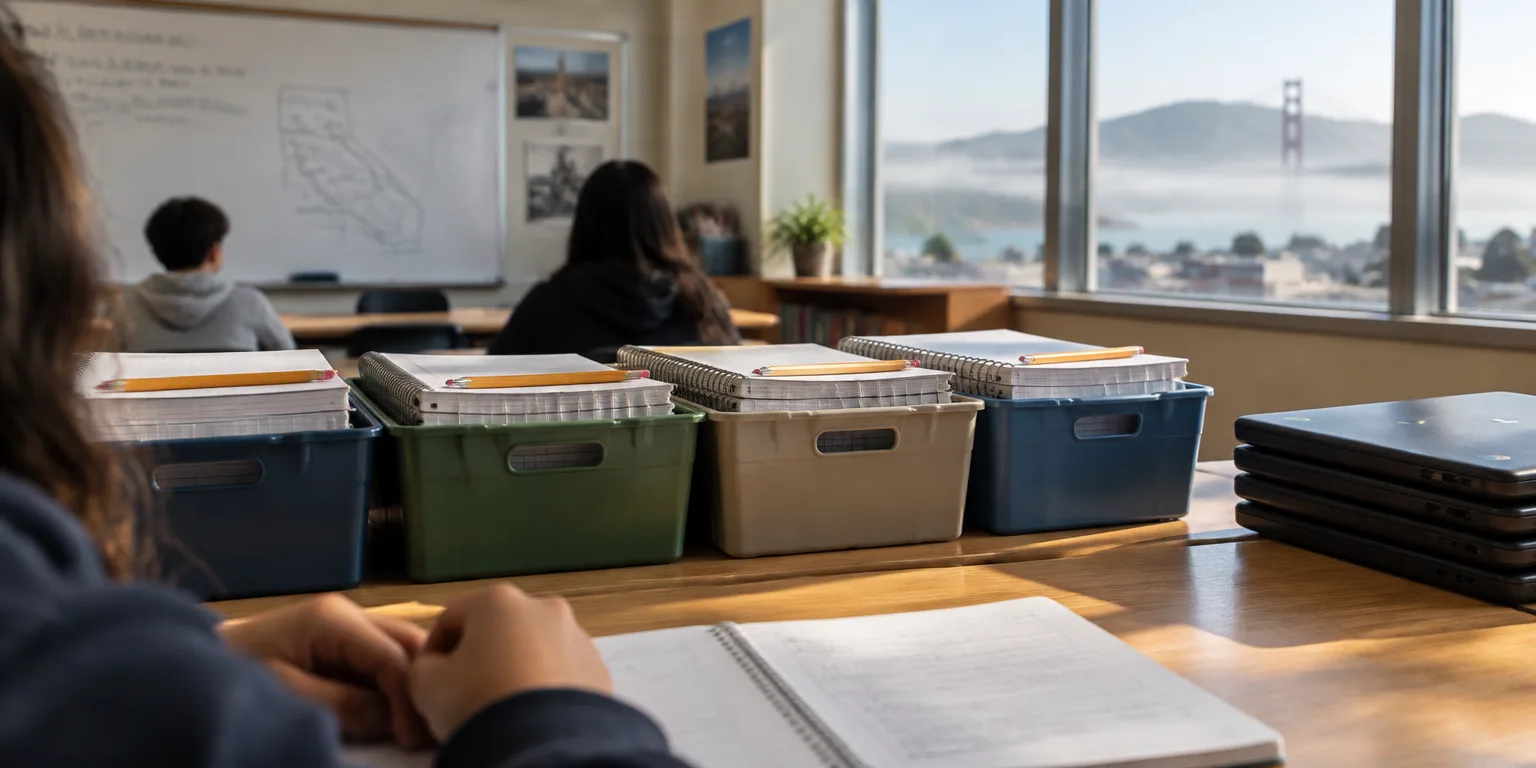
Another response is less screen time. A social studies teacher has students write in paper notebooks stored in bins and handed out at the start of class, and is scaling back Chromebook use because of heavy screen time.
For now, the fixes are small and classroom level. With spoken answers, paper kept in the room, and less time on devices, teachers are aiming for a clearer read on what students know.
Questions people ask
Can students still work around in-class checks?
Not fully, since phones can reappear outside direct supervision. Live answers and classroom-kept paper reduce unsupervised time and make outside help harder to use. The aim is a clearer read on what a student knows.
Why use oral exams with middle schoolers?
Speaking requires recall and explanation in the moment. Teachers can ask a follow-up right away and see where understanding breaks down. For sixth graders, it also tests whether they can explain an idea aloud.
Why cut back on screens?
In this case, the social studies teacher pointed to heavy screen time and is scaling back Chromebook use. Paper notebooks kept in the classroom also keep the work in the room.