The Empire Smuggled a Dead Girl Out Upright, Then Erased Her Name
The emperor ordered his son buried as a Catholic and his son's lover deleted from history.
 The Rest Is History · The Habsburg Murder Mystery
On Jan. 31, 1889, two men walked a dead girl out of a hunting lodge at Mayerling, near Vienna.
Her name was Mary Vetsera, a fashionable 17-year-old from a newly ennobled family. She had died the day before beside Crown Prince Rudolph, the 30-year-old crown prince of Austria-Hungary.
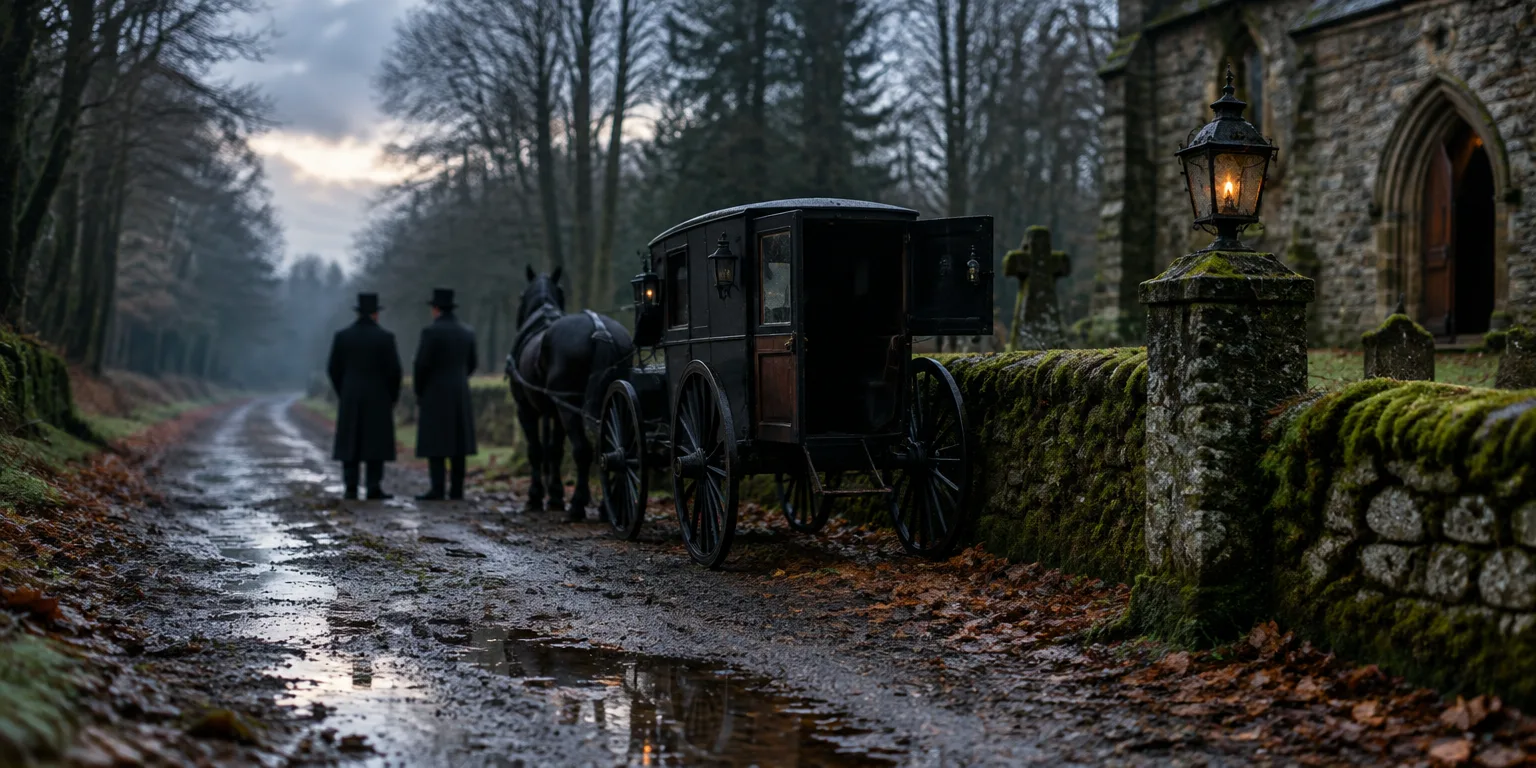
Her uncles had come to claim her body. A doctor washed off the blood and dressed her in a coat, hat, veil, boa, and shoes. Then the uncles propped her upright between them and walked her to a waiting carriage as if she were alive, with a broom handle slipped inside her clothing to hold her upright.
The emperor ordered the cover-up. After learning that both were dead, Emperor Franz Joseph, the Catholic ruler of a multinational empire, walked into his son's room and stood for 15 minutes in silence beside the body, a vigil for a fallen officer under army rules.
Then he set two priorities. His son, though both a murderer and a suicide in the eyes of the church, was still to receive a Catholic funeral. Franz Joseph told his aides, "All mention of this girl must be suppressed." "Her presence at the scene, her body, even her name must be deleted from the public record."
Empress Elisabeth herself had already broken the news to Mary's mother, Baroness Helene Vetsera. Imperial staff warned the baroness to flee Vienna before the press and crowds turned on her, and the suave Prime Minister Count Taaffe urged her to leave town and keep a very low profile.
The baroness had just received her daughter's last letter. Mary wrote, "Forgive me for what I have done." "I could not resist love in agreement with him." "I wish to be buried by his side of the Alland churchyard." "I'm happier in death than I was in life."
Burial was a problem, because suicides could not rest in consecrated ground. The emperor's staff quietly asked Heiligenkreuz Abbey to find room for Mary, no questions asked. The coach traveled after dark about three miles to the abbey, where police were waiting. At daybreak, once the rain let up, she was buried.
Police wired Vienna with a coded telegram: "All finished."
The silence was nearly complete. The one exception was an illustrated paper in Graz that wrongly said she had died in Venice and been buried in Bohemia. Writer Frederick Morton wrote, "her name never appeared again in any book, magazine or newspaper published in Austria Hungary."
Morton added, "It was as though nobody remembered that she had walked the earth."
Questions people ask
Who were Rudolph and Mary?
Rudolph was the only son of Emperor Franz Joseph and Empress Elisabeth, and thus heir to the Austro-Hungarian throne. Mary Vetsera was the 17-year-old daughter of a diplomat turned nobleman, infatuated with Rudolph after meeting him through court circles in 1888. They died together at Mayerling on Jan. 30, 1889, in what is now understood as a suicide pact.
Why did a Catholic burial matter so much?
Austria-Hungary presented itself as the guardian of Catholicism, and suicide was considered a mortal sin that barred burial in consecrated ground. To give Rudolph a church funeral, court doctors ruled that he had acted in a state of mental confusion and was therefore not responsible. The papal representative in Vienna was furious and reportedly called it the funeral of a murderer and suicide.
Did the cover-up actually fool anyone?
No. Austria-Hungary could silence its own press, but German newspapers printed the full story and circulated freely across the border. The contrast between the elaborate denials at home and the open reporting abroad only fed rumors and conspiracy theories. Those theories persist in books, films, and ballets about Mayerling.