The Factory Floor Is Where Real Innovation Happens
Separating design from manufacturing sounds efficient, but it throws away the hands-on learning that leads to better products.
 The Tucker Carlson Show · How WWII Doomed “Creativity” and Led to Its Takeover by Silicon Valley and Weapons Companies
An Apple label sums up a split in how Americans talk about work, as writer Tom Frank recalls: "designed by Apple in California, assembled in China." Frank says the company put that line on everything it made, and he believes it still does.
The message, Frank says, is that the creative work stayed in America while the making could go overseas. He argues that split gets creativity backward.
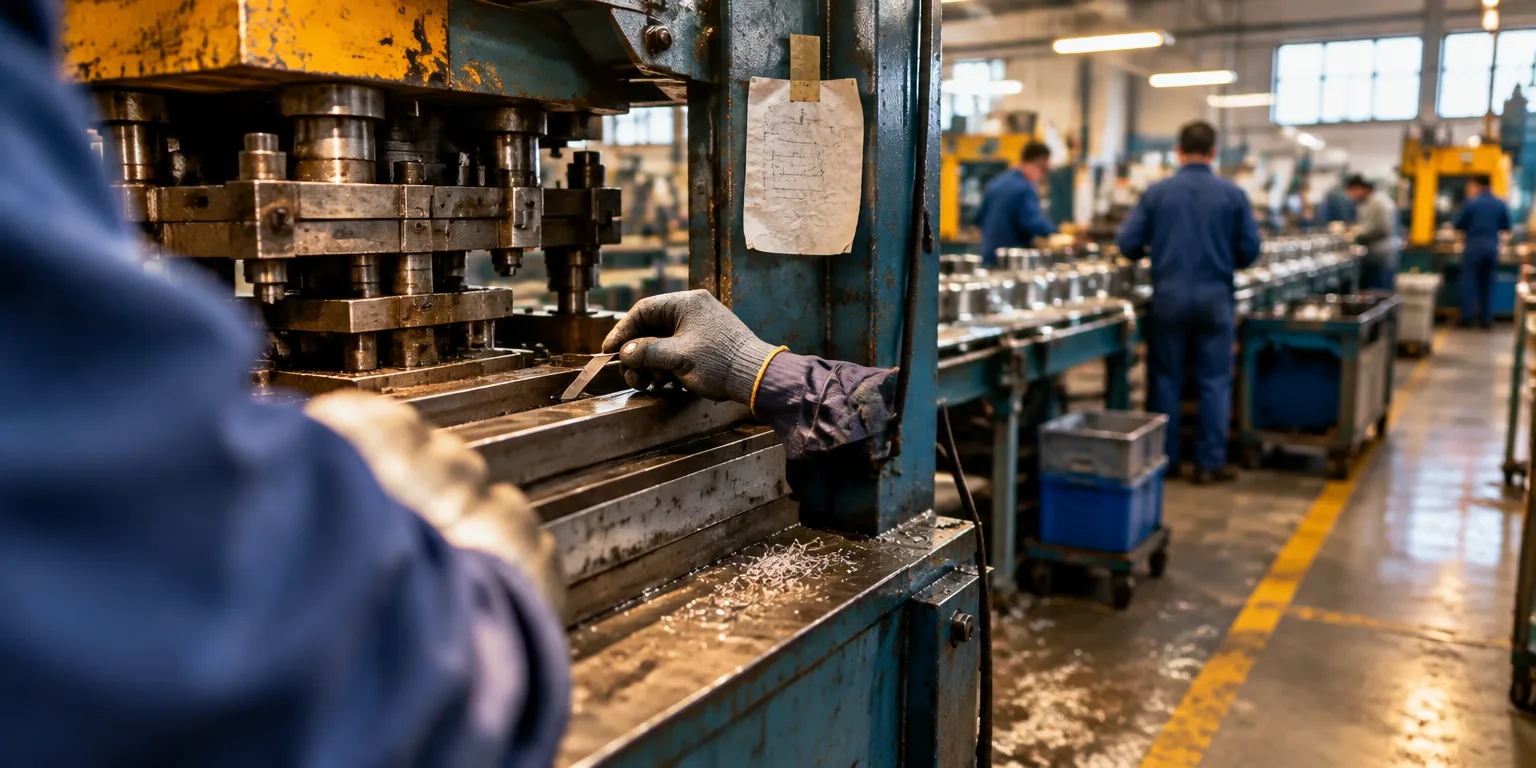
Engineers may design the machinery in an office building, but the people on the shop floor live with it. Workers handle the machines and the product every day, learning quirks, workarounds, and small improvements that no drawing captures.
To illustrate that kind of know-how, interviewer Tucker Carlson described watching his friend the previous morning move a garage off its foundation, load it onto a trailer, and haul it five miles. The friend had only a high school education, and Frank called the feat innovation.
Carlson offered his own example from his time working in a baked bean factory, where he said there was constant innovation. Frank agreed, saying such tinkering had to exist there.
Frank argues that shipping production overseas loses that learning. Building things teaches people how to build them better, and how to build other things, opening doors that stay shut when a country only designs.
China understands this, Frank says, and has not accepted the American idea that manufacturing is the past. Frank argues that the country that keeps the factory keeps the future improvements too.
Questions people ask
Why does it help to have designers near the factory?
Proximity helps because many problems only appear during production, like a machine that jams, a material that bends, or a step that wastes time. Workers see those problems first and often fix them on the spot, and engineers nearby can turn a quick fix into a lasting design change.
Is there evidence that making things leads to better ideas?
Yes. Economists call it learning by doing, and studies of airplanes, ships, and semiconductors have found that costs fall and quality rises as workers build more units. The improvement comes not from the blueprint alone, but from repetition, observation, and small adjustments.
What does China do differently with manufacturing?
China has paired large manufacturing clusters with technical schools, supplier networks, and government support for upgrading factories. When parts makers, assemblers, and engineers sit close together, a change in one step can quickly spread to others.