Nearly Four and a Half Hours of Questioning Ended With No Confession, Only a Theory
A lieutenant gave Patty Hickey a choice between deception and redemption, then settled on the theory that her husband walked away to die.
 Bear Brook · A Private Matter, Episode 5
Hours into the questioning, Dana Flanders, a state police lieutenant, told Patty Hickey, "we have been climbing a mountain together," adding that "Hand in hand, we're climbing up to the top of the mountain."
From there, he said, there were two trails down. There was deception run, where they would turn a blind eye and pretend everything was okay, or redemption road, where they would learn what happened to her husband Jay. It was not easy, he said, but he would walk it with her. He added, "what would Jesus do?"
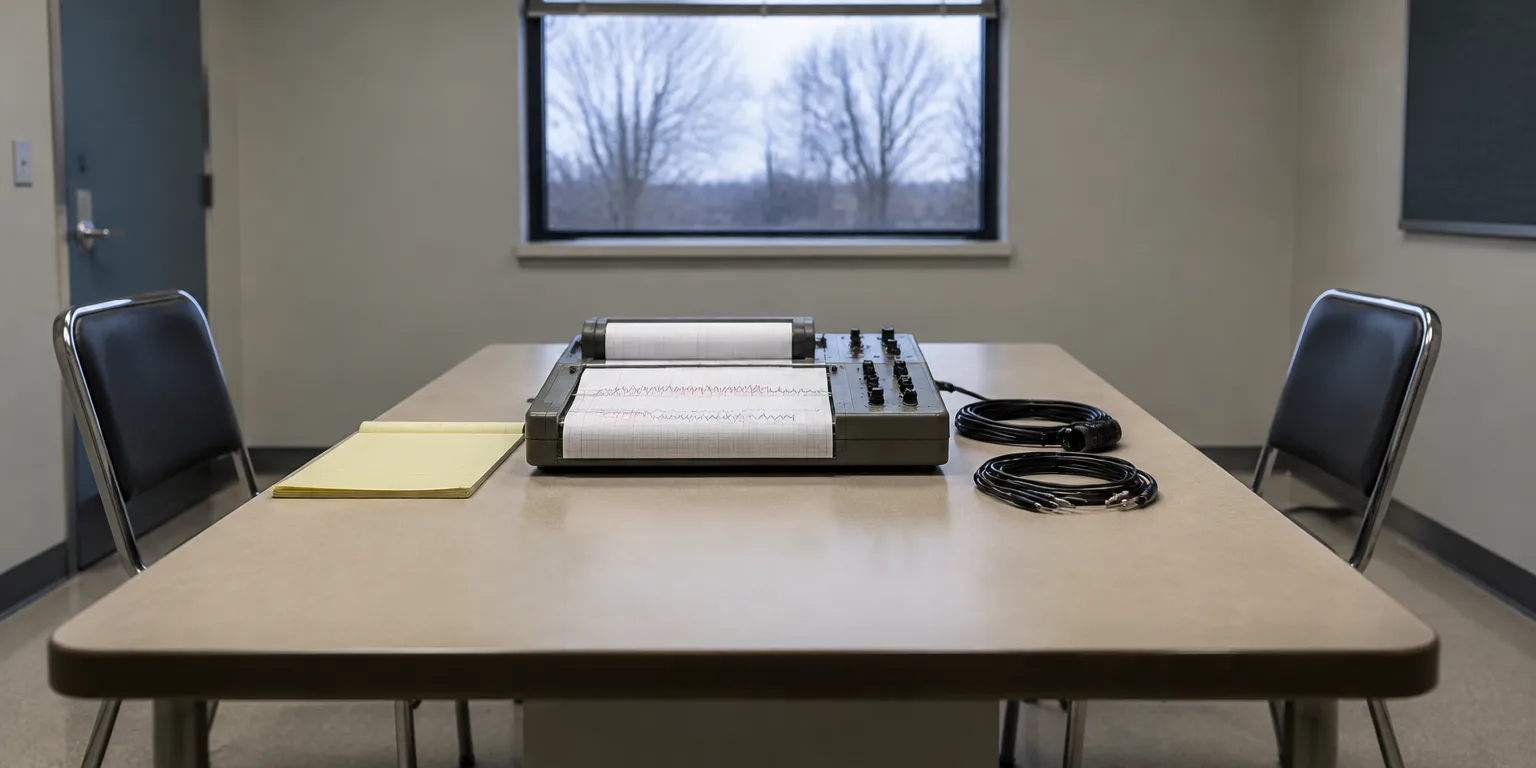
It was the last major interrogation over Jay's disappearance, an interview that would stretch to nearly four and a half hours. Flanders had brought a polygraph machine to help get the truth, but he never attached it to Hickey.
In his report, Flanders later wrote, "I did not believe Hickey was suitable for testing due to her own mental status and potential memory issues," without explaining further. Instead, he said, he continued in a more confrontational way.
He told Hickey she had done nothing to find Jay after he vanished while she went to get the mail. She said she thought Jay, who had dementia and memory loss, had gone for a walk or that his brothers had picked him up, and that she did not have their numbers. Flanders answered that the numbers were in the phone she had.
Nearly four hours into the interview, a detail caught his ear. Hickey mentioned that years before, Jay's doctors had advised her to begin exploring nursing-home care for him. Flanders built a theory on the spot: she had started looking, Jay knew and said he did not want to go, then walked out to end his life.
Hickey seemed open to the idea but never clearly agreed. Flanders told her she had known there was nothing to find and had lived in denial until her daughter called police.
Then he ended it. He told her to call him and said they would follow the exit sign. There was no confession and no charge, only the lieutenant's theory and, from Hickey, talk of the living room wood still in her barn and running the tractor.
Questions people ask
What is a polygraph and why would police bring one they never use?
A polygraph measures breathing, pulse, and sweating while a person answers questions, on the theory that lying causes stress. Studies have found it unreliable, and courts in New Hampshire generally do not admit the results as evidence. Police still sometimes use the test as leverage, because statements a person makes during the process can be admissible.
What does it mean that Jay had dementia?
Dementia is a decline in memory and thinking that interferes with daily life, often including confusion, getting lost, and forgetting familiar people. Jay had been diagnosed with dementia, which is why his ability to take walks alone became a central issue. People with dementia often need supervision and help with decisions about care.
Was Patty Hickey charged after the interrogation?
No confession or arrest came out of that final interrogation. Flanders closed the session by giving Hickey his card, telling her to call, and saying they would follow the exit sign. His theory was that Jay had walked off to end his life rather than enter a nursing home.